Egypt's Historic World Cup Knockout Victory and Its Impact
Egypt’s night of history in Dallas did not end on the pitch. It stretched far beyond Dallas Stadium, past Cairo and Alexandria, all the way to the rubble and tents of Gaza.
On Friday, Hossam Hassan’s side held their nerve, beat Australia 4-2 on penalties after a tense 1-1 draw, and claimed Egypt’s first-ever World Cup knockout victory. Then their coach dedicated it to Palestine.
Egypt hold their nerve, and their line in history
The match itself was tight, anxious, the kind of knockout tie where every misplaced pass feels fatal.
Emam Ashour broke it open early. On 13 minutes, he ghosted into the box and met a cross with a firm header, steering Egypt into a 1-0 lead and igniting a huge travelling support. The goal settled Egyptian legs and rattled Australian ones, but the game never slipped into comfort.
Australia grew into the contest after the break. Their pressure told on 55 minutes, though not in the way they would have imagined. Mohamed Hany, trying to cut out danger, turned the ball into his own net. A cruel equaliser, and suddenly the tie was reset.
From there, it became a classic World Cup scrap. Half-chances, tactical fouls, tired sprints into channels. Extra time came and went without a decisive blow, both sides looking like they feared the mistake more than they trusted the moment.
So it went to penalties, and Egypt’s date with history moved 12 yards closer.
Harry Souttar blinked first, failing from the spot. Lucas Herrington followed, his miss tilting the shootout decisively Egypt’s way. Hossam Abdelmaguid stepped up with the weight of a nation – and much more – on his shoulders and rolled in the winning kick.
Egypt were through to the last 16, where Argentina or Cape Verde now await. A new chapter, already guaranteed to be written in bold.
A victory carried on two flags
What happened next turned a football win into something far larger.
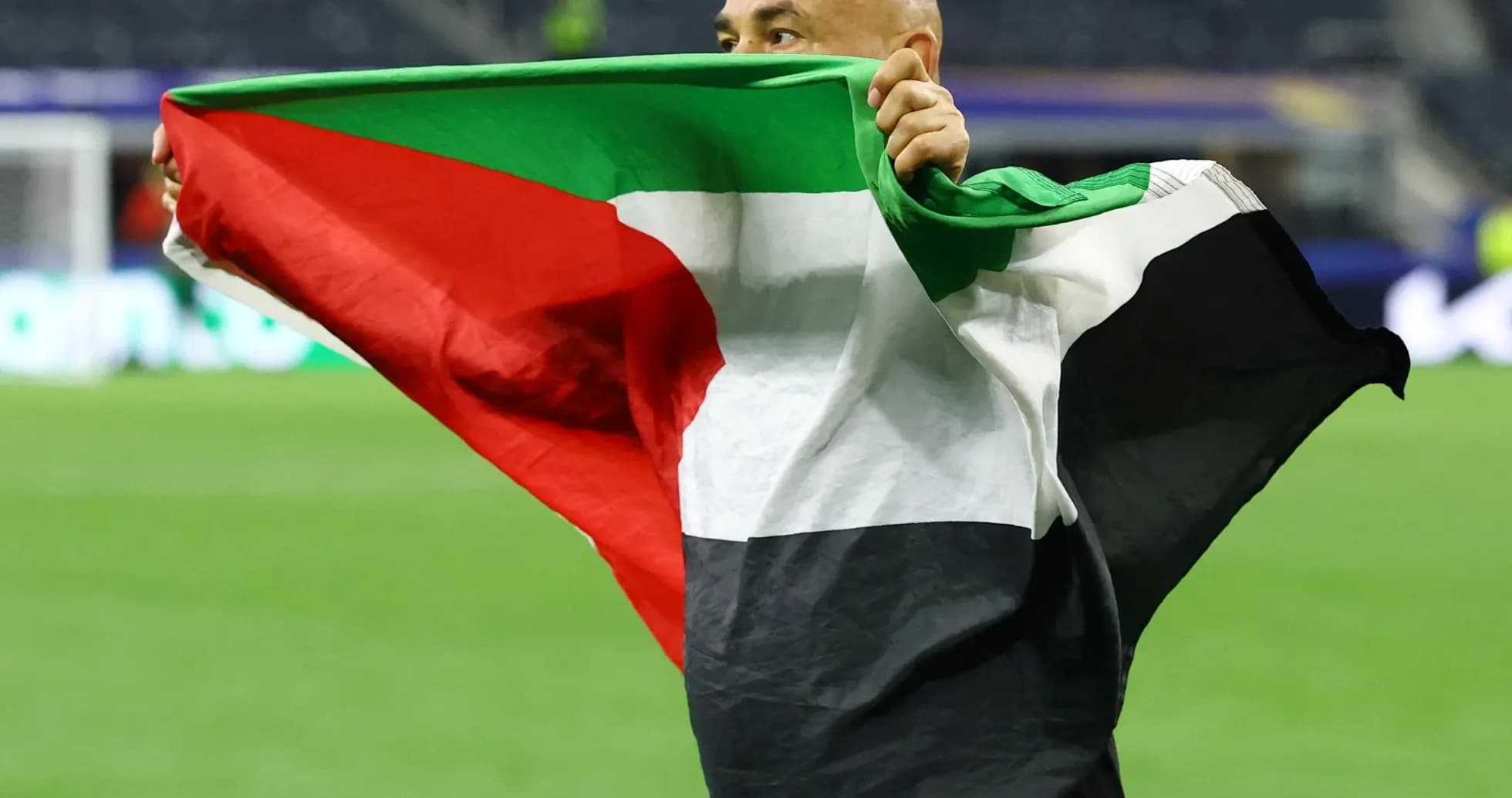
Hossam Hassan emerged onto the pitch carrying both the Egyptian and Palestinian flags. Around him, his players dropped to the turf in prostration, a collective gesture of thanks and release after decades of waiting for a moment like this on the World Cup stage.
Then came his words.
“May God grant them [the Palestinians] victory, may God have mercy on their martyrs,” he told reporters. “I’m saying to them: I’m dedicating this victory to the Egyptian people and Palestinian people, those kind and honourable people.”
In a single night, Egypt’s first World Cup knockout win became a shared celebration across the Arab world.
Gaza finds a rare moment of light
In Gaza, the reaction underlined just how far the ripples of this result travelled.
Thousands gathered around screens set up against a backdrop of bombed-out buildings and makeshift tents. Social media footage showed children with Egyptian flags painted on their faces, people cheering beneath shattered concrete, pockets of joy in a landscape of destruction.
“For the first time, I’m following the World Cup with this much excitement,” wrote Gaza-based Tamer Nahed on X. He described how “thousands of people came out of their tents and from among their destroyed homes to watch the match.”
“Faces lit up with smiles, cheers filled the air, and it felt as if everyone had decided to give themselves a moment of life despite everything surrounding them,” he added.
It was football as escape, but also as defiance. Egypt’s penalty win gave Gaza something to celebrate, however briefly, amid the rubble.
Tension off the pitch
This night of emotion had already been charged before kick-off.
Hours earlier, members of the Egypt squad were involved in an altercation with police at the team hotel in Dallas. The national team said a Dallas police officer pushed team director Ibrahim Hassan and player Trezeguet as they tried to take a photo with a fan.
The incident spread quickly on social media, adding another layer of tension to an already high-stakes evening. The Dallas Police Department later stated that the situation had been resolved at the scene.
By the time the final penalty hit the net, that flashpoint felt like a footnote to a much bigger story.
A last-16 tie, and something more
On paper, Egypt now prepare for a last-16 clash with Argentina or Cape Verde, a daunting assignment wrapped in opportunity. On the ground, in places like Gaza, the meaning runs deeper.
This was a football milestone for Egypt – their first World Cup knockout win, sealed in the most dramatic fashion. It was also a night when a team, a coach, and a set of flags turned a sporting result into a shared statement.
The next opponent will test Egypt’s tactical limits. The question now is whether this surge of emotion, this sense of playing for more than themselves, can carry them even further into the tournament.