Egypt's Historic World Cup Knockout Victory Led by Mohamed Salah
ARLINGTON, Texas — Mohamed Salah limped into this World Cup still nursing a hamstring and carrying a nation on his shoulders. He walked out of AT&T Stadium on Friday night as the captain who finally led Egypt into uncharted territory.
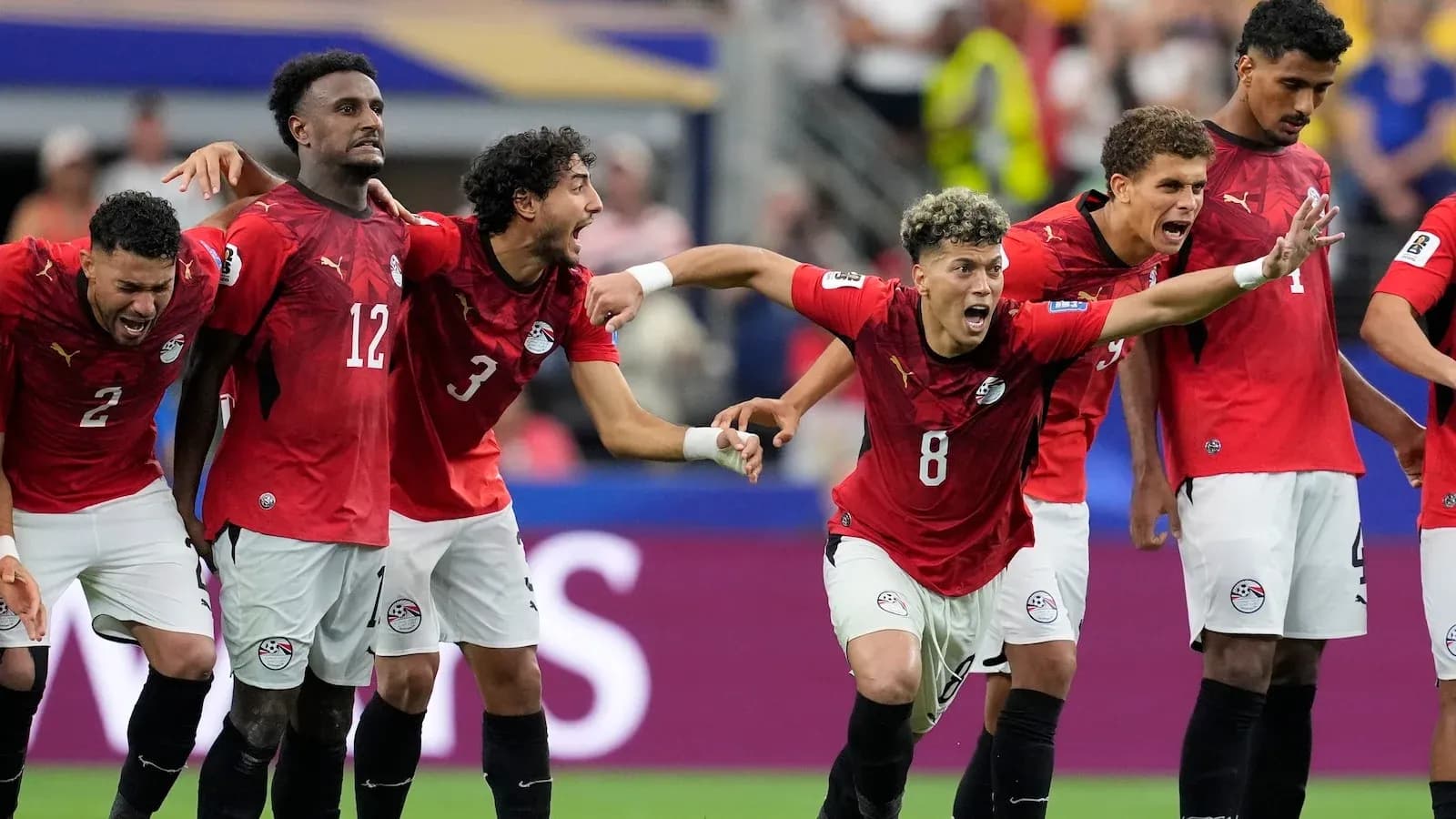
A first-ever World Cup knockout win. Achieved the hard way, on penalties. Claimed in front of 70,244 people in a Texas cathedral built for the Dallas Cowboys but taken over by Egyptian red.
Egypt 1, Australia 1. Egypt 4-2 on penalties. History made.
Salah’s night, Egypt’s moment
Salah is 34 now, no longer the blur that terrorized fullbacks weekly at Liverpool, but still the reference point for everything Egypt does. Hamstring strapped, he played every second of regulation and extra time. He still stepped up in the shootout, still buried his kick.
He has scored 68 times for his country, one behind his coach Hossam Hassan’s national record of 69. Yet on this night his greatest contribution was not a goal, but a presence — a captain holding a fragile team together as the tension grew unbearable.
“Today was one of the best days of my life,” he said, the emotion obvious. He had earned the right to say it.
Egypt had never won a World Cup match before this tournament. Now they have three — including their first in the knockout rounds, at the fourth attempt and in the first edition with a 48-team field.
Abdelmaguid, the unlikely hero
The decisive moment fell to a player who had never scored for his country.
Hossam Abdelmaguid, 25 years old, 15 caps, no international goals. Until now.
With Australia trailing 3-2 in the shootout after Lucas Herrington smacked the crossbar with the Socceroos’ fourth attempt, Abdelmaguid walked from the halfway line with a nation’s pulse thudding in his ears. Mathew Ryan, brought on late in extra time specifically for this moment, danced on his line.
Abdelmaguid went low to the left. Ryan dived the wrong way. The net rippled. The stadium exploded.
Egypt’s bench sprinted towards him. Red shirts flew in every direction. Flags whipped in the air as fans roared, many of them in tears. A defender with no international goal to his name had just written himself into Egyptian football folklore.
He followed Mahmoud Saber, Ramy Rabia and Salah, who all converted from the spot. Jackson Irvine and Awer Mabil scored for Australia, but the two misses were fatal.
Harry Souttar set the tone badly for the Socceroos by blazing the opening kick over the bar. Herrington’s miss sealed it.
The pressure finally told. Just not on Egypt.
Hassan’s prayer and a nation’s release
On the touchline, Hossam Hassan lived every second.
“I was only thinking about the Egyptian fans,” he said through a translator. During the shootout he prayed: “God, please make the Egyptian people happy.”
He tried to strip the moment of fear for his players.
“Do not look at the pressure,” he told them. “Just let everything out, don’t think about anything. Think about your penalty kick. Don’t even think about the goalkeeper.”
They listened. They struck. They delivered what generations before them could not.
A brutal twist for Hany
For a long time, it looked as if Egypt might not need penalties.
They struck first, early and well. In the 13th minute, Emam Ashour timed his run and his leap perfectly, glancing a header inside Patrick Beach’s near post. A clean, confident finish. A dream start.
Australia staggered but did not fall. They pressed, probed, waited.
The cruel equalizer arrived in the 55th minute, and it will haunt Mohamed Hany.
Aiden O’Neill whipped a free kick from the left of the penalty area into a crowd of bodies. Hany rose to clear but misjudged it, sending his header flashing past his own goalkeeper, Mostafa Shoubir.
It was his second own-goal of this World Cup, after another in a 1-1 draw with Belgium in the group stage. No player had ever scored two own-goals in the same tournament before. It is a record nobody wants.
The context made it worse. Less than 10 minutes earlier, Hany had been down on the turf near the same spot after a heavy collision with Connor Metcalfe on a header attempt. A stretcher was brought on, medical staff checked him, and he eventually continued after what appeared to be a concussion assessment.
He stayed on. He fought on. Then came the mistake that dragged Australia back into the tie and pushed Egypt into a long, nervous slog.
Missed chances and a fateful switch
The game swung wildly at the start of the second half.
Within seconds of the restart, Omar Marmoush had a golden chance to put Egypt 2-0 up. Clean through, he dragged his shot wide. A huge let-off for Australia. The kind that lingers in the back of the mind when the night stretches into extra time.
Egypt carved out more openings late in regulation. Rabia forced Beach into a superb sprawling save with a powerful header. Moments later, Salah found space and shot, but Beach gathered comfortably.
Haissem Hassan then saw a goalbound effort blocked by Souttar’s knee. Australia clung on.
Tony Popovic, the Australia coach, made the bold call late in extra time. He replaced Beach, just 22 and playing only his sixth game for the national team, with Ryan, the veteran goalkeeper making his 105th appearance.
Beach had been excellent. Brave, sharp, decisive. Ryan came on cold, tasked with winning a shootout.
He did not get close to any of Egypt’s four penalties.
“It hurts when you get that close,” Popovic admitted. “Unfortunately, we bow out in a penalty shootout, so it’s difficult to take right now.”
Australia’s strange World Cup curse
Australia’s World Cup knockout history remains a story of frustration and freakish detail.
They have now played three times in the elimination rounds. Three defeats. Just two goals scored in those games — and both of them own-goals by the opposition.
They lost 1-0 to Italy in 2006. They fell 2-1 to Argentina in Qatar four years ago, their only goal that night coming from an Argentine own-goal. Here in Texas, they needed another own-goal, this time from Hany, just to stay alive.
No wonder the pain felt so sharp. They were a crossbar and a few inches of composure away from finally breaking that barrier.
Instead, they watched another nation celebrate its breakthrough.
Atlanta awaits, and perhaps Argentina
Egypt’s reward is a round-of-16 tie in Atlanta on Tuesday, against either defending champions Argentina or tournament surprise Cape Verde.
The challenge will be enormous either way. Argentina carry the weight of a title defense and the aura that comes with it. Cape Verde bring the unpredictability of a rising force with nothing to lose.
Egypt will travel knowing something fundamental has changed. They arrived at this World Cup without a single victory in the tournament’s history. They now carry the confidence of a team that has won twice in the group stage and survived a knockout shootout under the brightest lights.
Salah is chasing a record. Hassan is chasing a deeper kind of redemption as a coach. A defender with no goals to his name has just scored the most important one of his life.
The Pharaohs have finally stepped through the door. The only question now is how far they dare go.