Egypt's Historic World Cup Knockout Victory Over Australia
In the end it came down to a teenager, a crossbar and a country holding its breath.
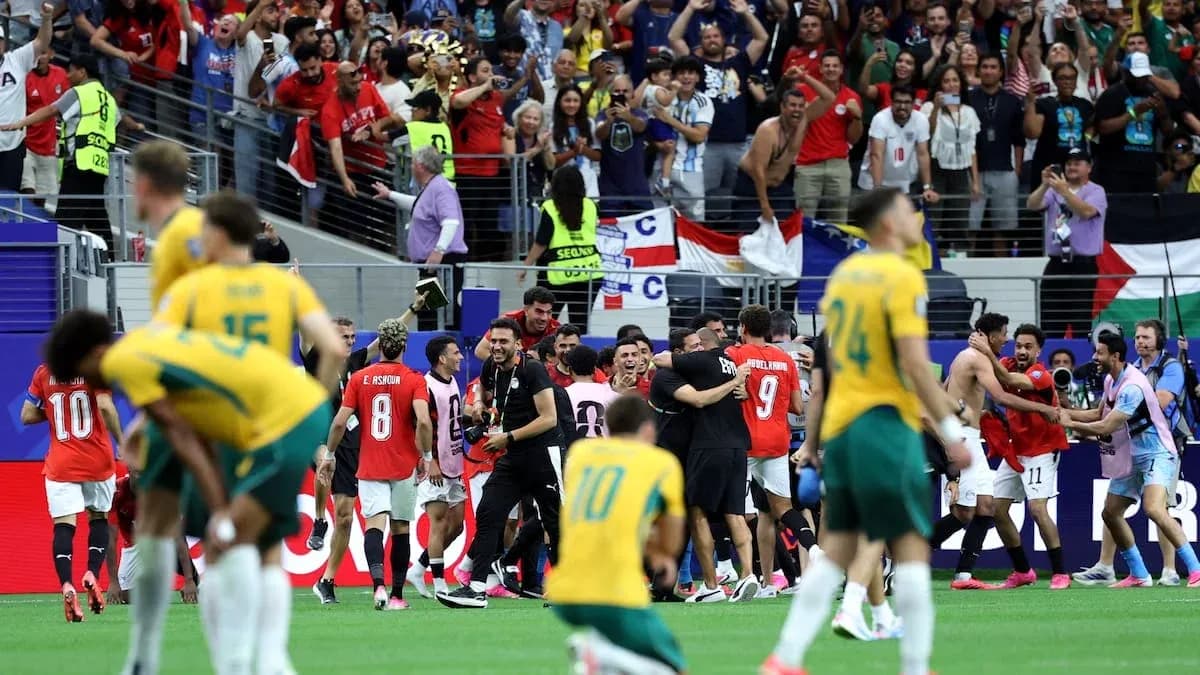
Lucas Herrington, just 18, stepped up for Australia with the shootout on a knife-edge. He struck cleanly, too cleanly, the ball thundering against the bar and back out into the Texas night. Moments later, Abdelmaguid buried his kick, and Egypt were through. Mohamed Salah sank to his knees in tears of joy. The Socceroos sank with him, for very different reasons.
This was a World Cup knockout tie that both sides had been chasing for generations. Neither Egypt nor Australia had ever won a men’s World Cup knockout match. That weight hung over the air-conditioned home of the Dallas Cowboys, where 70,000 fans – most of them Egyptian, most of them loud – turned a neutral stadium into something far more hostile.
A gamble in goal, a nightmare start
Tony Popovic had already played his hand. As the game drifted inexorably towards penalties, he rolled the dice and brought on Mathew Ryan, the most experienced goalkeeper in Australian history, specifically for the shootout. It was a bold, last-gasp gamble.
It backfired immediately.
Shooting towards the bank of Egypt fans, with whistles pouring down from the stands, Harry Souttar strode up to take Australia’s first penalty and lashed it high over the bar. The Socceroos were behind before Ryan could even make a save.
From there, Egypt were ruthless. Every one of the next five takers scored, Salah among them, stroking home with the icy calm that has defined his career. Australia clung on through their own successful kicks, but Herrington’s miss opened the door. Abdelmaguid walked through it and slammed it shut.
Egypt strike first against the run of play
The drama of the shootout almost overshadowed how strangely this match unfolded.
Australia actually started the brighter. With less than five minutes gone, Cristian Volpato – the late convert from Italy to the green and gold – rattled the top of the crossbar with a fierce effort. It was a warning shot and, briefly, a sign that Popovic’s side might finally shake off the goal-shy form that had seen them score just twice in the group stage.
Instead, they were the ones punished.
Egypt, nervy at the back despite their historic first World Cup win in the groups against New Zealand, soaked up pressure and then struck. Nestory Irankunda switched off at the back post, losing Emam Ashour, and Karim Hafez’s cross picked out the midfielder perfectly. Ashour powered his header home after 13 minutes, his second goal of the tournament, and Hossam Hassan’s men suddenly had control.
The goal flipped the script. Australia, a team more comfortable scrapping and countering, were forced to chase. They rarely looked convincing doing it.
A bruising contest, a costly injury
The first half became attritional, exactly the kind of contest Egypt’s coach had warned about when he spoke of Australia’s physical edge.
Salah, 34 and coming off a hamstring strain, floated on the fringes of the game. The former Liverpool star saw little of the ball and made even less impact before the break, marshalled and muscled by a disciplined Australian back line. When he did drift into pockets of space, the final pass never came.
Australia finally tested Mostafa Shoubir 10 minutes before half-time, Aziz Behich firing a tame effort straight at the goalkeeper. Shoubir, whose father Ahmed kept goal for Egypt at the 1990 World Cup, barely had to move.
The half ended with a thud. Jordan Bos, one of the quickest players at the tournament and a key outlet for Australia down the flank, was left in a heap after a flying challenge from Rabia. Bos could not continue and was replaced at half-time by Kai Trewin – a significant blow to Popovic’s attacking plan.
Australia handed a lifeline
Egypt should have killed it seconds after the restart.
Omar Marmoush, the Manchester City attacker, found himself sliding in at close range with the goal gaping. He pushed his finish wide. It felt huge at the time. It looked even bigger later.
The miss jolted Australia. They pushed higher, threw more bodies forward, and finally forced the kind of chaos they thrive on. From an in-swinging free-kick, Mohamed Hany, under heavy pressure, mistimed his header and sent the ball skidding past his own goalkeeper.
One own goal in a World Cup is unfortunate. This was Hany’s second of the tournament.
Australia barely cared. They were level 10 minutes after the interval, their equaliser owed more to persistence and physicality than craft. The stadium tightened. Both sides suddenly sensed the same thing: history was within reach.
Egypt surge, Beach stands tall
From that moment, the game tilted again.
Egypt grew into the final stages of normal time, their passing sharper, their attacks more measured. Salah, still not at his devastating best, began to link play rather than finish it, drifting into the move that almost won it at the death.
Ramy rose to meet a late cross, his header arrowing towards the corner. Patrick Beach, the Australian goalkeeper who had carried the load before Ryan’s introduction, flung himself across goal and clawed it away in added time. It was an outstanding save, the kind that usually becomes a defining moment in a story of survival.
Instead, it only delayed the inevitable.
Extra time brought more Egyptian pressure. Legs grew heavy, minds slower. Salah finally had a sight of goal early in the added period, cutting in on his weaker right foot and lashing his shot well over. It was another reminder that even the great ones feel the strain.
By then, penalties felt almost preordained.
Tears, history and a harsh lesson
When they came, Egypt were ready. Australia were not.
Souttar’s early miss set a tone the Socceroos could never quite shake. Egypt’s takers, led by Salah’s ice-cold strike, showed the composure of a team desperate to bury years of frustration on this stage. Herrington’s misfortune, smashing the bar when Australia needed perfection, underlined the fine margins that decide World Cup careers.
Abdelmaguid’s winner did more than send Egypt through. It delivered the seven-time African champions their first-ever men’s World Cup knockout victory, a landmark moment that had eluded generations of Pharaohs sides.
For Salah, often the face of Egypt’s near-misses, the tears were about more than one shootout. For Australia, who had flirted with an upset and left everything out there, the heartbreak was just as real.
They gambled. They fought. They pushed Egypt to the brink.
On a night when history finally chose a side, it simply chose someone else.