Eddie Howe's Tough Season at Newcastle United: A Call for Change
Eddie Howe set off alone.
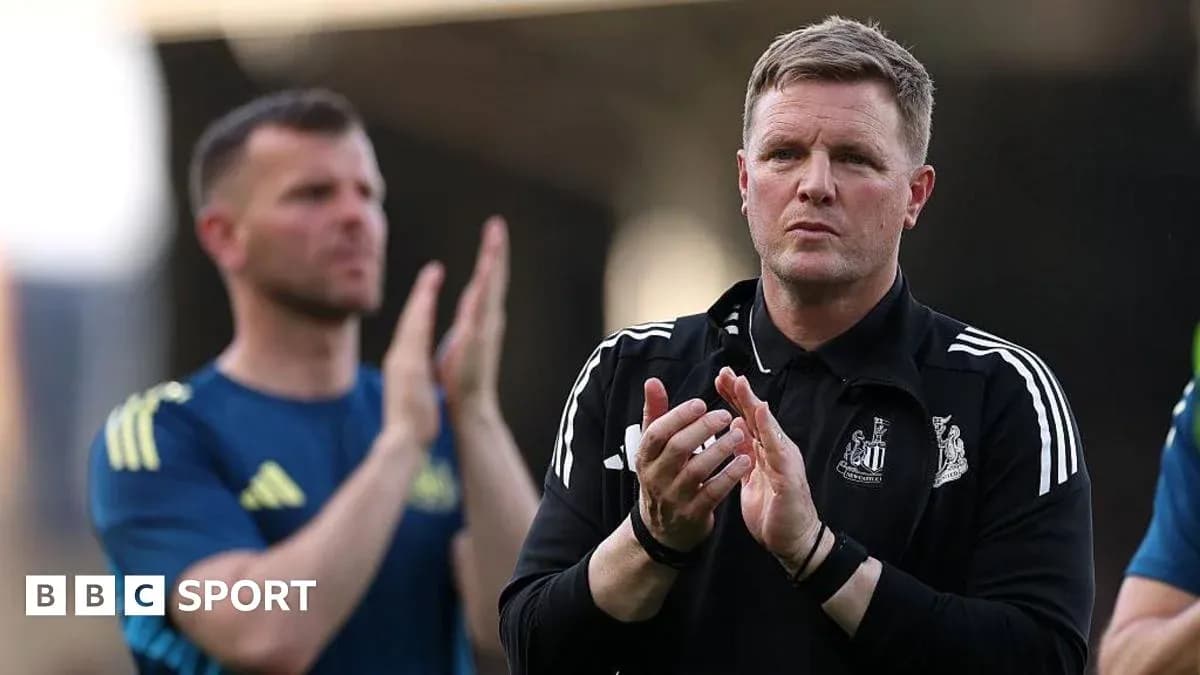
Newcastle United’s head coach took the first steps of the traditional lap of appreciation at St James’ Park after the final home game of the season. For a moment, it looked like a solitary walk. It didn’t sound like one.
“Eddie Howe’s black and white army” rolled around the ground again and again on 17 May after the draw with West Ham. The same chant had framed the celebrations when Newcastle clinched Champions League football in 2023. It was back when they did it again in 2025. This time, though, the noise carried a different weight.
This was applause for survival, not success. For endurance, not glory. For a manager and a team who had been battered by a season that never really settled.
The stadium emptied slowly. The ones who stayed made sure Howe heard them. He did. In a campaign he openly called his toughest yet on Tyneside, that reception stuck.
Newcastle had taken seven points from their final three home games. It felt like a flicker of momentum at the end of a draining year. A hint of something to cling to.
There was still one more game.
A flat finish and familiar failings
Fulham away on the final day offered a chance to end on a high, to carry that late surge into the summer. Instead, Newcastle reverted to type. Limp. Loose. Beaten 2-0 and well beaten, slipping to a 17th league defeat of the season.
When the players and staff walked over to the away end at full-time, some heads were bowed. It looked like a scene they had acted out too many times. It felt like Groundhog Day.
“There have been a lot of bruises this season,” Howe said afterwards.
That barely covered it.
Earlier in May, with the campaign still stumbling along, Newcastle’s owners, senior executives and key decision-makers had already gathered in Northumberland for their annual summit. This year, it had an edge. How do you stop a slide? How do you make sure this season is an aberration, not a new normal?
“We are in a moment right now and they want to understand why, what we are doing about it and how to fix it,” a senior club figure said.
There was no public panic, no emotional sacking or grand gesture. Behind the scenes, though, the conversations were blunt. What went wrong? Who stays? Who goes? What has to change?
The answers are starting to take shape. Big changes. A different-looking squad when next season kicks off.
A summer of decisions
One of the headline calls is looming over Anthony Gordon. Bayern Munich want him. Newcastle will only sell on what they describe as “our terms”, and there remains a gap between the clubs’ valuations, but the winger looks increasingly likely to be among the departures.
Factor in other potential exits and the scale of the rebuild becomes clear. Newcastle could need a new goalkeeper, a full-back, a midfielder and at least two forwards as a bare minimum.
Howe has grown “frustrated” by problems he has not been able to solve on the pitch. He says the club are now “very clear” about what is required this summer after finishing 12th – a jarring comedown for a team that had been rubbing shoulders with Europe’s elite.
New signings alone will not fix the culture or the confidence. Howe knows that. But he has pointed to examples elsewhere of clubs climbing the table after one sharp, well-planned window. That is the model.
Sporting director Ross Wilson will lead the rebuild. Howe is not just under the microscope; he is part of the solution. As BBC Sport has reported, the hierarchy see him as central to diagnosing and repairing what has gone wrong.
No one has forgotten who he is. This is the coach who delivered Newcastle’s first major domestic trophy in 70 years by winning the Carabao Cup last season. The man who dragged the club from relegation trouble into the Champions League.
Standards, though, have slipped. Inside the club, there is no attempt to dress it up. This season has not been good enough.
On the touchline, Howe has looked like a manager searching for answers, scrambling for a formula that would stick. Just as his team have veered between the ruthless and the ragged, he has felt unpredictable too.
The bar now has to be reset after his worst domestic campaign at the club.
“It’s something we need to address and we need to address it very quickly,” he said.
From ruthless to fragile
The most striking change has been in Newcastle’s edge – or lack of it.
In 2024-25, they were known for finishing teams off. No side in the Premier League threw away fewer points from winning positions than Newcastle’s seven. Take the lead, lean on Alexander Isak to score at the right moments, then trust a disciplined, aggressive unit to squeeze the life out of the game.
That version of Newcastle disappeared.
Isak’s protracted £125m move to Liverpool stripped Howe of his most reliable match-winner. Without him, and without the same defensive steel, Newcastle became a team you could always get at.
This season they squandered 27 points from winning positions – the most in the division. They conceded 21 goals in the final 15 minutes of league games, again the worst record in the top flight.
A fierce, snarling side turned flaky.
Unlike Aston Villa, who went on to win the Europa League but exited the domestic cups early, Newcastle tried to fight on multiple fronts for most of the season and repeatedly came up short. The schedule eased late on. The performances did not improve enough to suggest a genuine turning point.
Inside the dressing room, it felt like a slog. Fifty-eight games. New territory for many. Mentally draining.
“Bloody hell, it’s not easy,” said a source close to one regular starter.
Even wins carried a warning. Members of the coaching staff admitted they struggled to enjoy victories, knowing another game – and another potential setback – lurked just days away. Newcastle never found the sort of run that had defined their previous two seasons.
The margins were fine but brutal. Seventy-one per cent of their league defeats came by a single goal. Howe now has to find a way to drag his team back onto the right side of those details.
A fanbase ready to demand more
Season-ticket holder Liam Phillips believes the club needs a “reset”.
“He badly needs a good start next season,” he said of Howe. “If Newcastle are not in the top six or seven in the first few games, I think the crowd will quickly turn.
“There has been a patience and understanding this season but if the team start badly after spending more money in the transfer market, I don’t think people will be quite as forgiving.”
That is the reality of Newcastle’s new status. Expectations have shifted. The club cannot afford another misstep like last summer.
Twelve months ago, they missed out on several first-choice targets. Most of the signings they did make arrived too late. There was no chief executive, no sporting director, and the recruitment department operated without a clear spine of leadership. In the end, they buckled and sold Isak on deadline day after insisting for weeks he was not for sale.
Clubs like Brentford and Bournemouth have sold key players and rebuilt smartly. Newcastle spent more than £100m net last summer with Howe heavily involved in the process. They have not had enough in return.
Only defender Malick Thiaw has been an unqualified success.
Adapting to Howe’s demands
The intense schedule between September and March meant most of those new arrivals had to learn on the job. There was little time on the grass. Analysis sessions and video work did the heavy lifting in explaining Howe’s structure, his demands, his intensity.
Jacob Ramsey got only a short window to experience a full pre-match training rhythm before the fixtures piled up. Even in that brief spell, the midfielder was understood to have found the volume of high-intensity running in Howe’s drills a shock, despite having worked under the demanding Unai Emery at Aston Villa.
It was a snapshot of the adjustment many signings face. Newcastle’s way of playing is physically unforgiving. The hope at the club is that last summer’s recruits will be better for this bruising education, and that the second season brings a sharper return.
Howe has built his reputation on overachieving against clubs with bigger wage bills and deeper squads. This year, his side slumped into the bottom half.
They also had to watch Sunderland, their fiercest rivals, beat them home and away and claim a European place in a season when eight spots were available. Newcastle took none of them.
That sort of boom-and-bust cycle cannot last. Howe has previously thrived when he has had longer clear weeks to prepare his team for Premier League games. He needs to rediscover that clarity, that edge, with or without European football.
“Every experience makes you stronger and makes you appreciate the good times,” he said. “We will all try and come back a better team.”
The lap of appreciation told him the city is still with him. The summer will decide how long that lasts.