Eddie Howe Leaves Newcastle: Jaissle Set to Take Over
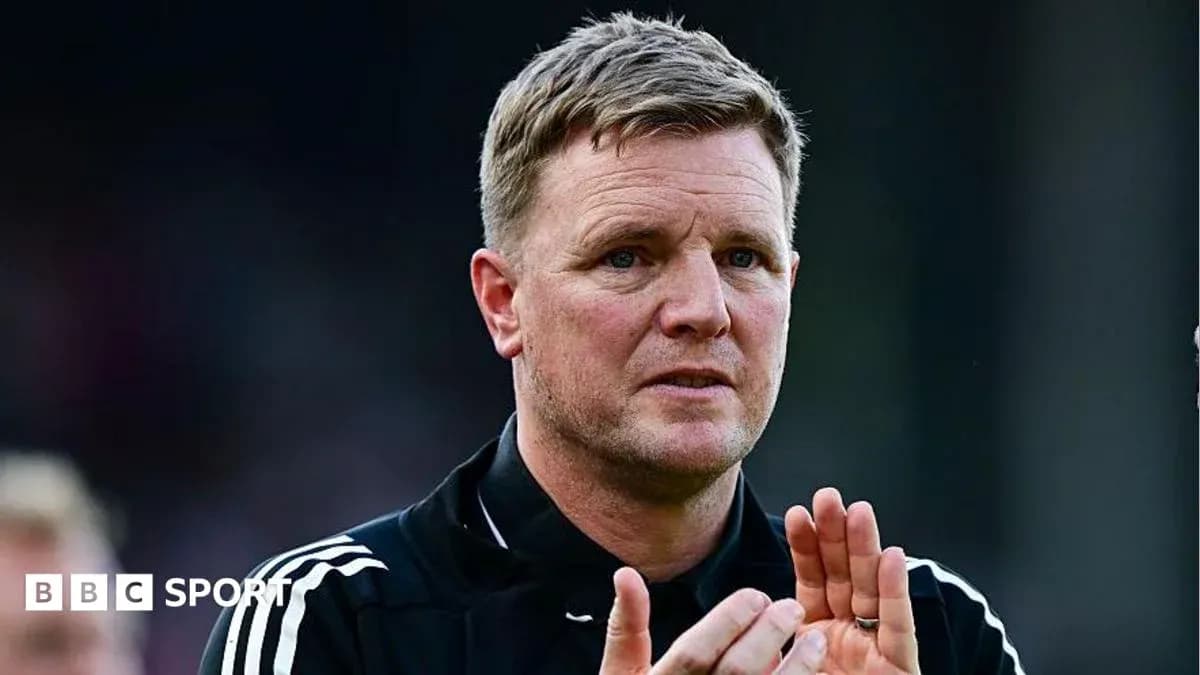
Eddie Howe’s Newcastle reign is over. Not with a lap of honour, not with a trophy held aloft, but with a 4-1 pre-season defeat to Bristol City and a sudden, sharp full stop to one of the club’s most transformative modern eras.
Sources have told BBC Sport that Howe will leave the club with immediate effect. Matthias Jaissle, currently in charge of Al-Ahli in the Saudi Pro League, is expected to be appointed as his successor.
For a fanbase that has spent the past three years rediscovering its voice, the silence around this decision feels deafening.
From revival to rupture
Howe walked into St James’ Park in November 2021, a month after the Saudi Public Investment Fund completed its takeover. Newcastle were staring down, not up. Relegation fears, a fractured squad, a fanbase exhausted by years of drift.
He changed all of that.
He replaced Steve Bruce and, brick by brick, rebuilt the club’s footballing identity. High tempo, front-foot, unapologetically aggressive. Under Howe, Newcastle did not just survive; they surged.
Champions League qualification in 2023 and again in 2025. A first major domestic trophy in 70 years with the 2025 Carabao Cup. St James’ Park roaring to the sound of European nights it thought it might never hear again.
Across 179 Premier League games, Howe delivered 84 wins, 38 draws and 57 defeats. No Newcastle manager has ever overseen more top-flight victories. Only Kevin Keegan can better his 46.9% Premier League win rate at the club.
Those are not the numbers of a caretaker. They are the numbers of an architect.
A season that broke the spell
Yet the past year has gnawed away at that legacy.
Newcastle finished 12th in the Premier League last season, beaten 17 times in 38 games. The team that had terrorised opponents with intensity suddenly looked drained, patched together, short of answers.
The Champions League run, which reached the last 16 before an 8-3 aggregate defeat to Barcelona, showed the ceiling of Howe’s best football and the cost of it. The EFL Cup defence carried them to the semi-finals. But the league form sagged badly after a fifth-place finish in 2024-25.
In public, Howe spoke of the challenges. In private, according to well-placed sources, he was increasingly surprised and unsettled by the club’s transfer business this summer.
He knew players would have to be sold. That was made clear early. At the start of the year he chose to stay on regardless, accepting the inevitability of departures. Somewhere between then and the end of this summer’s window, his stance shifted.
Newcastle’s boardroom language had suggested stability. In March, chief executive David Hopkinson insisted the club were “not having those conversations” about changing manager “at the moment”. The caveat now looks telling.
Sales, strain and a breaking point
The real fracture arrived in the market.
Twelve months ago, Newcastle spent around £240m on new players. That wave of investment has not been repeated. Instead, the story has been exits.
Alexander Isak, the striker who symbolised Howe’s attacking project, left for Liverpool. Back in January, Howe called the prospect of losing him “ever-challenging” and repeatedly pushed in media conferences for reinforcements. The replacements never truly matched the losses.
This summer, two more pillars were removed: Sandro Tonali to Tottenham, Anthony Gordon to Barcelona. Arsenal are now pursuing captain Bruno Guimaraes, another cornerstone of Howe’s side.
Howe did not walk into a dressing room being upgraded around him. He watched it being dismantled, piece by piece.
For a manager who built his reputation on developing players and elevating standards, that shift cut deep. The tension between ambition and compliance with financial rules – particularly around PSR – left him trying to hold together a squad that was losing quality faster than it could gain it.
The toll was visible. Supporters saw it. The football reflected it.
A fanbase stunned by the timing
If the decision itself divides opinion, the timing almost unites it.
“Middle of pre-season” is not when clubs usually choose to redraw their entire footballing blueprint. Yet that is exactly where Newcastle find themselves.
Charlotte Robson of the True Faith: Newcastle United Podcast summed up the confusion. For her, May would have made sense. The season had ended, elite managers were available, and Howe clearly looked like a man in need of a break. The club waited. Then moved when the clock was already ticking towards the new campaign.
Supporters’ reactions capture the emotional fault lines.
Some, like Ben, see Howe as the man who “gave Newcastle its spark back” – rescuing them from a relegation scrap, restoring pride, and delivering the kind of fearless football that turned St James’ Park into a storm again. For them, this is the end of an era built on graft and belief.
Others fear outright disaster. Roger calls it exactly that, warning that the cool-headed tactician who underpinned the club’s rise will be “difficult to replace” and that Newcastle now “look like a serious relegation prospect”.
Hazel, a season-ticket holder, talks of heartbreak. She points to the mess of injuries, PSR constraints and boardroom changes, and argues Howe still did “a reasonable job to hold things together”. Her anticipation for the new season has “evaporated”.
Tom focuses on the calendar. Lose a manager in May and you reset. Lose him in late July and you gamble. He fears this could “set us back years”, especially with key players gone and young, unproven signings asked to carry the weight.
Then there is the warning from Simon: be careful what you wish for. For all the frustration with last season, he insists Howe must leave with “everyone’s best wishes” for what he has given the club.
The consensus is clear on one point: this is not just another managerial change. It is a rupture.
Jaissle’s inheritance
Into this walks Matthias Jaissle, if the expected appointment is completed.
He will inherit a club that has tasted the top table and now feels it slipping away. A squad stripped of several of its most influential figures. A fanbase that has learned to demand more than survival, but has just watched the man who raised those expectations walk away.
He will also inherit Howe’s legacy: a dressing room conditioned to play with intensity, a club that has rediscovered its sense of possibility, and a stadium that knows exactly what it looks like when Newcastle United play without fear.
Howe leaves with numbers that will stand up to any scrutiny and memories that will outlast any spreadsheet. The question now is simple and brutal:
Can Newcastle’s next chapter match the one that just ended – or has the club just stepped away from the very manager best equipped to write it?