Diego Maradona's Final Days: A Trial of Negligence
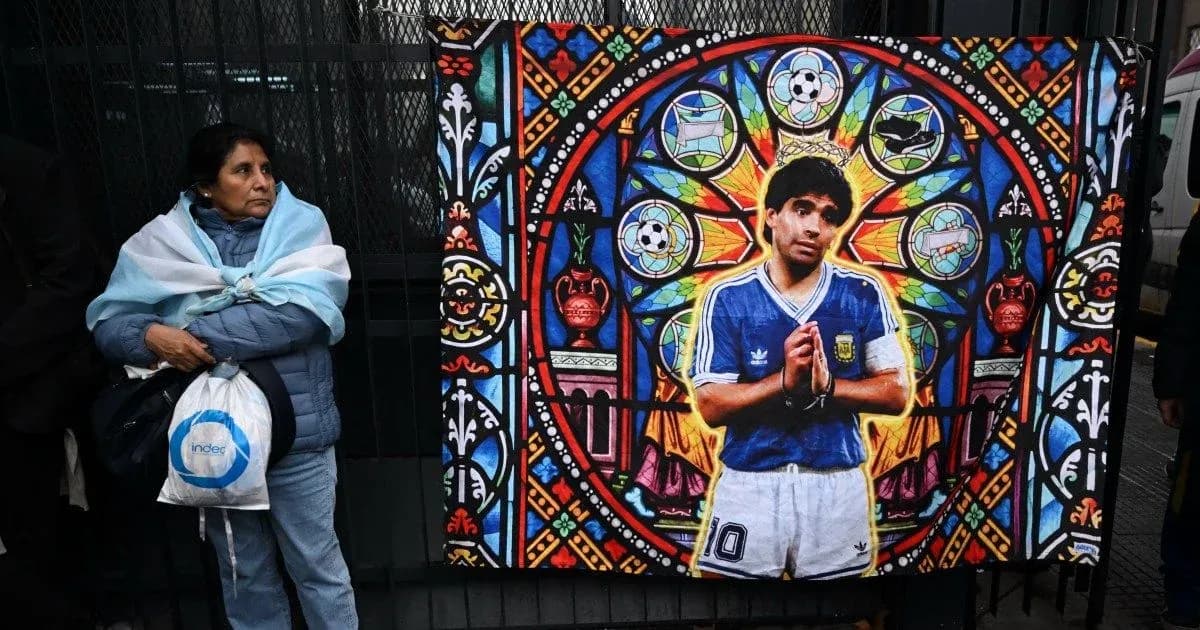
In his final days, Diego Maradona – a man who once seemed to bend the game, and time itself, to his will – lay motionless in bed, swollen and defeated, according to stark testimony delivered in an Argentinian courtroom.
The picture painted by Nicolas Taffarel, Maradona’s personal masseur, was brutally at odds with the legend’s image as football’s eternal street fighter. Speaking at the trial into the circumstances of Maradona’s death in 2020, Taffarel described a man who had stopped fighting.
“He wouldn’t get out of bed, he didn’t want to eat, he didn’t want to wash, he didn’t want to look after his personal hygiene,” Taffarel told the court on Thursday, his voice cracking as he relived those final visits.
A desperate warning, unanswered
Taffarel said he had raised the alarm with Maradona’s medical team, urging them to increase their presence around the 1986 World Cup winner. In an audio message played to the court, he recounted telling them they needed to visit “every day”.
He said he reported what he was seeing. He waited for a reaction. It never came.
“I reported the issues I observed with him, but I saw no concrete action or swift resolution,” he added, on the verge of tears as he spoke about the man he had worked with and cared for.
The signs, he said, were obvious. Maradona was bloated. His legs were swollen. Taffarel remembered being told by doctors to calm down, reassured that the symptoms would pass. You trust the experts, he suggested. You tell yourself it will be fine, that the situation will resolve itself.
“But it didn’t pass.”
The day before the end
On November 24, the day before Maradona died, Taffarel made one more attempt to rouse him. He tried to coax him out of bed, to sit up, to share a mate, the herbal drink that had accompanied so many conversations and so much of Maradona’s life.
The response chilled him.
“He said to me: ‘I don’t want anything, Taffita, that’s it.’ I asked him: ‘What do you mean, that’s it?’ and he replied: ‘Nothing, that’s it’,” Taffarel recalled.
The words “ya está” hung over the courtroom. In Spanish, the phrase can mean “it’s all right” or “it’s over”. In that room, with Maradona’s final hours under the microscope, it sounded far closer to a farewell.
The next day, Maradona was found dead, alone in bed, at the age of 60. The official cause: heart failure and acute pulmonary oedema, a build-up of fluid in the lungs. His death came just two weeks after he had undergone surgery.
A trial that cuts to the core
Seven healthcare professionals are on trial in Argentina, accused of potential negligence that may have contributed to the death of one of the game’s greatest icons. The group faces possible sentences of up to 25 years in prison.
All deny responsibility.
Their defence leans heavily on the limits of their individual roles. Several have argued that their specialisms and the scope of their involvement had no direct link to the clinical causes of Maradona’s death.
The courtroom, though, is not just weighing medical definitions and job descriptions. It is sifting through messages, memories and moments like those described by Taffarel – a man begging doctors to pay closer attention, a patient refusing food, drink and even basic hygiene, a legend reduced to a solitary, swollen figure in a bed.
The trial, which began in mid-April, is expected to stretch beyond this month. As it does, Argentina continues to wrestle with a stark question: did its greatest footballing son slip away because his body finally gave in, or because those charged with protecting him failed to act when the warning lights were flashing?