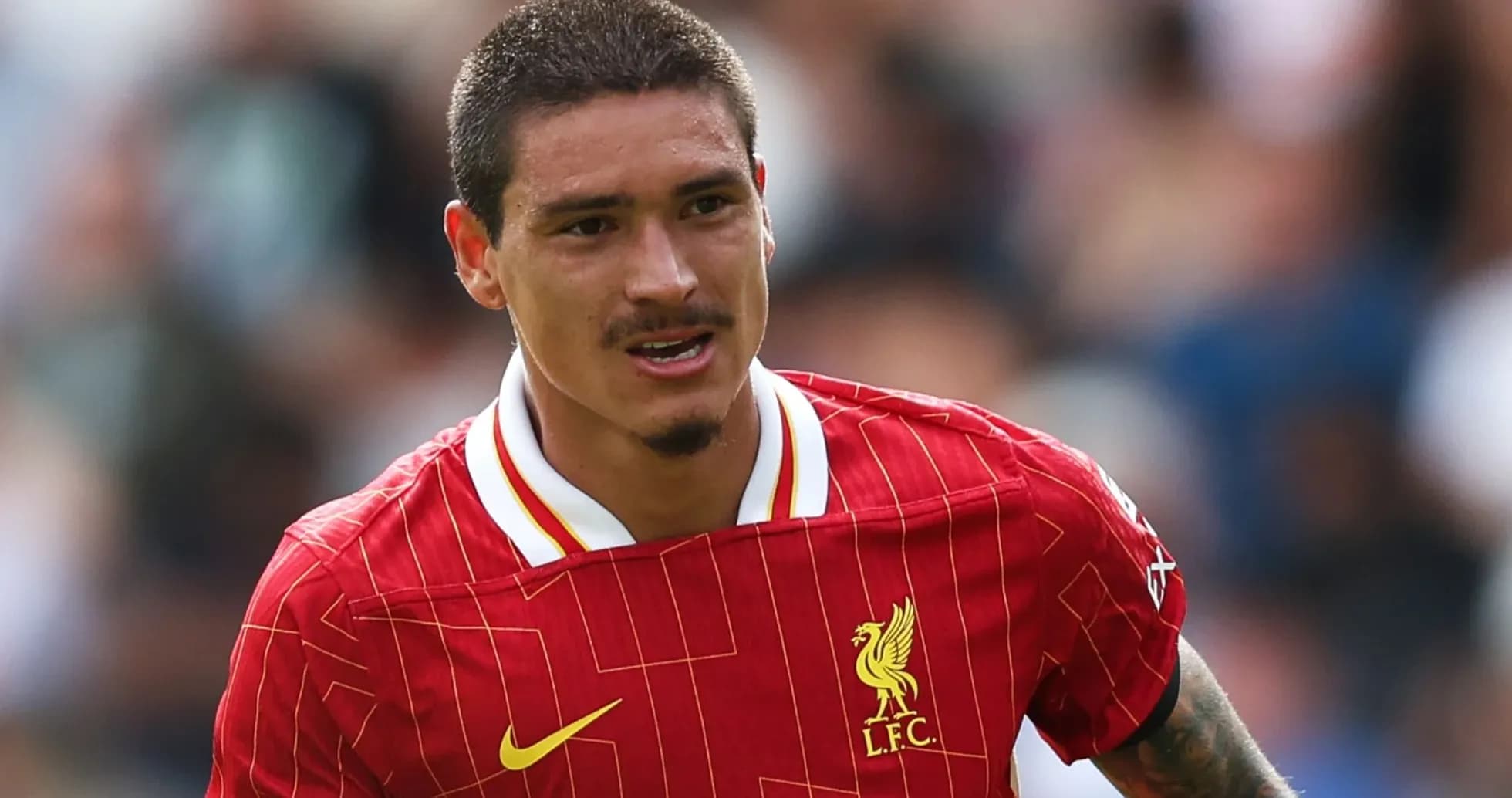
Darwin Nunez: The Next Step in Liverpool's Evolution
When Liverpool were at full volume under Jurgen Klopp, Darwin Nunez was supposed to be the next big soloist in the band. Heavy metal football, a £64 million move from Benfica in 2022, a raw, restless South American forward thrown into the chaos.
It never quite became the epic it was billed to be.
Nunez left Anfield in 2025 with 40 goals from 143 games, a player adored by some for his wild energy but never fully trusted as the leading man. He became a cult figure, not a cornerstone. The finishing was erratic, the movement electric, the overall verdict inconclusive.
Then came the money.
A lucrative switch to Saudi Arabia, a place alongside Cristiano Ronaldo and the cluster of European stars who chased a different kind of glory. At Al-Hilal, though, the project stalled. Foreign-player limits squeezed him out of the domestic squad. From marquee signing to spare part, he has now been told he can find a new club.
Suddenly, the old question returns: could that path twist back towards Liverpool?
Barnes: Nunez and the end of the Klopp template
John Barnes does not dodge it. Speaking to GOAL in association with viagogo’s “World Cuts” campaign, the Liverpool great strips the issue back to something simple: the manager and the model.
“Not if Iraola doesn't want to play in that way,” Barnes says. If Andoni Iraola chooses a style that suits Nunez, the door opens. If he doesn’t, it closes. No sentiment, no nostalgia. Just fit.
“If he says, ‘I want to play in that way’, which Darwin Nunez will fit, then maybe so. But if he says, ‘I don't want to play in a chaotic fashion’, then Darwin Nunez is not meant to come back.”
That word lingers: chaotic. Under Klopp, chaos was a weapon. Under a new regime, it might be a problem.
Barnes is blunt about the shift. “It's not Jurgen Klopp. If Jurgen Klopp was there, he may say we want him back. Then maybe that would be the situation. In fact, he left when Jurgen Klopp was there anyway. So I don't know what the situation is with him.”
The point is clear. Liverpool cannot keep measuring the present against a departed manager. “We can't live on the Jurgen Klopp legacy and say we have to go back to that,” Barnes insists.
For him, the club’s identity now sits in one place: the dugout. Quick, slow, controlled, frantic, heavy metal or something far more measured – whatever Iraola chooses, Liverpool, in Barnes’ eyes, must commit to it.
Salah, non-negotiables and a new hierarchy
That stance leads him to another big name: Mohamed Salah. The Egyptian has gone, released as a free agent alongside Ibrahima Konate and Andy Robertson, three pillars of the Klopp era walking away for nothing. The rebuild is unavoidable.
Barnes, though, challenges the idea that the style of play should be locked in by players, however great. “So Mo [Salah] was wrong in terms of what he said about non-negotiables, we have to play in this particular way. We have to give the manager his chance and say, however he wants to play, he's going to pick the players and we're going to back him.”
The power dynamic he describes is ruthless but realistic. Icons leave. Managers change. The club moves on.
To underline the argument, Barnes reaches for Arsenal. Mikel Arteta finished eighth, then eighth again, then fifth. The knives could have been out at any point. They weren’t.
“[Mikel] Arteta finished eighth in his first year, eighth in his second year, fifth in his third year. They backed him. You can see the outcome.”
The message for Liverpool fans is unmistakable: patience is not a luxury; it is a strategy.
Then comes the sharpest line of all: “Owners and chief executives and hierarchy don't sack managers, fans do. And the fans, unfortunately, lost faith in Arne Slot. So the decision had to be taken.”
Slot’s short-lived tenure stands as a warning. If Iraola stumbles early, what happens next?
“Now if Iraola loses two or three matches in the first month, are we then going to sack him?” Barnes asks. He points at Manchester United’s post-Ferguson spiral: David Moyes, Louis van Gaal, Jose Mourinho, all judged against a ghost.
If you're going to hold on to Jurgen Klopp’s legacy, we're not going to get a manager who is going to come to Liverpool and be successful. Forget about that.
Transfers, trust and the temptation of the market
With Salah, Konate and Robertson gone, the obvious question is who comes in. The answer, in Barnes’ view, is not “everyone”.
Liverpool have already lived through one big-spend misfire. “When Arne Slot came, we signed [Federico] Chiesa and [Wataru] Endo, who didn't play and we won the league. So is the solution to sign players?”
He doesn’t think so. “We signed four players, £400 million, but that didn't work. Is the solution to the problem signing players? We have enough players. We have good enough players. Now, if we need a centre-back, we get a centre-back.”
This is not a call for austerity, but for clarity. Sign what you need, not what the market dangles in front of you.
Barnes even drills down to academy prospects. Talk of a move for Yan Diomande prompts another concern. “If we sign a player and we talk about [Yan] Diomande coming, what's going to happen to [Rio] Ngumoha? We're going to set him back.”
He circles back to his core belief. “So for me, we've got enough players now. If we can get better players and the manager wants more, fine. But for me, I think the players we have are good enough. We have to trust them. We have to trust the manager and get on with it.”
Where does that leave Nunez?
All of this frames the Nunez question in a different light. This is not about romance, or about unfinished business. It is about whether a 26-year-old forward, currently battling to restart his career after a difficult spell in Saudi Arabia, fits the football Iraola wants to play.
Nunez, now sporting a braided look at the 2026 World Cup, remains a fascinating talent. He is unpredictable, explosive, capable of tearing games open or leaving them untouched. Under Klopp, that volatility was tolerated, sometimes even celebrated. Under Iraola, it will either be harnessed or rejected.
Liverpool need signings. They need a new spine, new leaders, new ideas. What they do not need, in Barnes’ eyes, is to be dragged backwards by the memory of what once worked.
Whether Nunez becomes part of the next version of Liverpool will say less about him and more about the kind of team Iraola wants this club to be.