Cristiano Ronaldo's Last World Cup Match: A Legend's Farewell
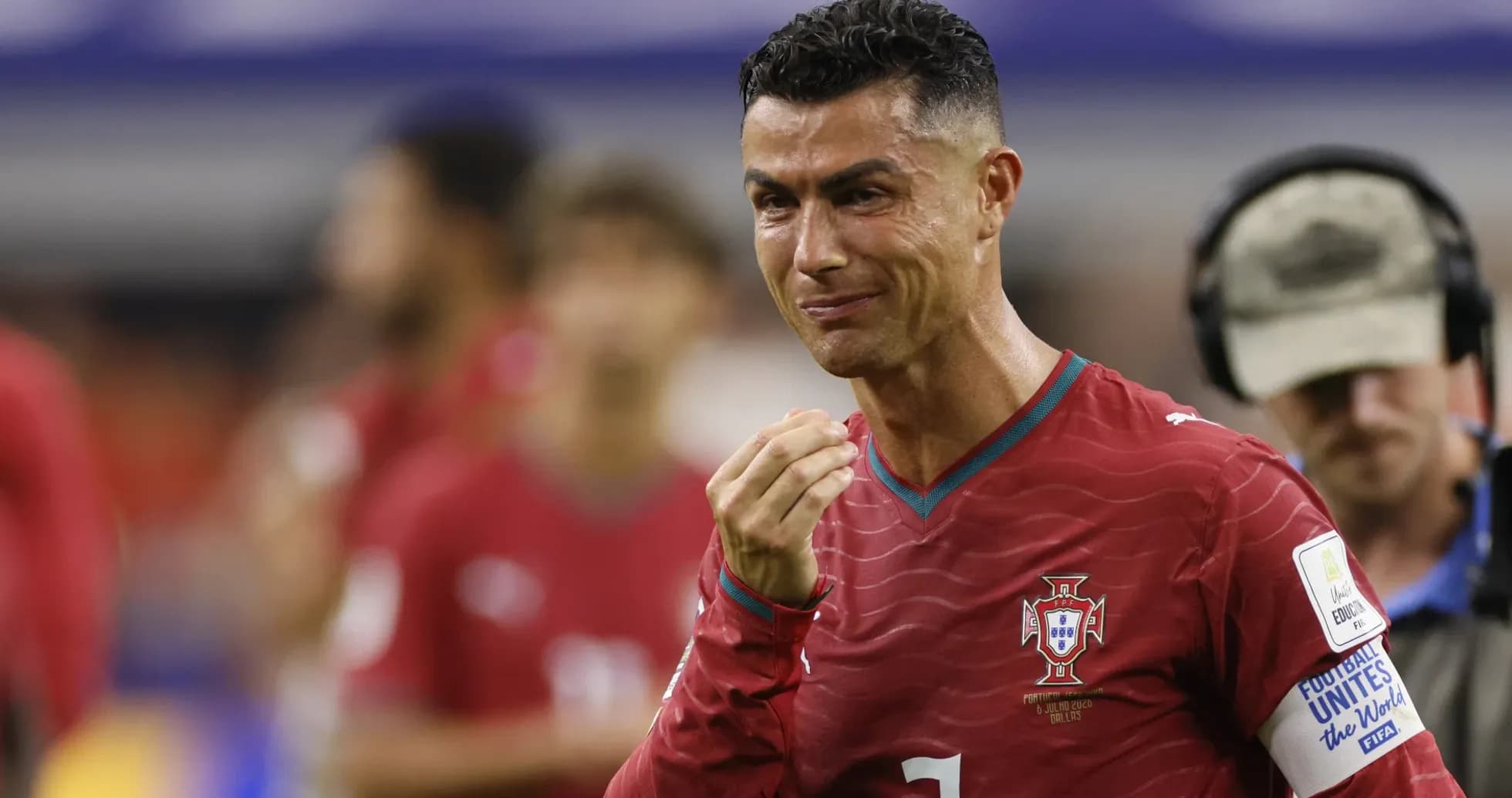
Cristiano Ronaldo walked off alone, head bowed, into the Texas night. No lap of honour, no final roar, just the slow trudge of a 41-year-old who has carried a dream for two decades and watched it slip away with a 1-0 defeat to Spain.
This was his last World Cup match. It looked like it.
The Portugal captain, one of the greatest to play the game, fought back tears as the reality set in: there will be no World Cup winner’s medal to add to that glittering, almost absurdly crowded trophy cabinet. The biggest prize of all has eluded him, and on this stage, in this last-16 tie at the home of the Dallas Cowboys, he could not bend the game to his will.
“That’s football, that’s the life of a footballer,” he said afterwards, voice heavy with the kind of exhaustion that goes beyond 90 minutes. “Sometimes you win, sometimes you lose, and you have to move on.”
He insisted he will step away and think about what comes next. For now, he leaves the World Cup “with a clear conscience,” as he put it. He reminded everyone that the greatest title he won with Portugal came in 2016, at the Euros, a triumph he considers “just as significant as a World Cup.”
It is a line that sounds defiant. It also sounds like a man trying to make peace with the one gap he could never fill.
A giant on the periphery
Ronaldo’s best World Cup run will remain the semifinals 20 years ago in 2026. That, too, says something about the journey. So does this performance.
Against Spain, he was a peripheral figure, stationed through the centre of a blunt Portugal attack that never quite found its rhythm. Three efforts at goal, no real sense of inevitability, no feeling that he might suddenly detonate the match as he once did with frightening regularity.
At one point, as a teammate’s pass went astray, he flung his arms into the air in frustration. It was a flash of the old Ronaldo, the perfectionist who demands more from everyone, including himself. But the response never came. The clock kept ticking. Spain held firm. The pressure Portugal tried to build never truly caught fire.
He finished the tournament in North America with three goals: a brace in a 5-0 rout of Uzbekistan and a penalty against Croatia in the last 32. No assists. No defining moment. For a man whose international career has been one long highlight reel, this farewell felt oddly muted.
When the final whistle blew, he did not wait for the crowd to script his exit. He walked off on his own.
From Madeira to the world
The contrast with the arc of his life could not be sharper.
Ronaldo’s story began in a poor family on Madeira, with an alcoholic father and a childhood that offered no guarantees. From there, he built an empire. Sporting Lisbon first, then the explosion into superstardom at Manchester United, where he became a global icon and a Champions League winner. Real Madrid followed, and with it four more European crowns and a goal-scoring record that rewrote the standards for forwards.
Then Juventus. A return to United. Now Al Nassr, the figurehead of Saudi Arabia’s push for footballing relevance.
Along the way, he became the leading scorer in the history of men’s international football. He collected five Ballon d’Ors. He turned his name into a brand, his celebration into a global ritual. “Siuuu!” echoed from playgrounds to packed stadiums, mimicked by star-struck children who knew every step of his routine.
Off the pitch, he crossed another frontier: the first billionaire footballer, a social media phenomenon with 671 million Instagram followers, a presence that extends far beyond the white lines of any stadium.
This is the scale of the man walking away from the World Cup stage without the trophy he chased longest.
The weight of time
In recent years, the narrative has shifted. Ronaldo’s powers, once so overwhelming, have ebbed. The electric acceleration, the devastating step-over, the ability to glide past defenders at will – all of that has faded. In response, he reinvented himself, moving infield from the wings to become a more traditional No 9, living in the penalty area, hunting chances rather than creating them.
The goals kept coming, but the debate grew louder. Had he stayed too long at the top level with Portugal? Was the team bending itself around a legend whose influence was no longer matched by his output?
Ronaldo and national team coach Roberto Martinez have both been accused of stretching this international career beyond its sell-by date. Against Spain, Martinez threw on two double substitutions late in the game, searching desperately for a spark. Through it all, Ronaldo stayed on, a permanent fixture, the one piece the coach would not move.
On the eve of the match, Ronaldo had tried to frame his legacy in broader terms. “I am not going to be more Cristiano Ronaldo or less because I win the World Cup,” he said.
It was a statement of identity, a reminder that his place in the sport’s history does not hinge on a single tournament. He is right. And yet, standing in Texas, on the wrong end of a 1-0 scoreline, the absence of that one trophy felt heavier than ever.
There will be no Hollywood ending to this World Cup story. No last, spectacular twist. Just a 41-year-old legend, walking alone down the tunnel, leaving the biggest stage with everything – except the one thing he wanted most.