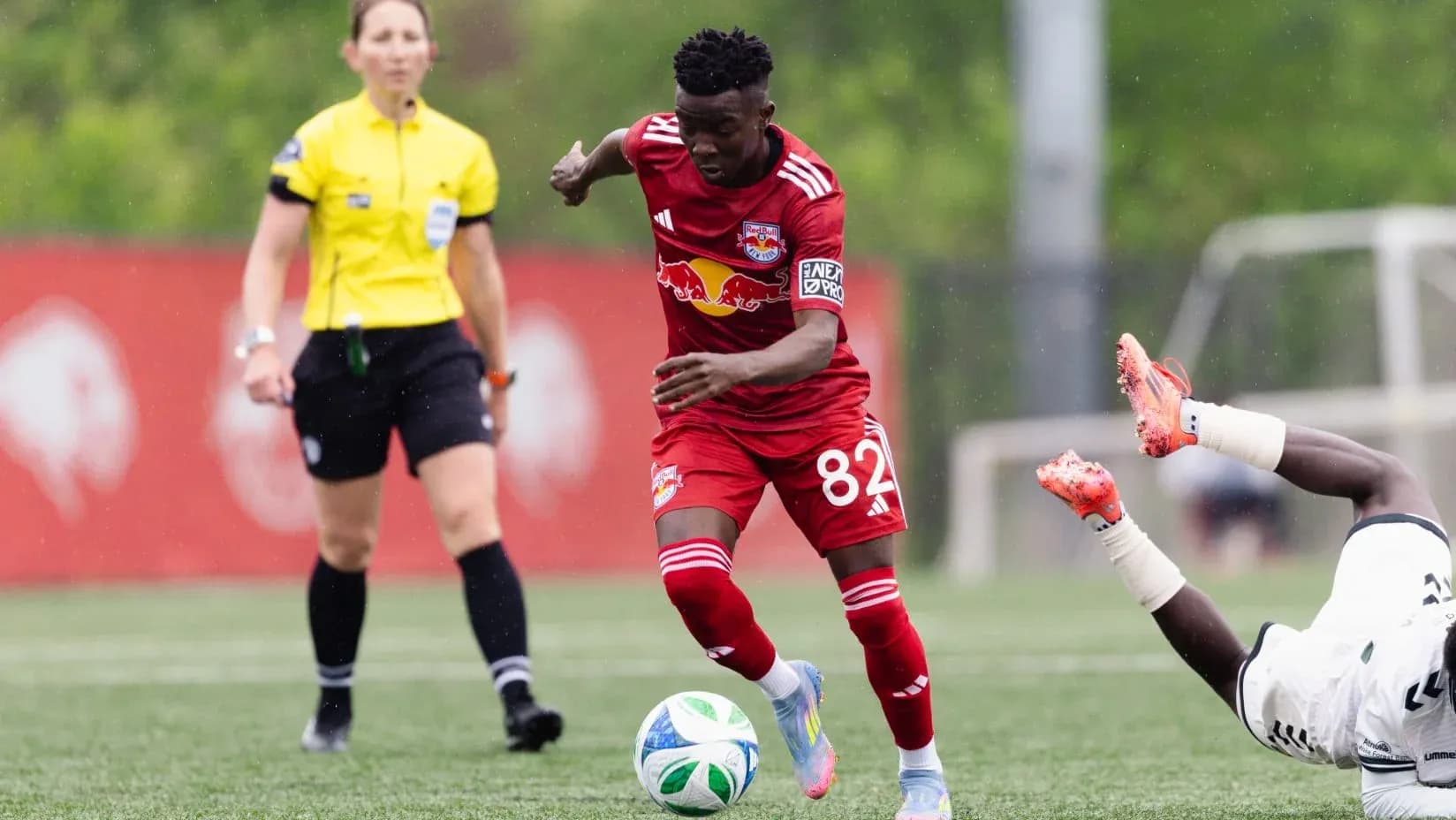
Connecticut FC Upsets New York RB II in MLS Next Pro Clash
Under the lights at MSU Soccer Park, this MLS Next Pro group-stage meeting ended with a jolt to the established order. New York RB II, the side sitting 2nd in the Eastern Conference and 1st in the Northeast Division heading into this game, were beaten 3–1 at home by Connecticut FC, a team that arrived ranked 13th in the conference and 7th in the division. Over 90 minutes, the visitors flipped the script: a side with a negative overall goal difference of -5 and only 0.8 goals per game at home showed that on their travels, where they average 1.8 goals per match, they can be a very different animal.
For New York RB II, this result jars against their seasonal DNA. Overall they had taken 23 points from 11 matches, with a strong attacking profile: in total this campaign they averaged 2.3 goals scored per game and only 1.5 conceded. At home, the numbers were even more assertive in attack, with 2.6 goals scored on average. Yet Connecticut exposed the fragility behind that front-foot approach. Heading into this game, New York RB II were conceding 1.7 goals per match at home, and the visitors punished that looseness with ruthless efficiency, striking twice before the interval and managing the second half on their terms.
Tactical Analysis
Tactically, both lineups told a story of youth, rotation and a willingness to trust academy products. New York RB II’s starting XI – A. Stokes, D. Gjengaar, A. Sanchez, J. Masanka Bungi, C. Faello, N. Worth, D. Cadigan, P. Sokoloff, B. Rodriguez, M. Jimenez and D. Nelich – had no declared formation in the data, but the profile suggests a high-energy, multi-line press with interchangeable roles. The bench, featuring A. Causey, A. Modelo, A. Wilson, M. Odeyinka, M. Morigi, I. Paola, S. Kone, M. Sissoko and A. Nasser, underlined the depth of attacking and midfield options, but also the absence of a clear, experienced spine to steady the game once it tilted away from them.
Connecticut FC’s XI, by contrast, looked balanced and clearly structured even without an explicit formation: G. Rankenburg in goal, protected by R. Van Hees, J. Stephenson, L. Kamrath and A. Applewhaite; a midfield unit of D. Lacy, S. Sserwadda and R. Mora-Arias; and a front line of I. Kasule, B. Tanyi and Caua Paixao. On the bench, coach options like A. Monis, E. Gomez, H. Kouonang, L. Goddard, D. D’Ippolito, J. Medranda and N. Koloniaris gave Connecticut fresh legs in every band of the pitch. It was a squad built to survive pressure and then strike when the spaces opened.
Disciplinary Profile
The “tactical voids” in this contest were less about absences – there were no officially listed injuries or suspensions – and more about structural risk. New York RB II’s disciplinary profile this season hinted at volatility. In total this campaign, 37.50% of their yellow cards have come between 76–90 minutes, with another 20.83% between 61–75 minutes, and they have seen a red card in the 61–75 range. That pattern suggests a team that often plays at the edge late in games, perhaps chasing results or defending leads with aggressive pressing. Connecticut FC, meanwhile, have their own edge: 26.67% of their yellows arrive between 76–90 minutes, and they have a red card in that same late window. This was always likely to be a match where the final quarter-hour would be chaotic and card-heavy.
First Half Performance
The first half, however, belonged to Connecticut. They arrived with a modest overall attacking record of 1.4 goals per game, but on their travels that figure jumps to 1.8, almost matching New York RB II’s home average. With B. Tanyi and Caua Paixao stretching the back line and I. Kasule drifting into pockets, Connecticut repeatedly found space behind New York’s aggressive front press. S. Sserwadda and R. Mora-Arias were the quiet controllers, breaking New York’s rhythm and feeding early passes into the channels. By half-time, the visitors led 2–0, a reflection of how their away identity – compact, direct, opportunistic – was perfectly calibrated to punish a high-line side conceding 1.7 at home.
The “Hunter vs Shield” narrative was inverted here. On paper, New York RB II’s attack – 25 goals overall before this game, with 18 at home – should have overwhelmed a Connecticut defence that had conceded 18 in total, including 11 on their travels at an away average of 1.8 per match. Instead, Connecticut’s shield held firm. G. Rankenburg marshalled his area with authority, while the back four of Van Hees, Stephenson, Kamrath and Applewhaite kept New York’s forwards in front of them, refusing to be dragged into the wide-open transitions that usually fuel New York’s goal glut.
Midfield Battle
In the “Engine Room” battle, New York’s midfield trio, with players like N. Worth and P. Sokoloff trying to dictate tempo, ran into a Connecticut core that understood when to foul, when to drop, and when to spring forward. Given Connecticut’s season-long pattern of yellow cards – 20.00% between 31–45 minutes and another 20.00% between 46–60 – their midfield is used to walking the disciplinary tightrope. They did so again here, disrupting New York RB II without tipping into the kind of early red that would have changed the contest.
Post-Match Analysis
Following this result, the statistical prognosis for both sides shifts. New York RB II’s overall goals against column, which already showed 1.5 conceded per game, will tick upwards, reinforcing the concern that their attacking firepower is masking a defensive structure too porous for knockout football, even with a positive goal difference of 10 heading into this match. Their lone penalty this season has been converted – 1 from 1, 100.00% – but they did not engineer the kind of box entries here to draw another spot-kick lifeline.
Connecticut FC, conversely, validate their split personality. At home they average only 0.8 goals scored and 1.8 conceded, but away they now have further proof that their 1.8 goals per game on their travels are no anomaly. Their overall goal difference of -5 remains a warning sign, but nights like this suggest that in a two-legged or neutral-venue 1/8 final scenario, they can be a dangerous underdog: compact, disciplined, and capable of landing heavy blows when the favourite opens up.
In pure xG terms – even without the raw model values – the shot profiles implied by these season numbers point to a future in which New York RB II must tighten their defensive zones between the 60th and 90th minutes, where their card and concession patterns converge, while Connecticut can lean into an away blueprint that trades territory for high-quality transitions. If this were a playoff dress rehearsal, Connecticut FC leave MSU Soccer Park with more than three points; they leave with a tactical script that can travel anywhere.