Colombia Dominates Ghana in Tactical Showcase
Colombia’s 1-0 win over Ghana at Arrowhead Stadium in this World Cup Round of 32 tie was a territorial and structural domination more than a dramatic contest. Nestor Lorenzo’s side imposed their 4-3-3 from the opening minutes, translating 61% possession, 20 total shots and 2.18 xG into a single but sufficient strike, while Carlos Queiroz’s 4-1-4-1 Ghana side were pinned back, limited to 8 shots and 0.26 xG and, crucially, failed to record a single shot on target. The pattern was clear: Colombia built patiently and aggressively in Ghana’s half, Ghana defended deep and relied on rare transitions that never truly materialised.
The key structural battle was in midfield. Colombia’s three of Gustavo Puerta, Jefferson Lerma and Jhon Arias gave Lorenzo a flexible triangle: Puerta and Lerma as the double pivot in early build-up, Arias stepping higher to become an extra forward between the lines. With 586 passes and a 91% completion rate (532 accurate), Colombia circulated the ball with control, using the full-backs Daniel Muñoz and Johan Mojica to create width and stretch Ghana’s 4-1-4-1 into a flat back five at times. This forced Thomas Partey, the lone holder, into constant lateral shifting, opening lanes into James Rodríguez and the front line.
Ghana’s 4-1-4-1 on paper became a 4-5-1 without the ball. Caleb Yirenkyi and Kwasi Sibo, nominally advanced midfielders, were dragged back alongside Antoine Semenyo and Iñaki Williams to form a compact band of four ahead of Partey. The idea was to close central corridors and funnel Colombia wide. However, Colombia’s positional play was disciplined: Luis Díaz and Jhon Córdoba occupied the half-spaces and central channel, while James Rodríguez drifted into pockets to receive on the half-turn. The volume of Colombian shots inside the box (12) versus Ghana’s (2) underlined how consistently the South Americans managed to access dangerous zones.
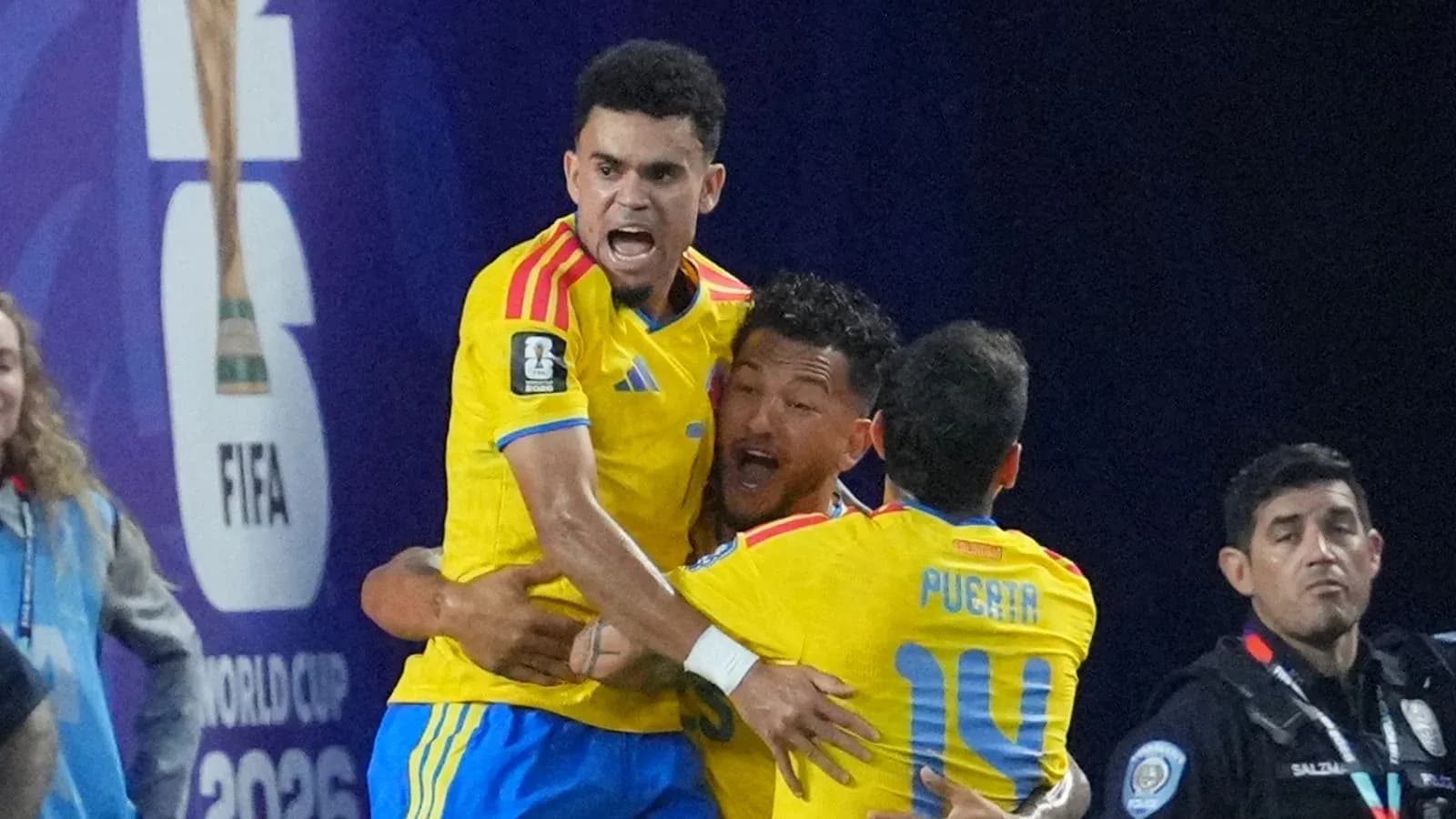
The decisive phase came early, and it revealed Lorenzo’s willingness to adjust quickly. At 8', Jhon Córdoba (OUT) was withdrawn for Luis Javier Suárez (IN), a bold attacking substitution so early. This tweak sharpened Colombia’s pressing and off-ball running. Six minutes later, the change paid off: at 14', Jhon Arias arrived from midfield to score, assisted by Luis Javier Suárez, attacking the interior channel that Ghana’s shifting block had left exposed. The pattern — third-man runs from midfield exploiting Ghana’s narrowness — became a recurring theme even if it did not produce further goals.
Ghana’s response was mostly reactive. With only 376 passes at 83% accuracy (312 accurate), they struggled to construct through Colombia’s first line. Jordan Ayew was often isolated against Davinson Sánchez and Jhon Lucumí, who held a high line and stepped aggressively into duels. When Queiroz tried to change the dynamic on 62', he introduced Abdul Fatawu Issahaku (IN) for Iñaki Williams (OUT) and Elisha Owusu (IN) for Kwasi Sibo (OUT), shifting towards more direct running and an extra stabiliser in midfield. Yet the underlying problem remained: Ghana could not progress centrally against Colombia’s compact 4-3-3 mid-block, and their rare shots came from low-value, outside-the-box positions.
Defensively, Colombia’s back four were rarely stretched. The team committed 14 fouls to Ghana’s 10, a reflection of how often they were counter-pressing in advanced zones rather than being forced into last-ditch defending. The yellow cards — Jhon Arias for “Tripping” at 12' and Richard Ríos for “Tripping” at 78' — came in midfield contests, not in emergency situations in front of goal. That aligns with the shot data: Ghana had 8 attempts but none on target, and Colombia’s blocked shots figure (4) shows they were the side consistently forcing Ghana’s back line to intervene.
The goalkeeping story is unusually straightforward. Camilo Vargas (Colombia) did not register a single save because Ghana never hit the target; his influence was more about positioning and sweeping behind a high line than shot-stopping. By contrast, Lawrence Ati Zigi (Ghana) was central to keeping the scoreline respectable. He made 7 saves and, combined with Ghana’s 5 blocked shots, anchored a defensive effort that, despite conceding 8 shots on goal and 20 in total, limited Colombia to just one actual conversion. The goals prevented metric for Ghana, 1.92, underlines how much Ati Zigi (Ghana) outperformed the expected outcome given the quality of chances faced.
Lorenzo’s in-game management was coherent with the tactical plan. At 46', James Rodríguez (OUT) made way for Richard Ríos (IN), adding fresh legs and more defensive energy to protect the lead without abandoning the 4-3-3 structure. Later, at 73', Jhon Arias (OUT) was replaced by Juan Fernando Quintero (IN), a move that reintroduced creativity between the lines while maintaining control of the ball. Finally, at 90', Luis Díaz (OUT) was withdrawn for Jaminton Campaz (IN), a time-management and fresh-legs substitution to see out the match and defend transitions.
Queiroz’s substitutions were more about damage limitation and chasing a game that Ghana never truly threatened to level. Marvin Senaya (OUT) for Alidu Seidu (IN) at 13' came early, perhaps to adjust the right side’s defensive stability. Later, the double change at 79' — Jordan Ayew (OUT) for Ernest Nuamah (IN) and Caleb Yirenkyi (OUT) for Prince Kwabena Adu (IN) — injected pace and directness, but by then Colombia’s block was set and the match rhythm favoured the team in possession.
Discipline also reflected the game’s territorial tilt. Ghana collected three yellows: Caleb Yirenkyi for “Holding” at 49', Abdul Fatawu Issahaku for “Unsportsmanlike conduct” at 66', and Alidu Seidu for “Tripping” at 76'. All three came as Colombia probed in Ghana’s half, forcing defenders and midfielders into recovery actions and emotional responses. Colombia’s two yellows, both for “Tripping”, were the by-product of aggressive counter-pressing rather than sustained defending near their own box.
Statistically, the verdict is clear. Colombia’s 61% possession, 586 passes and 2.18 xG against Ghana’s 39%, 376 passes and 0.26 xG describe a one-sided tactical contest. Colombia generated more than double the total shots (20 to 8), quadruple the shots on goal (8 to 0) and six times the shots inside the box (12 to 2). The combination of Colombia’s attacking structure and Ghana’s deep, reactive block created a match where the scoreboard — 1-0 — flatters the losing side. The high goals prevented values on both sides (1.92 for each) add a final layer: Colombia under-finished relative to their chances, while Ati Zigi (Ghana) over-performed, ensuring that this tactical domination translated into a narrow, rather than emphatic, victory.