Colombia Dominates Ghana in World Cup Match
KANSAS CITY, Mo. — The heat hit first.
Eighty-eight degrees at kickoff, a heat index pushing 96, the air at Arrowhead Stadium hanging thick over a vast bowl painted almost entirely yellow. Hydration breaks, so often a talking point, suddenly felt like survival tools. Players stretched, grimaced, grabbed at calves. The stands never stopped singing.
Colombia never really stopped controlling.
Jhon Arias struck early, finishing off a ruthless move in the 14th minute, and that was enough for Los Cafeteros to grind out a 1-0 win over Ghana on Friday night, booking their place in the World Cup round of 16. It was not a thrashing. It didn’t need to be. It was the kind of professional, composed performance that makes coaches and tournament rivals take notice.
Early blow, instant answer
The night could have wobbled in the opening exchanges. Jhon Córdoba, Colombia’s starting forward, pulled up just minutes into the match, clutching his groin. A key attacking piece gone almost before the game had begun, and on a night when the heat alone threatened to sap legs and minds.
Néstor Lorenzo didn’t hesitate. On came Luis Suárez — the Sporting CP standout, not the Inter Miami icon — earlier than anyone had planned. The change reshaped the game.
Suárez needed barely 10 minutes to tilt the contest. Daniel Muñoz slipped a ball into him on the right, and Suárez didn’t overcomplicate it. One glance, one sharp cross fizzed across the face of goal. Arias darted into the space, met it first time, and flicked it beyond Lawrence Ati Zigi.
One chance. One clean finish. One-nil Colombia.
The goal crystallized the gulf in rhythm and confidence between the teams. Colombia, already one of the tournament’s most assured sides through the group stage, settled into their patterns. Ghana, chasing shadows and the game, never truly found a way to unsettle them.
Colombia in command
Colombia arrived in Kansas City having conceded just once in three group matches, after wins over Uzbekistan and Congo and a draw with Portugal. Their form had been so convincing that Spain coach Luis de la Fuente had openly called them “a candidate to win the World Cup.”
The evidence on this night did nothing to weaken that claim.
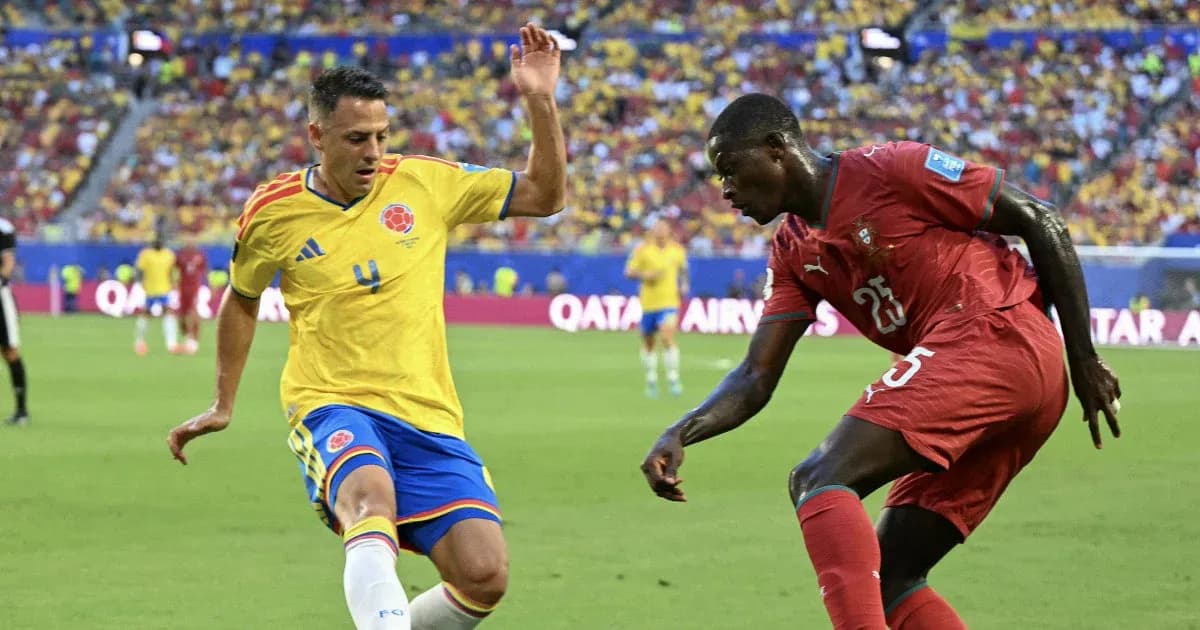
They dominated the ball as expected, pinning Ghana back for long stretches. The Black Stars had averaged only 36.1% possession in the group stage — the second-lowest of any team to advance — and those attacking limitations were laid bare again. When Ghana did piece together an attack, Colombia’s response was swift and punishing: a turnover, a burst of acceleration from Suárez or Luis Díaz, midfielders joining in waves.
The pattern repeated. Ghana tried to breathe. Colombia stole the oxygen.
Díaz thought he had finished them off in the 56th minute, racing through to bury a chance that sent the Colombian fans into another explosion of noise. The flag cut it short. Offside. Moments later, Díaz was denied again, this time by a superb, point-blank save from Ati Zigi.
Ati Zigi became Ghana’s lifeline. He finished with seven saves, several of them sharp, reflex stops that kept the scoreline respectable and the tension alive. Without him, this could have looked like a rout on paper, even if the heat ensured it never quite became one on the pitch.
Ghana’s struggle in the furnace
Ghana arrived as underdogs and overachievers. This is the same program that failed to qualify for the Africa Cup of Nations last year for the first time in nearly 20 years, yet somehow fought its way out of a group topped by England and Croatia. They had already silenced a few doubters just by reaching this stage.
Against Colombia, the question was blunt: could they create enough?
The answer, over 90 sweltering minutes, was no. Ghana finished with eight shots. Not a single one tested the goalkeeper. They probed occasionally, found pockets of space here and there, but the final pass, the decisive touch, never arrived. Every half-opening seemed to end with a Colombian interception, a tackle, or a counterattack flashing the other way.
The heat did them no favors. Nor did Colombia’s relentlessness.
Hydration breaks arrived like pit stops in a marathon. Players doubled over, stretched hamstrings, poured water over their heads. Cramp claimed legs on both sides. The tempo dipped at times, but Colombia’s control never really did.
A yellow wall and a growing belief
Inside Arrowhead, the setting told its own story. The home of the NFL’s Chiefs is normally a sea of red, broken by a band of yellow seats. On this night, that band disappeared into a single, roaring mass of Colombian yellow that filled the entire bowl two hours before kickoff.
Drums, flags, horns, chants — all of it wrapped the stadium in a South American soundtrack. Every Colombian touch was cheered, every Ghanaian misstep groaned at, every Colombian counterattack greeted with a rising wave of noise.
This is a team their fans expect to go deep, not just make up the numbers. The performance matched that ambition. Calm on the ball. Aggressive in transition. Defensively disciplined. The kind of complete tournament display that doesn’t rely on chaos or luck.
Ghana, for all their effort, walked off without a shot on target and without many complaints. They had been outplayed by a side operating at a higher level, both technically and collectively.
Colombia walked off with something far more valuable than a narrow win: confirmation that their group-stage form was no mirage.
Next stop: Vancouver, British Columbia, on Tuesday, and a round-of-16 clash with Switzerland for a place in the quarterfinals. On current evidence, and with a yellow wall following them wherever they go, who really wants to be the one standing in their way?