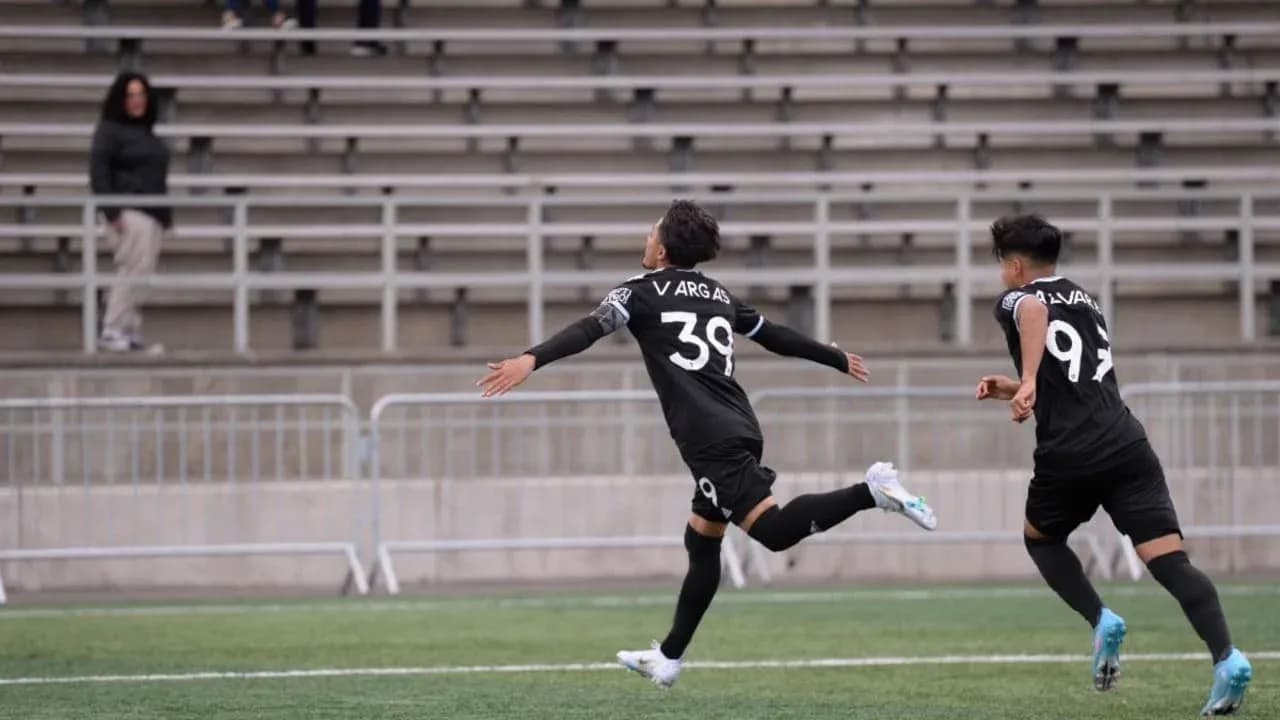
Chattanooga Edges Carolina Core 1–0 in MLS Next Pro Clash
Finley Stadium underlined its reputation as a proving ground rather than a playground. Chattanooga edged Carolina Core 1–0 in MLS Next Pro group-stage action, a narrow scoreline that felt like the distilled essence of where these two sides stand in their 2026 journeys.
I. The Big Picture – contrasting trajectories in the Eastern field
Following this result, Chattanooga sit on 19 points from 11 matches, ranked 3rd in the Central Division and 6th in the Eastern Conference. Their overall goal difference is +3, built from 19 goals scored and 16 conceded. At home they have been assertive: 6 matches, 4 wins, 0 draws, 2 defeats, with 11 goals for and 9 against. That home goal average of 1.8 for and 1.5 against paints them as proactive and occasionally vulnerable, but rarely dull.
Carolina Core, by contrast, remain a side trying to escape the undertow. They have 8 points from 11 matches, 7th in the Central Division and 15th in the Eastern Conference, with a goal difference of -9 (12 scored, 21 conceded in the standings snapshot; 13 for and 24 against in the broader stats profile). On their travels they have played 6, lost 6, scoring 4 and conceding 12. An away average of 0.7 goals for and 2.3 against underlines why this trip to Tennessee always threatened to be damage limitation as much as opportunity.
Yet both teams arrived with a certain edge. Chattanooga’s recent form line of “LWLLWWLLWWW” shows a streaky side learning to channel volatility into momentum. Carolina’s “LLLLLLWLLWL” tells of a team that finally tasted a win but still lives on the brink every weekend.
II. Tactical Voids – absences and discipline in a bruising league
There was no official list of absentees, but the lineups themselves offered clues to how each coach chose to plug structural gaps.
For Carolina, Donovan Ricketts sent out a side that blended youthful energy and physical presence. N. Holliday in goal fronted a back line anchored by N. Martinez, S. Yepes Valle and M. Diakite, with D. Colon adding bite. In midfield, R. Montenegro and T. Zeegers looked tasked with knitting transitions, while D. Diaz and T. Raimbault supported the forward thrust of D. John and A. Sumo.
Chattanooga’s selection spoke of balance. Veteran goalkeeper E. Jakupovic provided calm behind a defensive unit of T. Robertson, F. Sar-Sar, M. Hanchard and A. Sorenson. Ahead of them, A. Garcia, L. Husakiwsky and S. Louis formed a hard‑running core, with D. Mangarov and A. Krehl offering creative touches behind the spearhead of Y. Cohen.
Disciplinary trends from the season framed the risk each side carried. Chattanooga’s yellow-card distribution spikes between 31-45 minutes and 61-75 minutes (both at 25.00%), with another surge at 76-90 minutes (20.83%). Their red cards are concentrated in the 61-75 and 76-90 windows (50.00% each), suggesting that late in each half they flirt with the line between aggression and self-destruction.
Carolina’s card map is more evenly spread but just as concerning: yellow cards peak in the 46-60 minute band at 21.21%, with heavy activity also between 16-30, 31-45 and 76-90 minutes (all 18.18%). Crucially, both of their red cards this season have arrived in the 46-60 minute window (100.00%), turning the start of the second half into a recurring danger zone.
In a tight 1–0, the absence of red-card drama will have felt like a small tactical victory for both benches, especially given how often these sides have sabotaged themselves after the interval.
III. Key Matchups – Hunter vs Shield, Engine Room vs Enforcer
Without league-wide top-scorer data, the “Hunter vs Shield” narrative becomes more collective than individual. Chattanooga’s attack is defined by timing rather than a single talisman. Overall, they score most frequently between 76-90 minutes (26.32%), with strong secondary peaks from 31-45 and 46-60 (both 21.05%). That late-game surge is the hallmark of a side that can raise tempo and risk as legs tire.
Carolina’s defensive frailty dovetails ominously with that pattern. They concede heavily between 16-30 and 31-45 minutes (both 22.73%), but there is also a significant 18.18% concession rate in the 76-90 window. That intersection—Chattanooga’s late push against Carolina’s late wobble—was always likely to decide the narrative. Even if the winning goal did not literally fall in that band, the tactical story of the match was Chattanooga leaning into their ability to play with urgency late on, while Carolina struggled to maintain structure under fatigue.
In midfield, the “Engine Room” clash was about Chattanooga’s trio of A. Garcia, L. Husakiwsky and S. Louis against the Carolina axis of R. Montenegro and T. Zeegers. Chattanooga’s season-long scoring spread—goals coming in every 15-minute window from 0-75—reflects a team comfortable building pressure in phases. Carolina’s attacking map is more compressed: 45.45% of their goals arrive between 46-60 minutes, with the rest split evenly between 31-45, 61-75 and 76-90 (all 18.18%). They are at their most dangerous right after half-time, precisely when Chattanooga’s card discipline can falter.
The battle, then, was about who could own that hinge between the first and second halves. Chattanooga’s midfield needed to avoid reckless challenges while managing Carolina’s post-interval surge. Carolina, for their part, had to turn that 46-60 window into more than just sterile possession, especially given they have failed to score in 3 away fixtures overall.
IV. Statistical Prognosis – xG by proxy and defensive resolve
Without explicit xG numbers, the season profiles stand in as a rough proxy. Heading into this game, Chattanooga’s overall scoring average of 1.7 goals per match and conceding 1.5 suggested a typical match profile hovering around 3.2 combined goals. Carolina’s overall averages of 1.2 for and 2.2 against pointed to 3.4. On paper, this fixture leaned toward a multi-goal contest.
Instead, Chattanooga compressed the chaos into a controlled 1–0. That outcome aligns with two quieter but telling trends. First, Chattanooga had already kept 2 clean sheets in total this campaign, both at home, and their biggest home defeat margin (1-4) had clearly left a scar; there was a visible intent to protect Jakupovic better. Second, Carolina’s total lack of clean sheets and their record of failing to score in 3 matches on their travels spoke of an attack that too often runs out of ideas in the final third.
The final verdict is that Chattanooga’s defensive solidity on the night outstripped their season average, while Carolina’s attacking limitations fell exactly in line with the numbers. The home side’s late‑phase scoring profile, combined with their capacity to ride out their own disciplinary hot spots, tipped a finely balanced statistical equation in their favour. At Finley Stadium, the margins were thin, but the pattern was clear: Chattanooga are learning how to win tight games; Carolina are still searching for a way to survive them.