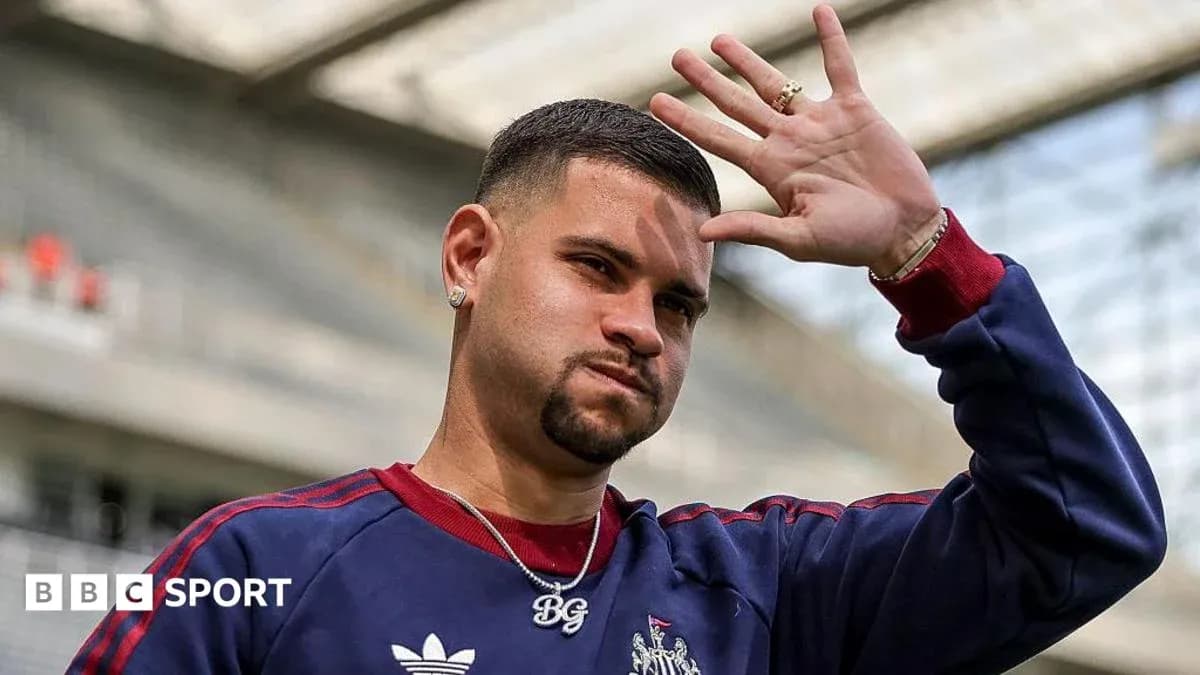
Bruno Guimaraes Leaves Newcastle: A New Chapter Begins
Newcastle United did not come into this summer planning for life without Bruno Guimaraes. They have been forced into it.
The club’s sporting director Ross Wilson has confirmed that the Brazilian’s impending £75m move to Arsenal was driven not by strategy, but by the will of a captain who had emotionally reached the end of his Newcastle journey.
“He effectively told us he wanted to leave and move on,” Wilson explained, laying bare the turning point. Respectful, emotional, but clear. Guimaraes no longer wanted to play for Newcastle United.
Once that truth landed, everything else followed.
A Deal They Never Wanted to Make
Newcastle’s hierarchy insist this was not a sale they had mapped out.
“There’s no part in saying it was part of our strategy and was in our thinking this summer – it wasn’t,” Wilson said. The club had built around Guimaraes, given him the armband, and watched him become the heartbeat of the side. Letting him go was never supposed to be on the agenda.
Yet football plans rarely survive contact with ambition. When a 28-year-old talisman decides his next step lies with the Premier League champions, the conversation changes. Newcastle still held the contract, still held the power, but the emotional weight shifted.
“What we had to weigh up was… he effectively told us he wanted to leave,” Wilson added. Once Arsenal’s offer climbed into what he called “a certain range of number”, Newcastle’s resistance began to soften. They did not roll over, but they did adapt.
Arsenal Push, Newcastle Hold the Line
Behind the scenes, the negotiation carried all the edge you would expect for a player of Guimaraes’ stature.
Newcastle chief executive David Hopkinson hinted that Arsenal’s first moves came in lower, with early figures not matching the club’s valuation for a midfielder who turns 29 in November and has been the face of their resurgence.
Arsenal tried to test the waters. Newcastle pushed back.
“You’re dealing with very sophisticated actors on each side,” Hopkinson said. “That’s what negotiation looks like.”
In the end, the £75m fee landed in the zone Newcastle could live with, even if not quite at the number they had dreamed of.
Hopkinson admitted the club “would have liked an even higher number” for such an influential figure, but framed the outcome as a deal that works on both sides. From Newcastle’s point of view, it is a sale that carries both financial logic and a hint of reluctant pride.
“It’s a fee that satisfies us,” he said. “If you want to put a merchandising spin on it, it’s the highest fee for a player in that position at that age… Is it a good deal for Newcastle United? I believe it is, but Arsenal are getting a very special player and person.”
The Human Cost of a Strategic Shift
For all the talk of numbers, this one hurt.
Guimaraes said goodbye to team-mates and staff in Spain with tears in his eyes before leaving the club’s pre-season camp. This was not a cold, calculated exit. It was a parting loaded with emotion, from a player who had become more than just a name on the teamsheet.
He leaves as the fourth key departure in less than a year. Sandro Tonali has gone to Tottenham Hotspur. Anthony Gordon has moved to Barcelona. Alexander Isak joined Liverpool last summer. One by one, the pillars of Newcastle’s project have been stripped away.
Losing Guimaraes cuts deepest. He was the symbol, the swagger, the link between the stands and the pitch. The player who made Newcastle feel like a club on the rise again.
Now he will wear Arsenal’s colours.
Rebuild Under Pressure
Newcastle have no time to dwell. The market is open, the clock is ticking, and a hole has opened up at the centre of their midfield.
The recruitment team is already at work. Five players have arrived this summer, four of them aged 20 or under, a clear nod to a long-term build. This time, though, the profile must change. The club wants a midfielder with experience, someone who can step into the chaos of the Premier League and not flinch.
They expect to make a couple more additions before the window shuts on 1 September. The temptation, when a star leaves late in the summer, is to throw money at the problem. Wilson made it clear they cannot afford that kind of panic.
They will move. But they refuse to lurch.
“We don’t want to make any mistakes by jumping to do something that we don’t really want to do to tick a box,” he warned.
Newcastle have lost their captain, their talisman, and a symbol of their recent rise. The fee softens the blow. The manner of his departure, respectful but decisive, at least gives them clarity.
Now the question is simple and brutal: can they turn that clarity into a new core before the window slams shut, or will this summer mark the moment their momentum truly stalls?