Brazil's World Cup Collapse: A Cycle of Nostalgia and Missed Opportunities
Brazil’s World Cup collapse did not come out of nowhere. It was built, piece by piece, on a squad that looked backwards while the rest of the world sprinted ahead.
An ageing spine and a tired idea
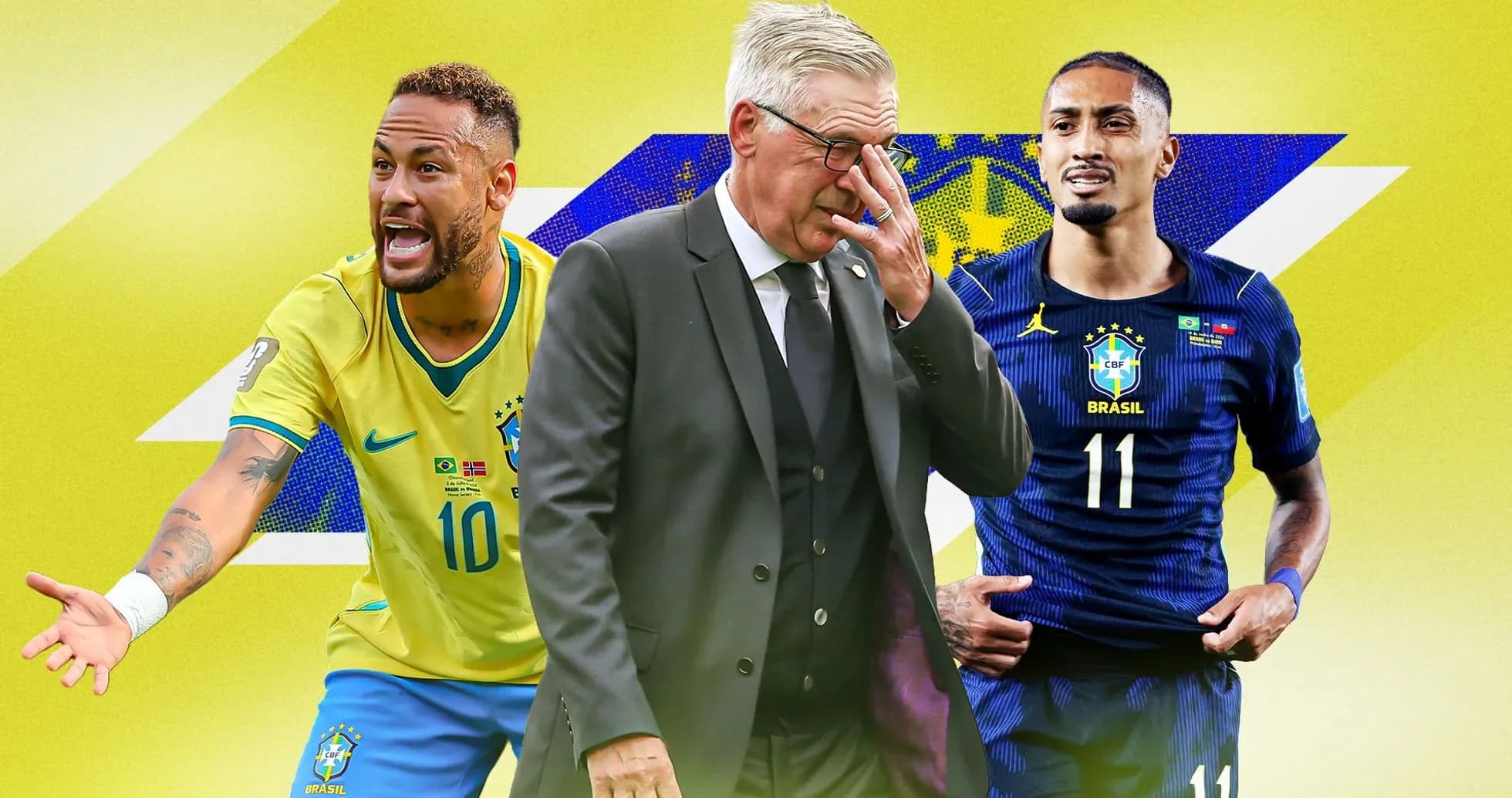
Carlo Ancelotti doubled down on experience. It cost him.
Brazil arrived with three goalkeepers aged 33, 32 and 38. The back line? An average age of 31, anchored by Danilo and Alex Sandro, full-backs who once terrorised Europe but now resemble echoes of a different era.
In midfield, the picture was even starker. Casemiro, 34, again carried the burden. Fabinho, 32, logged significant minutes as well. They were once destroyers of elite midfields; in this tournament, they often looked like men trying to hold back the tide with their bare hands.
There were flickers of tomorrow. Bournemouth’s 19-year-old Rayan and Botafogo’s 25-year-old Danilo hinted at a future that might yet be brighter. Ancelotti, bruised by the exit, did not hide from the obvious.
“We need some young talent, we need some high-level players coming into Brazilian football,” he admitted. The message was clear: the old guard cannot carry this team forever.
Neymar’s ghost and the missing No.9
One selection overshadowed all others. Neymar.
Ancelotti bowed to the noise – from media, from sections of the torcida – and recalled the 34-year-old, despite his last cap coming in October 2023 and a recent history written in medical reports rather than match reports.
Predictably, the gamble backfired.
On the eve of the World Cup, Neymar suffered a calf injury and was ruled out for “two to three weeks”. He missed Brazil’s first two group games and played only 14 subdued minutes against Scotland. His cameo in Miami felt less like the return of a national idol and more like a testimonial appearance – nostalgic, but detached from the brutal reality of tournament football.
Ancelotti did not turn to him at all in the dramatic last-32 win over Japan. Chasing the game against Norway in the round of 16, he finally sent Neymar on for a longer spell. The forward converted a late penalty, but it was a consolation, not a catalyst. For all the noise around his name, his influence on this World Cup was minimal. His international story is almost certainly over.
That made the decision to leave Joao Pedro at home look even worse.
The Chelsea striker, 24, had just produced a debut season at Stamford Bridge worth 29 combined goals and assists. His versatility, his movement, his ability to operate across the front line – everything pointed towards a player made for tournament football. Many simply assumed he would travel, perhaps even start as Brazil’s No.9.
Ancelotti himself admitted when naming the squad that Pedro “probably deserved to be on this list”. Then left him out.
When Neymar broke down again, that call moved from debatable to indefensible.
Ronaldo Nazario did not mince his words.
“I have to be honest, I think this elimination begins with the decisions from the bench,” he said. “I still don’t understand why Joao Pedro was not part of this squad. He has had an exceptional season, he is in form, and Brazil needed a striker who could offer something different.”
In a World Cup defined by fine margins, Brazil deliberately travelled without one of their most in-form forwards. The inquest will circle back to that decision again and again.
Midfield overrun, Guimaraes overworked
The age profile of the squad bled into the structure of the team. Midfield, historically Brazil’s engine room, became a weakness.
Ancelotti initially named just five central midfielders, one of whom – Lucas Paqueta – is more naturally a No.10. Only when right-back Wesley was injured did Manchester United-bound Ederson come in as a late replacement.
That left Bruno Guimaraes with a near-impossible task. The Newcastle captain had to create, cover, and connect. He still delivered four assists, dragging Brazil forward whenever he could, but the lack of support was glaring. Ederson and Danilo saw only scraps of minutes, a clear sign the coach did not fully trust his alternatives.
After the loss to Norway, Ancelotti pointed straight at the heart of the pitch.
“We have to think about the future, but it is very evident that in the midfield, I think that we have to move some players,” he said. It was as close as he came to an admission that the balance had been wrong from the start.
The defining moment of that Norway defeat came from the spot. Brazil earned a first-half penalty. The stadium held its breath, expecting Vinicius, the country’s leading scorer at the tournament and in sparkling form, to take charge.
He didn’t.
Up stepped Guimaraes. His effort was saved. Brazil later fell behind and never found a way back.
Only after the match did Ancelotti reveal the thinking: a data-led hierarchy of takers.
“We did statistics for the players and according to that, Raphinha was the best option,” he explained. “The best person would be Raphinha and then Neymar [who weren’t on the pitch], and after that, Bruno Guimaraes. After Bruno, it would be Martinelli, so we chose Bruno Guimaraes as we felt he would be the best.”
On paper, the logic held. On the pitch, in the moment, it felt like a triumph of spreadsheets over instinct.
Injuries and excuses
Ancelotti will argue, with some justification, that this World Cup was sabotaged by injuries before a ball was even kicked.
Eder Militao, Rodrygo and Estevao Willian were all ruled out before the squad announcement. That meant no first-choice right-back and the loss of two wide players who could have started or changed games from the bench. Brazil arrived diminished, their margin for error already slim.
The bad luck did not stop there. Neymar’s predictable fitness troubles were compounded by two more hammer blows. Raphinha pulled up with a hamstring problem in the first half of the second group game against Haiti and played no further part. Paqueta, another key creative outlet, was forced off at half-time in the knockout tie with Japan.
By the time Norway exposed Brazil’s frailties, the squad looked threadbare in attack and disjointed in midfield. The tactical flaws were Ancelotti’s; the lack of depth was not entirely his doing.
The end of one cycle, the uneasy start of another
For Ancelotti, this failure will be framed as a beginning rather than an end.
“A defeat is the beginning of a new adventure,” he said. “We have to keep improving, to find new ideas. It is not an end, it is the start of a new cycle.
“We will manage this defeat by bringing a fresh impetus to our work and the assessment of the players. We will try to improve and look for new ideas. The same as we did this year.
“I think the work we've done has been good. Football is like this; sometimes you have to manage the sadness of a defeat. I am used to this.”
The words are calm, almost soothing. The reality is harsher.
Brazil leave another World Cup wrestling with the same questions: too much faith in yesterday’s heroes, not enough courage to trust tomorrow’s. The squad needs surgery, not tweaks. Younger legs, bolder calls, less nostalgia.
Ancelotti says this is the start of a new cycle. The real test is simple: when the next squad list drops, will Brazil still be clinging to the past, or will he finally cut the cord?