Boavista’s Fall: A Historic Club Disappears from European Football
Boavista are gone. Not relegated, not restructured, not clinging on in some forgotten corner of the pyramid. Extinct.
A court order issued on 16 July 2026 instructed the Porto club to cease all activities by 31 July and hand over its premises, the final act in a long, messy financial collapse. Years of unpaid debts, failed restructuring attempts and mounting obligations have finally wiped a 123‑year‑old name off the professional game’s landscape.
For Celtic supporters, the news lands with a jolt of nostalgia. Boavista are not just another foreign club disappearing into the small print of football’s financial casualties. They are stitched into some of Celtic’s most vivid European memories.
From Porto to Paradise: The First Meeting
The relationship began in 1975, long before the black-and-white chequered shirts became a familiar sight on European nights.
Celtic drew Boavista in the European Cup Winners’ Cup that season. The first leg in Porto finished 0-0, a tight, cagey affair that set the stage for a decisive night at Celtic Park a fortnight later.
In Glasgow, Celtic did what Celtic so often did in that era. They turned a narrow tie into a statement. Goals from Kenny Dalglish, Shuggie Edvaldsson and Dixie Deans sealed a 3-1 win and a 3-1 aggregate victory, pushing the Scottish champions into the next round and sending Boavista home.
That evening carried a small piece of history too. It was the first time Celtic had worn squad numbers on the back of those famous green-and-white hoops. New numbers, old outcome: Celtic overpowering European visitors under the lights at Paradise.
Larsson, Lisbon’s Shadow and a Semi-Final Epic
For most modern Celtic fans, though, Boavista means one thing: 2003.
The UEFA Cup semi-final. Henrik Larsson. The march to Seville.
The first leg at Celtic Park ended 1-1, the Portuguese side snatching an away goal and taking a dangerous result back to Porto. It felt awkward, nervy. The tie was alive, but finely balanced.
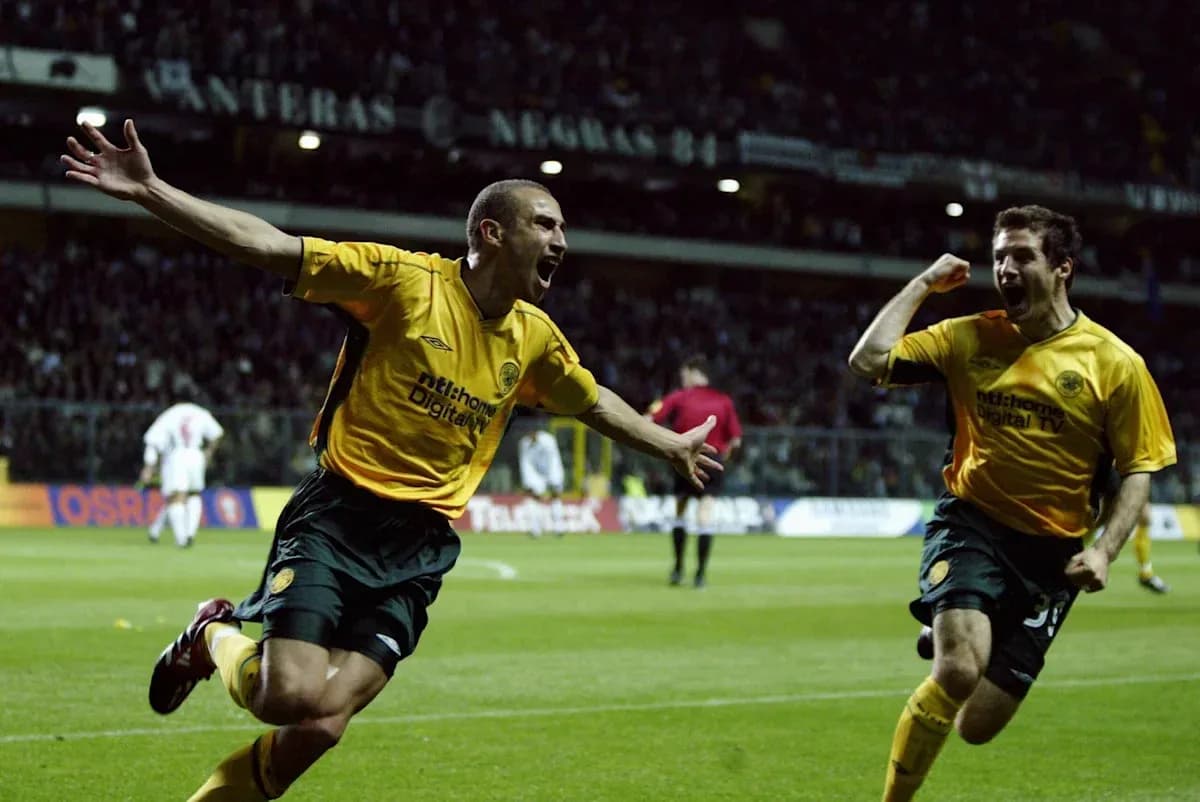
In the second leg at the Bessa Stadium, tension hung over every pass. Celtic pushed, Boavista resisted, the clock inched forward. Then Larsson found the moment. He scored the only goal of the night, his second of the tie, to give Celtic a 2-1 aggregate win and send them into a historic European final against Boavista’s city rivals, Porto.
The final in Seville still stings. Porto and José Mourinho walked away with the trophy after extra time, and Celtic were left with what-ifs and weary legs. Yet the semi-final, and Boavista’s role in it, remains one of the great modern chapters in the club’s European story. The image of Martin O’Neill embracing Larsson at full-time in Porto is burned into Celtic folklore.
The Rise That Broke the Order
Boavista were never just a European footnote. Domestically, they smashed Portugal’s old order.
Founded in 1903, they amassed nine major honours and, in 2001, did the unthinkable. They won the Primeira Liga, becoming the first – and still only – club outside the traditional “big three” of Benfica, Porto and Sporting Lisbon to be crowned champions of Portugal.
That title felt like a crack in the concrete. A club from outside Lisbon and the established powers of Porto, lifting the league trophy. The chequered shirts at the summit of Portuguese football. It looked like a new force had arrived.
Instead, it proved to be the high point before a long slide.
Sanctions, Chaos and the Long Road Down
Boavista’s financial problems did not appear overnight. They built slowly, then accelerated brutally.
The club were hit with a ban on signing players across five transfer windows, a suffocating sanction that left squads thin and options limited. When that embargo finally lifted, the response was desperate and chaotic: nine players signed in a single day in February 2025, a flurry that felt more like a last throw of the dice than a coherent plan.
On the pitch, the decline became impossible to ignore. In the 2024/25 season, Boavista finished bottom of the Primeira Liga. A 4–1 defeat away to Arouca on the final day sealed their relegation, triggering a pitch invasion by some of the 2,000 travelling fans who had watched their club sink.
The punishment did not end with the drop. The Portuguese league authority barred Boavista from competing in Liga Portugal 2, handing a reprieve to relegated side Oliveirense. A club that had once toppled the giants now could not even take its place in the second tier.
Their attempts to find a foothold lower down the ladder fared no better. Boavista were refused registration to both the third-tier and fourth-tier Campeonato de Portugal for 2025. That decision forced a change of company structure and pushed the senior setup into the Liga Pro, a new elite competition under the Porto Football Association.
The original club entered a separate team in the fourth division of the district leagues. It looked like a lifeboat, a way to keep the name alive. Instead, it became another symbol of the chaos. The side began racking up losses by default, simply failing to show up for fixtures, and withdrew from competition altogether at the end of October.
By the time the court order arrived this July, the footballing side of Boavista was already a shell. The legal ruling simply confirmed what the football had been saying for months: there was nothing left to save.
A Giant’s Echo
Boavista’s insolvency process centred on unpaid obligations to creditors, with previous restructuring attempts unable to plug the gaps. In blunt terms, they failed to pay their debts and ran out of road.
For Celtic fans, the club’s disappearance will always be framed by those two ties: the 1975 Cup Winners’ Cup clash and the 2003 UEFA Cup semi-final. From Dalglish, Edvaldsson and Deans in the first chapter to Larsson’s ruthless finishing in the second, Boavista were the foil in nights that helped define eras.
Now they are history. The name may yet return in another guise – a “new” Boavista FC, a rebirth in lower leagues, a fan-driven revival. Football has seen that story before.
But the original Boavista, champions of Portugal in 2001 and semi-final opponents in one of Celtic’s greatest European runs, have reached the end. The chequered shirts that once disrupted a nation’s hierarchy now sit folded away, another warning of how quickly a club can fall when the numbers stop adding up.