Bezos Nears Liverpool Stake Amid Powerhouse Consortium
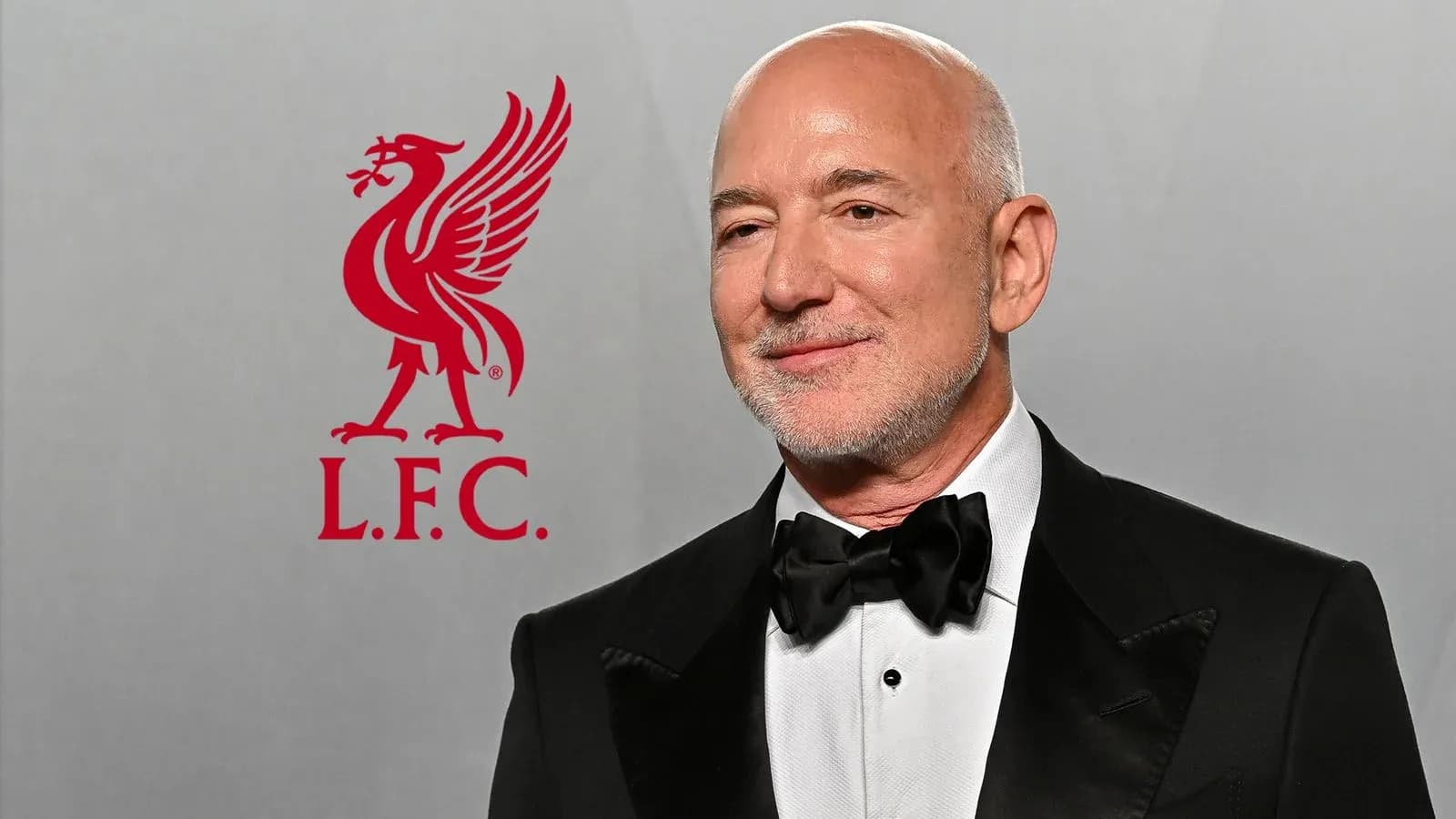
Liverpool are on the brink of welcoming one of the world’s richest men into their boardroom, with Jeff Bezos part of a powerhouse consortium closing in on a deal to buy a significant minority stake in the club.
Sky News understands that Fenway Sports Group (FSG), Liverpool’s controlling shareholder since 2010, is preparing to announce the sale of roughly one-third of the club, with confirmation possible as early as this week. Those close to the process warn the timing could yet drift into next week, but the direction of travel is clear: new money is coming to Anfield, and in extraordinary volume.
At the heart of the syndicate is Amit Bhatia, the British-Indian entrepreneur and former Queens Park Rangers shareholder, who is leading the investor group. Alongside him sit Bezos, the Amazon founder whose personal wealth is estimated by Forbes at more than £207bn, and Eduardo Saverin, the Facebook co-founder valued at over £23.7bn.
Between them, they form one of the most financially muscular alliances ever to move into English football.
A deal on a different scale
The proposed investment would value Liverpool at around £4.4bn ($6bn), placing it among the most expensive transactions in the sport’s history. One insider has indicated the stake could creep above 30 per cent, slightly higher than first anticipated.
For FSG, it would mark another staggering milestone in a 16-year tenure defined as much by balance sheets as by trophies. The Boston-based group bought Liverpool in 2010 for about £300m, inheriting a club in deep financial trouble and a fanbase fearful of the future. A decade and a half later, they are close to crystallising a valuation more than ten times that figure while retaining majority control.
The last time a slice of Liverpool changed hands came in 2023, when Dynasty Equity acquired a small stake that valued the club at over £3.3bn. This new deal would blow straight past that benchmark.
FSG have declined to comment on the timing of any announcement. A spokesperson last month acknowledged that “an investment consortium led, managed, and represented by Amit Bhatia has expressed interest in making a strategic minority investment in Liverpool Football Club,” but stopped there. The Bhatia-led group has also kept its counsel, refusing to be drawn on the talks.
Silence, in this case, speaks loudly.
Billionaires, boardrooms and the new face of football
Bezos has never previously been seriously linked with a football club purchase. His move towards Anfield underlines how elite sport has become a prized asset class for the super-rich, sitting alongside tech, media and aerospace in global portfolios.
Saverin is no stranger to the game’s upper financial reaches either. In 2022 he formed part of a consortium that tried, unsuccessfully, to buy Chelsea during the sale triggered by sanctions on Roman Abramovich after Vladimir Putin’s invasion of Ukraine. That bid failed; this one is closing in.
Bhatia, 46, provides the football bridge and financial glue. With an investment banking background, he now runs AyBe Capital, a multi-asset investment firm with interests spanning technology, media, property and real estate, consumer retail and health. He is also the son-in-law of steel magnate Lakshmi Mittal, one of the world’s wealthiest industrialists.
Bezos brings the global clout of Amazon and the innovation halo of Blue Origin, his aerospace company, and Nash Holdings, the vehicle that owns The Washington Post. Saverin brings Silicon Valley capital and experience of major, complex deals. Bhatia brings the structure, the contacts, and a track record in sport.
For Liverpool, that combination would reshape the ownership landscape overnight.
What it means for FSG – and for Liverpool
This is, on paper, a minority investment. FSG remain in charge. Yet the identity and resources of the incoming shareholders will inevitably fuel speculation that this could be a stepping stone towards something bigger.
The logic is simple: when a trio of this wealth and ambition buys into a club of Liverpool’s stature, the question is rarely if they want more influence, but when and how they intend to exert it.
For now, the deal would serve several purposes. It would lock in a huge paper profit for FSG without forcing them to relinquish control. It would inject fresh capital at a time when the financial arms race across the Premier League and Europe shows no sign of slowing. And it would place Liverpool firmly among the global sports properties backed by the deepest of deep pockets.
The move also reinforces a broader trend. From American private equity funds to Gulf state investment vehicles, elite football has become a magnet for capital seeking global reach, reliable broadcast income and the prestige that comes with owning a historic club. Liverpool, with its worldwide fanbase and modernised stadium, sits near the top of that list.
For supporters, the questions will come thick and fast. What does this mean for transfer budgets? For Anfield redevelopment? For the long-term structure of the club? FSG’s track record suggests they will continue to run Liverpool with a strong eye on sustainability and data-driven decision-making, but the financial ceiling may be about to rise again.
A new era taking shape
The last 16 years at Liverpool have already delivered a Champions League, a Premier League title, a modernised Anfield and a global commercial machine. Now, another pivot point looms.
If the Bezos–Bhatia–Saverin consortium crosses the line in the coming days, Liverpool will not just be one of the most storied clubs in English football. It will be one of the most heavily backed, with three of the world’s richest men sharing a stake in what happens next on Merseyside.
The numbers are vast. The stakes, sporting and financial, even bigger. The next announcement from FSG will tell Liverpool fans just how dramatically their club’s ownership map is about to change.