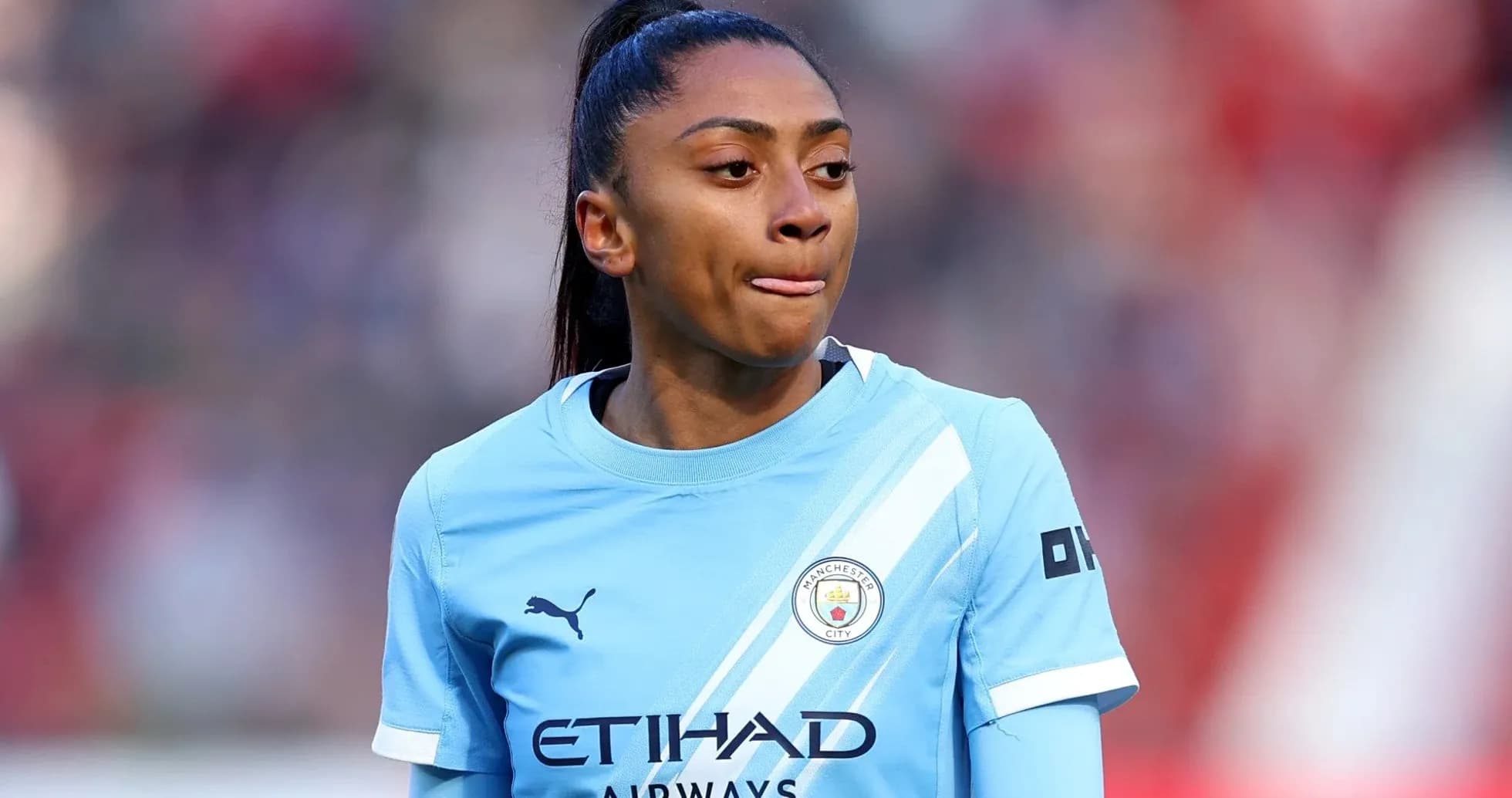
Barcelona Secures Kerolin: A Record Women's Transfer
Barcelona are about to smash through another barrier in the women’s transfer market – and they’ve chosen Kerolin as the player worth breaking the bank for.
The Brazil international is set to join the European champions this week on a four-year deal, in a move that underlines both Barca’s ambition and their willingness to push their fragile finances to the edge once again.
A fee that rewrites the market
The chase has been brewing for weeks. Journalist Victoria Leite first revealed Barcelona’s interest earlier this month, reporting that two bids had already been rejected by Manchester City. The second of those offers would have eclipsed the fee paid for Keira Walsh in 2022, a deal that set Barca’s women’s transfer record at around £400,000.
That still wasn’t enough.
Reports in Spain highlighted that Kerolin’s contract at City included a release clause of more than €1m, a figure that initially looked beyond Barca’s reach. Yet the pressure didn’t ease, and the conversations between the clubs continued. Leite has now reported that the two sides have finally found an agreement: a fee in the region of €1.5m.
That number changes the landscape. It places Kerolin among the most expensive players in the history of the women’s game, behind only Grace Geyoro of London City Lionesses and potentially Chelsea’s Alyssa Thompson. This is not a speculative punt on potential. This is elite-level money for a forward in her prime.
City lose a star they never planned to sell
From Manchester City’s perspective, the deal is as simple as it is painful. Kerolin was not on the market.
She only arrived in January 2025 from North Carolina Courage and needed little time to adjust. Last season, her first full campaign in England, she produced 14 direct goal contributions in the Women’s Super League. At City, only Khadija Shaw, Alessia Russo and Vivianne Miedema bettered that output as the club finally reclaimed the league title after a decade-long wait.
She is 26, under contract until 2028 and just entering her peak. Clubs do not willingly part with that profile.
Yet the offer forces a different kind of calculation. City are flush with attacking options: Shaw, Miedema, Mary Fowler, Lauren Hemp, Aoba Fujino and Iman Beney already crowd the forward line. Beth Mead has arrived this summer to deepen that pool even further. When a squad is this stacked and a fee of this magnitude lands on the table, even the most reluctant sporting director starts to listen.
The money gives City room to manoeuvre again if they feel they need another attacker. Crucially, it arrives early enough in the window for them to act.
Barca’s urgent need for a new reference point
For Barcelona, this isn’t a luxury signing. It’s a response to a summer of painful departures.
Alexia Putellas, twice a Ballon d’Or winner and the face of the club’s rise, has left for London City Lionesses. Salma Paralluelo, who scored twice in the Champions League final, chose to walk away on a free despite being offered a new deal. Those exits ripped experience, leadership and goals from the heart of the attack.
There is still serious talent in Catalunya. Claudia Pina, Ewa Pajor, Kika Nazareth and Caroline Graham Hansen – fresh from signing a new contract – form a frontline that most clubs would envy. Behind them, Sydney Schertenleib and Vicky Lopez are growing into their roles and pushing for more minutes.
But Barca’s recruitment this summer has largely focused on youth, on tomorrow rather than today. Kerolin changes that balance. She brings proven end product, Champions League-level experience and the kind of individual, game-breaking quality that decides semi-finals and finals. For a team determined to stay on top of Europe, that matters.
The financial gamble behind the football logic
The football case for Kerolin is straightforward. The financial picture is anything but.
Transfer fees in the women’s game have accelerated at a dizzying pace, and a player of Kerolin’s profile, with two years left on her deal, was never going to come cheap. Even so, the size of this outlay jars against Barca’s recent reality.
Only last summer, several first-team players had to leave to help the club stay within Financial Fair Play limits. A cluster of highly rated academy products were sold too, victims of a balance sheet that left little room for sentiment.
Those pressures have not disappeared. They sit in the background of every decision, and they loom especially large when the club commits to a fee that pushes the upper edge of the women’s market.
On top of that, renewal season is coming. Patri Guijarro, arguably the best holding midfielder in the world, is only tied down until 2027 and is attracting interest from Lyon and leading English clubs. Pajor, now the focal point of the attack, enters the final year of her contract. Esmee Brugts, one of the brightest young talents in Europe, is in the same situation.
Barca have already watched Alexia Putellas, Paralluelo, Mapi Leon and Ona Batlle walk away for nothing. They cannot afford a repeat next summer. Not if they want to keep building rather than constantly patching over self-inflicted wounds.
So the question hangs over this move. Can Barcelona pay a record fee for Kerolin and still ring-fence the money needed to lock down the core of their squad?
On the pitch, the answer looks obvious. Kerolin gives them a new edge, a fresh star at the peak of her powers, and a statement that the European champions are not slowing down.
Off it, the calculation is harsher. Barca are betting that the cost of not signing a player like Kerolin – in trophies, in status, in momentum – would be even higher.