Australia vs Egypt: A World Cup Knockout Clash in Dallas
The World Cup has a way of shrinking the map. On a hot day in Dallas, Australia and Egypt meet in the round of 32, two football cultures from opposite sides of the world funneled into the same tight corridor: win, and a likely date with Argentina awaits. Lose, and the journey ends under the stadium lights in Texas.
Both arrive here as runners-up, both a little bruised, both still standing.
Socceroos walk the tightrope
Australia’s path has already swung from promise to reality check and back to grind. They opened their campaign with a sharp, controlled 2-0 win over Turkey, a performance that hinted at a side comfortable on this stage, then were brought back down by a 2-0 defeat to the USA that exposed the margins at this level.
The final group game against Paraguay turned into a test of nerve. No goals, little margin for error, and everything riding on details: a tackle timed right, a clearance made under pressure, a run tracked in the final minutes. The 0-0 draw was enough. Australia finished level on points with Paraguay but edged through on goal difference, the sort of fine print that decides whether a tournament becomes a memory or a story still being written.
This knockout tie brings its own demands. The Socceroos must manage the occasion, not the bracket. With Argentina looming for the winner, the temptation is to look ahead. They cannot afford it. The staff have already called this a “difficult” match, and that’s exactly what it is: a contest against a disciplined side, led by one of the game’s most ruthless forwards.
There is, however, a growing sense of leadership within the Australian camp. Harry Souttar has taken on the captain’s armband and, by all accounts, grown into it. The responsibility has not just been symbolic. It has forced him to set the tone, to anchor the back line through those nervy late spells that define tournament football. In a game where one mistake can tilt an entire campaign, that presence matters.
Salah returns, Egypt sharpen their edge
On the other side stands Egypt, a team that rarely drifts far from drama at major tournaments. They matched Belgium stride for stride in Group G, both nations collecting five points, and only goal difference separated them at the finish.
Egypt’s route was built on resilience. They held Belgium, they held Iran, and when they needed three points, they found them against New Zealand. That win pushed them into the knockouts, again on the small details of goals scored and conceded. It’s been that kind of World Cup for them: tight games, narrow gaps, and just enough quality when it counts.
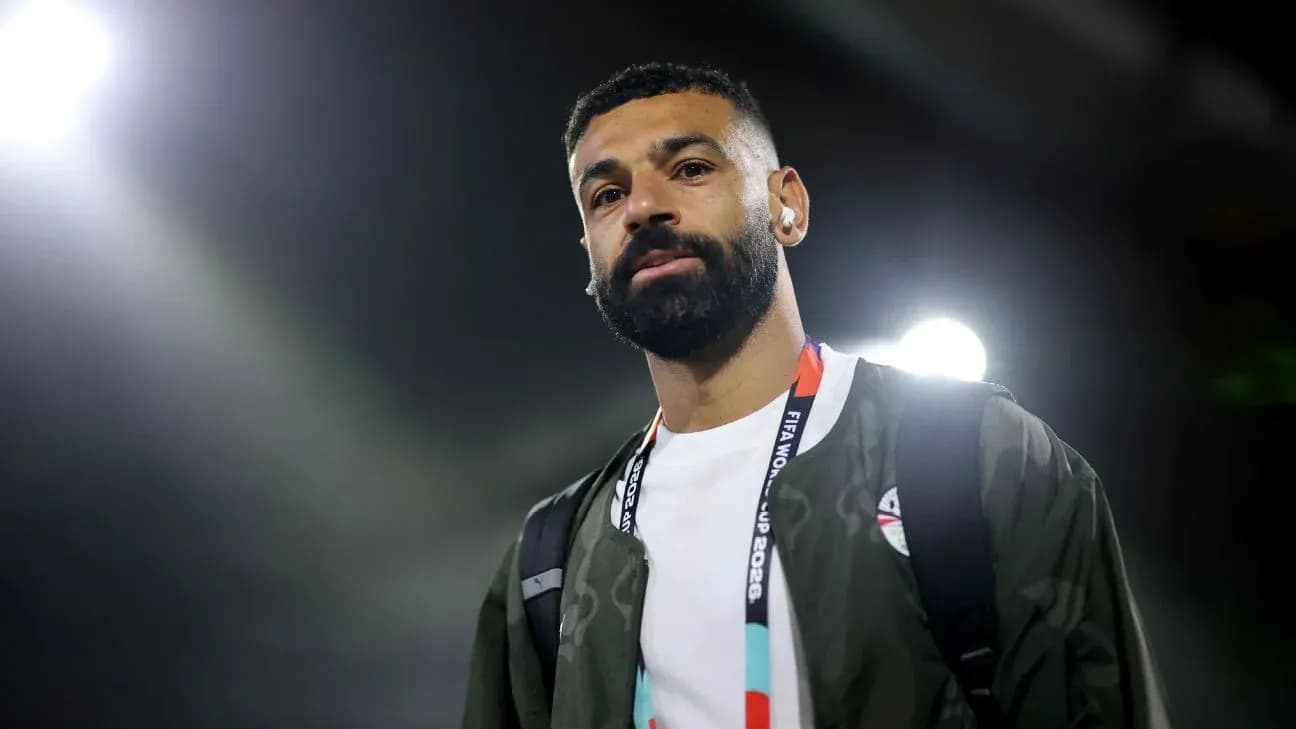
The headline, of course, is Mohamed Salah. The Liverpool star has recovered from a hamstring issue in time for this clash, a development that instantly changes the mood around the Egyptian camp and the tactical calculations for Australia. Salah’s presence does more than add goals and threat on the break. It stretches defenders’ concentration, drags entire back lines a step deeper, and opens spaces for those around him.
For Egypt, his return arrives at the perfect moment. Knockout football is often decided by one flash from a player who can bend a match to his will. They have exactly that profile back in the XI.
History offers only hints
Australia and Egypt do not share a long, tangled rivalry. This will be only their third meeting, and the past offers contrasting snapshots rather than a clear pattern.
In 2010, Egypt swept to a 3-0 win in a friendly, a reminder of the technical quality and attacking fluency that has long defined their best sides. Go back further, to the 1987 President’s Cup in South Korea, and the roles reverse. That match finished 0-0 before Australia held their nerve in a penalty shootout, a result that fits neatly with the current image of the Socceroos: stubborn, organized, hard to put away.
Those games sit far in the rear-view mirror now, involving different generations, different eras. Still, they underline one thing: when these two meet, there is rarely a middle ground. It tends to be either emphatic or decided at the very edge.
A crossroads in Texas
So it comes down to Dallas. Australia, with their evolving leadership and a defence that has already survived a group-stage knife-edge. Egypt, with Salah back, their confidence hardened by a group in which they had no room to drift.
Both advanced by the slimmest of margins. Both know that the next step is enormous: a likely clash with Argentina, one of the tournament’s great gravitational forces.
Before that, they must survive each other.