Australia vs Egypt: Socceroos Face Challenge in Second Half
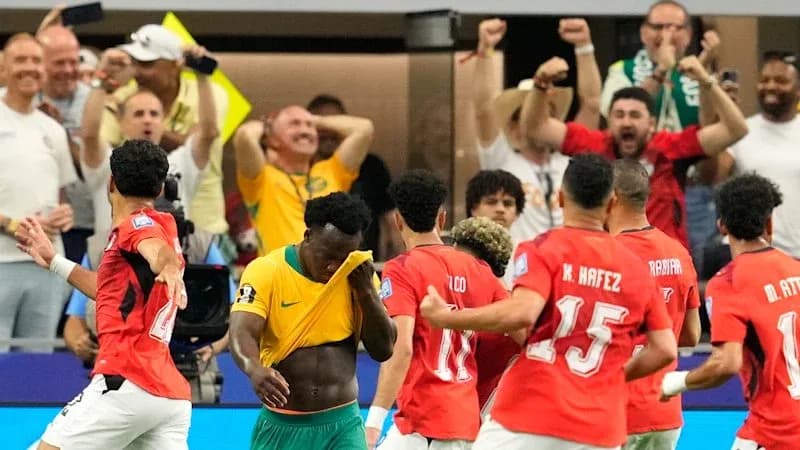
Australia went into the break a goal down to Egypt and with a sense of injustice hanging in the air, but also with the clear feeling this match is there for them if they sharpen their edge.
The Socceroos conceded from the kind of situation they normally own. A routine set piece turned into a cheap goal, their line a fraction slow to push out, one defender perhaps playing the scorer onside. For a side that prides itself on discipline at dead balls, it stung. The reaction from the camp said as much: frustration at a rare lapse, and at a referee who played advantage on a foul but never came back with the yellow card that seemed inevitable.
They were told to park it and respond. Be better in the second half. Keep the ball. String passes together. Because when Australia did manage five, six, seven passes, the game opened up. Pockets of space appeared between Egypt’s lines, and with them, chances.
And the chances did come.
Aziz Behich sparked one of Australia’s brightest spells when he drove at Mohamed Hany down the left, carrying the ball deep into Egypt’s defensive third. The move ended with a long throw from Alessandro Circati, a classic Australian weapon. Jackson Irvine and Harry Souttar attacked it, the ball flicked on by Kai Herrington, and it fell to Nestory Irankunda. He recycled it smartly back to Behich, who let fly. The shot was low, firm, and heading inside the near post until the goalkeeper got down sharply to his right. A genuine opening, beaten away.
Irankunda almost turned provider and finisher again moments later, buzzing around the edge of the box as Egypt briefly lost their shape. Australia, at that point, looked the more likely to score.
Egypt, though, had something to cling to. That scruffy goal gave the Pharaohs exactly what they wanted: a lead to sit on, a platform to frustrate. They dug in, defended aggressively, and then slowed everything down whenever they could. Contact meant a pause. A nudge meant a roll on the turf. Every marginal decision was stretched to its limit.
It worked. They forced Australia to run, to chase, to restart. They turned the game into a grind.
The officiating did little to ease the tension. There was anger in the Australian ranks when a promising attack ended with a weak header in the box and a tangle of limbs. Cristian Volpato was hauled down by Ahmed Hafez at the back post, while Ahmed Hegazi’s partner, Ramy Rabia, appeared to have the ball brush his arm as he challenged. The referee ignored both incidents, gesturing to his own arm as if to say there was nothing doing. Play on.
All of it fed into the feeling that five minutes of added time was nowhere near enough. A three-minute hydration break, a goal, multiple stoppages for Egyptian players on the turf, and yet only five put on the board. For Australia, it was another source of irritation. For Egypt, it was a compliment to their dark arts.
Amid the chaos, one moment cut deeper than the scoreboard. Jordan Bos, one of Australia’s most dynamic outlets, went down and stayed down. When he finally rose, it was only with the help of two trainers, unable to put weight on his left foot. As he was carried from the pitch, the sense was immediate and grim: his night was over, and possibly more. For a side chasing the game, losing that kind of thrust on the flank was a brutal blow.
Egypt still had the star power of Mohamed Salah, but even he played within himself. The hamstring tightness that shadowed his build-up seemed to temper his bursts, yet his mind remained sharp. He drifted off Souttar’s shoulder, probing for space, and at one point slid in behind only for Herrington to read it and shut the door. When Salah stood over a free-kick on the right, he opted for guile instead of glory, rolling a short pass square to Emam Attia. The midfielder unleashed a clean, powerful drive from distance, but Australia had the back post covered and the danger passed.
So the half ended with Egypt 1-0 up, clinging to their lead, and Australia walking off with a mixture of anger and belief. The Egyptians had their moment and seized it. The Socceroos had theirs and squandered them.
The equation for the second half is brutally simple: keep the ball, sustain the passing sequences, and turn territory into goals. The game is there. But so is the clock.