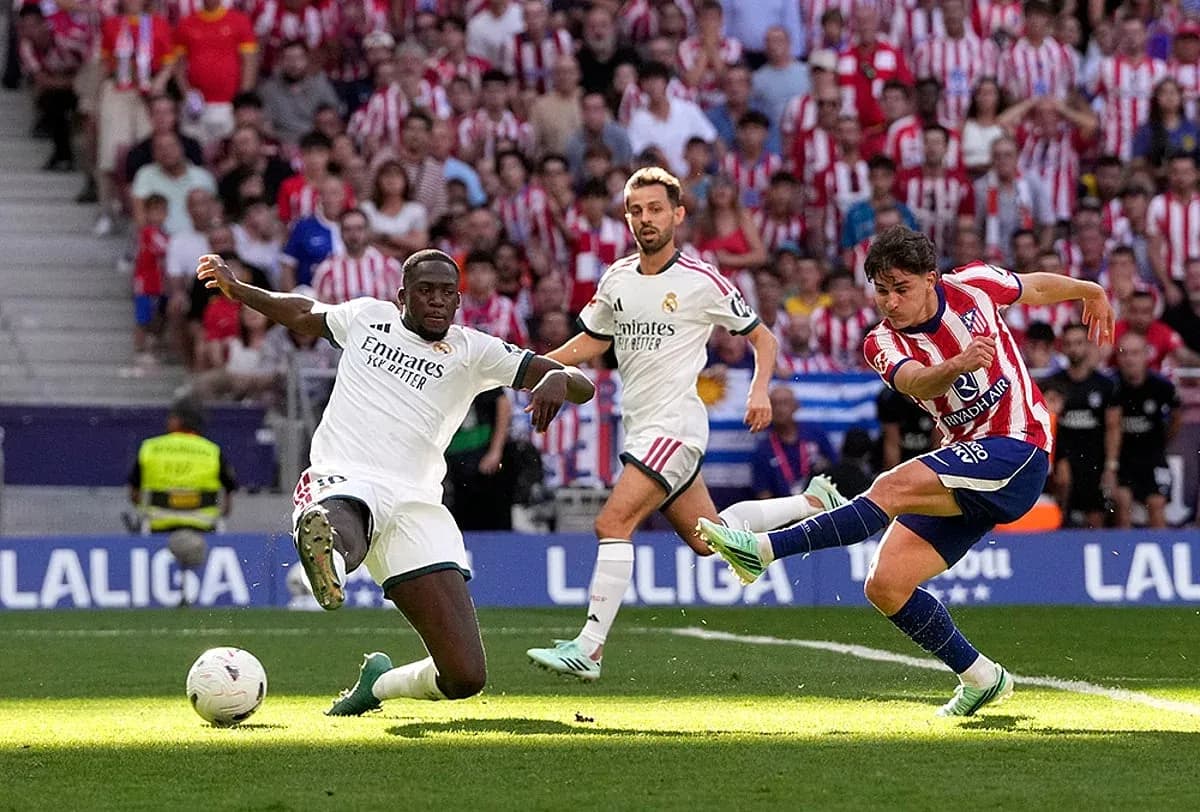
Atletico Madrid Overcomes Osasuna in La Liga Clash
The lights had barely settled over Estadio El Sadar when the story of this match – and of two contrasting seasons – came sharply into focus. Following this result, Osasuna remain the embodiment of mid-table turbulence in La Liga, 12th with 42 points and a goal difference of -4, while Atletico Madrid, 4th on 66 points with a goal difference of 21, continue to grind their way towards Champions League security.
Osasuna’s season-long identity was visible in Alessio Lisci’s team sheet: a familiar 4-2-3-1, the club’s most-used structure with 21 league appearances in that shape. At home they have been notably stronger, with 9 wins from 18 and 30 goals scored at an average of 1.7 per game at El Sadar, compared to just 0.7 on their travels. The XI reflected that home boldness: Aitor Fernandez in goal behind a back four of V. Rosier, Alejandro Catena, F. Boyomo and J. Galan, with Jon Moncayola and L. Torro anchoring, and a creative band of R. Garcia, M. Gomez and R. Moro operating behind the spearhead, Ante Budimir.
Diego Simeone’s Atletico arrived with their own well-defined DNA: a 4-4-2 that has been their default this campaign, used in 24 league fixtures. On their travels they have been more human than ruthless – 6 away wins from 18, scoring 22 and conceding 22 at an average of 1.2 goals for and 1.2 against – but the structure remains unmistakably Atletico. J. Musso started in goal, shielded by a back line of M. Llorente, M. Pubill, D. Hancko and M. Ruggeri. The midfield four of T. Almada, R. Mendoza, Koke and O. Vargas supported a front duo of Antoine Griezmann and A. Lookman, with Alexander Sørloth waiting among the substitutes as a powerful option.
The absences framed the tactical voids on both sides. Osasuna were without S. Herrera through suspension (red card) and V. Munoz with a muscle injury, depriving Lisci of rotation and energy in midfield. Atletico’s list was far longer and more structural: J. Alvarez (ankle injury), A. Baena (suspended for yellow cards), P. Barrios (muscle injury), J. Cardoso (contusion), J. M. Gimenez (injury), N. Gonzalez (muscle injury), N. Molina (muscle injury) and G. Simeone (hip injury) all missed out. That cluster of absences removed a key creator in Baena, a pressing midfielder in Barrios, a defensive leader in Gimenez and an influential wide playmaker in G. Simeone, forcing Simeone to lean heavily on Koke’s control and the versatility of Almada and Vargas.
Discipline was always going to be an undercurrent. Heading into this game, Osasuna’s yellow card distribution showed a clear late-game spike: 20.45% of their bookings came between 76-90 minutes, with another 18.18% between 61-75. Their red cards also clustered in high-stress phases, with 28.57% between 31-45 minutes and another 28.57% between 76-90 and 91-105 respectively. Atletico’s yellows peaked in the 31-45 minute window at 21.05%, with a steady spread from 16-90 minutes, while their reds were evenly scattered – 20.00% in each 15-minute block from 16-90. This was a matchup primed for tension in the middle and late stages, especially once fatigue and scoreboard pressure kicked in.
Within that emotional frame, certain individuals defined the tone. For Osasuna, Catena is both organiser and risk-taker. Over the season he has blocked 32 shots – a remarkable volume that underlines his willingness to step into the line of fire – but his 11 yellow cards and 1 red card show the cost of that aggression. Alongside him, Moncayola is the engine: 50 tackles, 6 blocks and 20 interceptions across the campaign, plus 4 assists, make him the hinge between defence and attack. His presence at the base of the 4-2-3-1 was crucial to protecting a back line that, overall, has conceded 47 goals in 36 matches, an average of 1.3 per game.
Ahead of them, Budimir is the pure “Hunter” in this narrative. With 17 league goals from 35 appearances, he is one of La Liga’s most efficient focal points. He has taken 84 shots, 39 of them on target, and drawn 35 fouls, constantly occupying centre-backs. Importantly, his penalty record is not spotless: he has scored 6 but missed 2, so any spot-kick for Osasuna carries a hint of jeopardy rather than inevitability.
On the other side, Atletico’s attacking threat is more distributed. Sørloth, even from the bench, looms as a late-game battering ram: 13 goals from 33 appearances, 54 shots with 34 on target, and 272 duels contested, 129 won. His profile – strong in the air, relentless in contact – is perfectly suited to closing out games or turning tight contests when defences tire. In midfield, the absent G. Simeone’s season numbers (6 assists, 31 key passes, 909 completed passes at 81% accuracy) underline how much creative responsibility shifted onto Koke and Almada in this match.
From a structural standpoint, this game always looked like a clash of Osasuna’s home assertiveness against Atletico’s systemic control. Heading into this fixture, Osasuna’s home goals-for average of 1.7 and goals-against average of 1.2 painted them as proactive hosts who accept risk. Atletico, by contrast, carried an overall defensive record of 39 goals conceded in 36 matches – 1.1 per game – supported by 13 clean sheets, including 6 on their travels. Their away attack at 1.2 goals per game is not explosive, but it is efficient enough when paired with that defensive platform.
The “Hunter vs Shield” duel therefore centred on Budimir against Atletico’s back four and their collective record of 39 goals conceded overall. With Catena and Moncayola tasked with containing Griezmann, Lookman and, later, Sørloth, the margins were always going to be thin. Atletico’s ability to manage phases – especially the high-card windows around half-time and the closing quarter-hour – was decisive. Their season-long pattern of spreading bookings without losing structural discipline contrasted with Osasuna’s tendency to accumulate late yellow and red cards, and that composure under pressure ultimately underpinned a 2-1 away victory.
Statistically, a neutral xG model would likely have shaded Atletico before kick-off: they entered with a stronger overall attack at 1.7 goals per game, a tighter defence at 1.1 conceded, and more clean sheets than Osasuna’s 7. Even without explicit xG values, the volume and quality of their season-long output suggested they would carve out the higher-value chances. Following this result, that logic held. Atletico’s defensive solidity and depth in forward options, even with a crowded treatment room, gave them just enough edge to withstand Osasuna’s home intensity and the aerial menace of Budimir, and to leave Pamplona with a win that fits neatly into the statistical arc of their season.