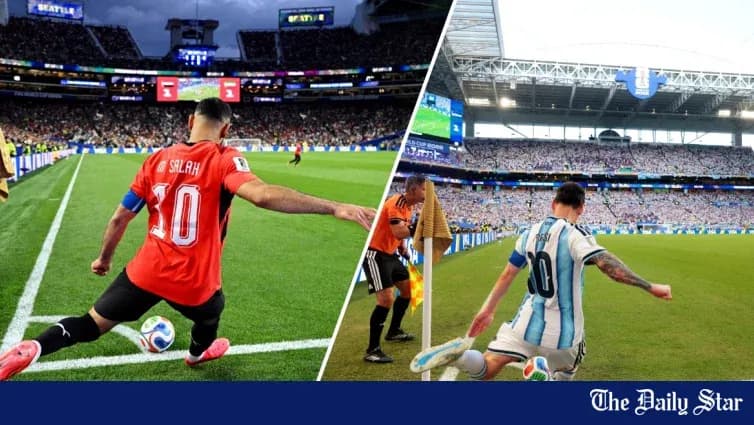
Argentina vs Egypt: World Cup Quarterfinal Showdown
Two left-footed geniuses. Two exhausted squads. One ticket to the World Cup quarterfinals.
On Tuesday night in Atlanta, the tournament’s most familiar figure and its most feared counter-attacker walk into the same spotlight. Lionel Messi’s Argentina against Mohamed Salah’s Egypt at Mercedes-Benz Stadium: a last-16 tie wrapped in fatigue, intrigue and the sense that one of these eras is nearing its final act.
Argentina’s first real wobble
Argentina arrive looking like champions who have just felt the ground move beneath them.
Cape Verde, on World Cup debut, dragged them into a dogfight on Friday and very nearly threw them out of their rhythm and the tournament. It took extra time, 3-2, and a cruel 111th-minute own goal from Diony Borges to separate the holders from a side that peppered them with 16 shots and no fear.
For the first time this campaign, Lionel Scaloni’s team looked vulnerable. The smooth, almost routine progress of the group stage vanished in a tangle of loose pressing and heavy legs. The old debate burst back to life: one bad night, or the first clear blueprint for how to rattle the champions?
Messi did not disguise his frustration. He admitted he was tired, and he bemoaned Argentina’s failure to press high, the very platform that has underpinned their dominance. That admission matters, because Argentina have leaned on him harder than ever.
At 38, he is still their sharpest edge. Seven of Argentina’s 11 goals so far bear his name, with the team’s tally also padded by an own goal. Every attacking pattern seems to orbit his left foot. Every opponent knows it, and yet stopping it remains something else entirely.
Bodies creaking, decisions looming
The price of survival against Cape Verde was visible on the physio’s table.
Facundo Medina limped off with severe cramp. Enzo Fernández seized up as well. Nicolás González stayed on despite an ankle problem only because Argentina had already emptied their bench. The following day’s recovery session painted a worrying picture: Nahuel Molina, Fernández and Medina all unable to complete the work.
Medina’s issue has been downplayed as cramp, a relief for Scaloni, and Nicolás Tagliafico stands ready if the left-back needs a rest. González is the bigger concern, his ankle sprain casting doubt over his availability and limiting Scaloni’s options in the wide areas.
The quick turnaround from Friday to Tuesday has stripped away luxuries. This is now a tournament of ice baths and sleep, as much as tactics and talent.
Egypt’s moment, 92 years in the making
Across the bracket, Egypt arrive with a different kind of weight: history.
Their penalty shootout win over Australia, after a draining 1-1 draw that went the full 120 minutes, pushed them into the World Cup last 16 for the first time in 92 years. An entire footballing nation that has carried its continental pedigree like a question mark on the global stage finally has an answer.
They did it the Egyptian way: disciplined, compact, then suddenly dangerous. The Pharaohs will not try to outplay Argentina in midfield. They will organise, absorb, and wait for the moment to spring Salah and Omar Marmoush into space.
That plan, though, hinges on Salah’s body holding up. He went into the Australia match nursing a hamstring concern and at times seemed reluctant to hit top speed, an understandable instinct in another 120-minute slog. Even at 80 or 90 per cent, his presence bends a game. But against Argentina, hesitation in the sprint lanes can be the difference between a famous upset and a long, lonely chase.
Egypt will have studied Cape Verde’s bravery with interest. The underdogs showed that if you press selectively, attack with numbers and refuse to be cowed by the shirt, Argentina can be dragged into chaos. Egypt’s question is whether they can reproduce that intensity without losing their structure.
Masters of extra time
If this tie stretches into the night, history tilts sky blue and white.
Argentina are serial survivors when the clock hits 90 and keeps going. Across all World Cups, they have won 10 of their 12 matches that went beyond regulation, with four decided in extra time and six on penalties. They understand the psychology of those moments, the rhythm of suffering and seizing a single chance.
That record is not just a statistic; it’s an attitude. When others tighten up, Argentina tend to grow. For Egypt, who only just emerged from their own 120-minute ordeal, the idea of another marathon against a side that thrives in them is a daunting prospect.
Messi, Salah and the stakes in Atlanta
Strip everything back, and the match still gravitates toward those two left boots.
Messi, chasing one more deep run on the biggest stage, carrying a nation that now expects resilience as much as brilliance. Salah, the symbol of Egypt’s footballing rise, finally with a World Cup knockout tie that matches his status, desperate to drag his country where it has never been.
Both are tired. Both are essential. Neither can hide.
The winner walks into a quarterfinal in Kansas City on July 11, against Switzerland or Colombia, with momentum and belief restored. The loser leaves with a summer of what-ifs and the sense that a rare window of opportunity has slammed shut.
For Argentina, it is about defending a crown and proving that Cape Verde was a stumble, not a sign. For Egypt, it is about turning a 92-year wait into a launchpad, not a footnote.
Atlanta will decide which story keeps running.