Argentina Edges Cape Verde Islands in Extra Time Victory
Under the Miami lights at Hard Rock Stadium, this Round of 32 tie felt less like a routine knockout and more like a stress test of identities. Argentina arrived as the World Cup’s form side, top of Group J with 9 points from 3 matches and a towering overall goal difference of +7 (8 scored, 1 conceded in the group). Cape Verde Islands came from Group H in second place, unbeaten but winless with 3 points from 3 draws and a neutral overall goal difference of 0 (2 scored, 2 conceded). Over 120 minutes, that contrast in pedigree and pattern was stretched to its limits before Argentina finally edged a 2–1 victory after extra time.
Argentina's Seasonal Profile
Argentina’s seasonal profile heading into this game was clear: ruthless, front-foot and unforgiving. Across the tournament so far they had played 4 matches in total, winning all 4. At home-designated fixtures they had played 3, winning all 3; on their travels they had 1 played, 1 win. Their attacking output has been relentless: 11 goals in total, split as 8 at home and 3 away, with averages of 2.7 at home, 3.0 away and 2.8 overall. Defensively, they had conceded only 3 in total (2 at home, 1 away), with averages of 0.7 at home, 1.0 away and 0.8 overall. The overall goal difference across the campaign stands at +8 (11 for, 3 against), a reflection of both dominance and control.
Cape Verde Islands' Route
Cape Verde Islands’ route has been more attritional. Across 4 matches in total they had not yet won, with 3 draws and 1 defeat. At home they had played 1, drawn 1; away they had played 3, drawing 2 and losing 1. Their attack has been modest but resilient: 4 goals in total (0 at home, 4 away), averaging 0.0 at home, 1.3 away and 1.0 overall. Defensively, they had conceded 5 in total (0 at home, 5 away), with averages of 0.0 at home, 1.7 away and 1.3 overall, for an overall goal difference of −1 (4 for, 5 against). They are a side that tends to survive rather than impose.
Tactical Matchup
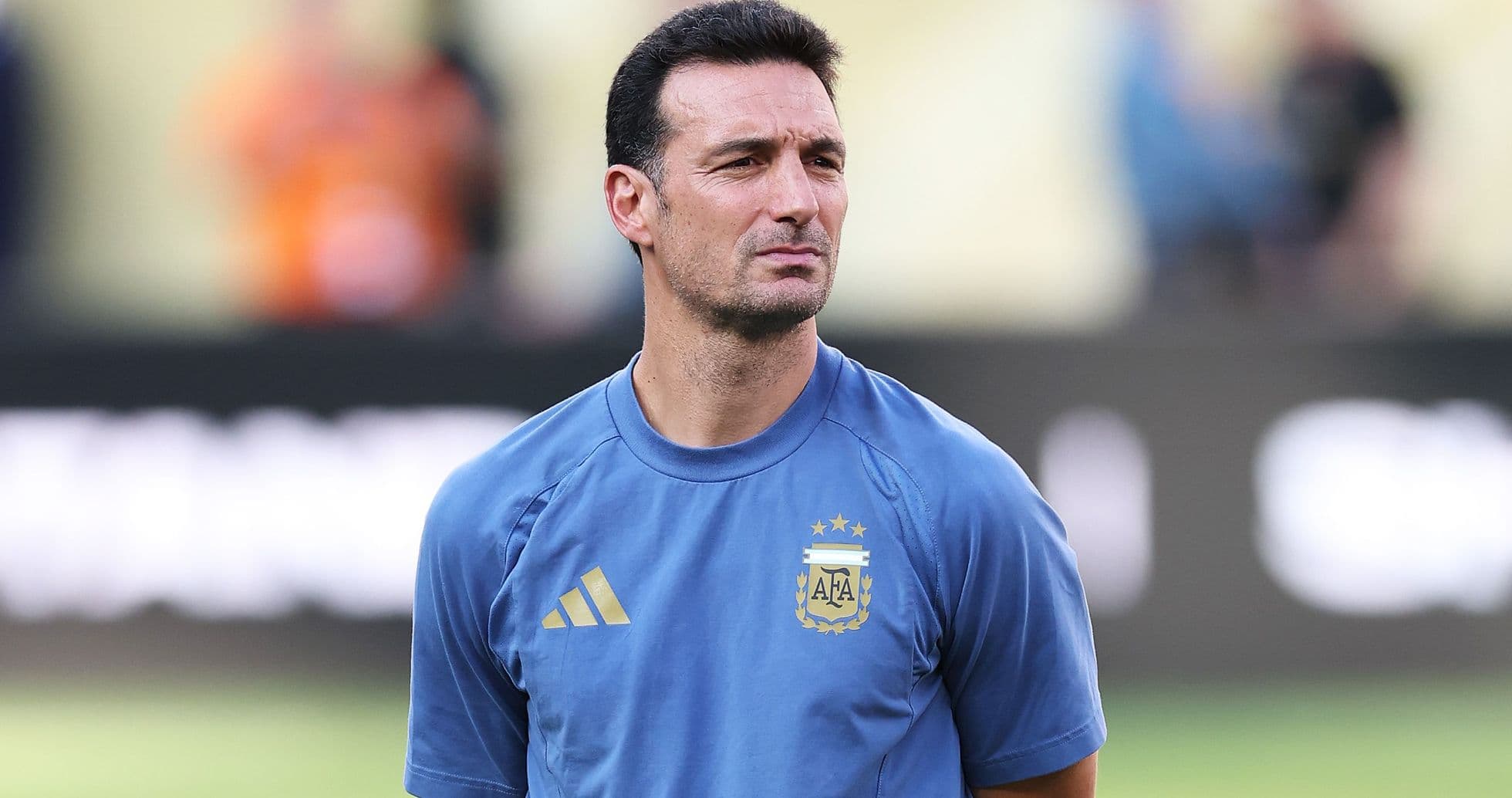
Tactically, this match was always going to hinge on how Argentina’s familiar 4-4-2 would crack Cape Verde Islands’ disciplined 4-1-4-1. Lionel Scaloni doubled down on continuity: a back four of N. Molina, C. Romero, L. Martinez and F. Medina in front of E. Martinez, with a compact midfield band of R. de Paul, A. Mac Allister, E. Fernandez and T. Almada supplying L. Messi and L. Martinez up front. The shape is designed for territorial pressure: full-backs high, double pivot secure, and Messi drifting into half-spaces to overload the central lanes.
Pedro Leitao Brito’s Cape Verde Islands answered with a structure built to bend without breaking. Vozinha anchored a back four of S. Moreira, R. Lopes, D. Borges and S. Lopes Cabral, shielded by the single pivot K. Lenini. Ahead of him, R. Mendes, L. Duarte, D. Duarte and J. Cabral formed a hard-running line of four behind lone forward N. Da Costa. On paper it is a defensive system; in practice it is a springboard for selective counters once the first line of pressure is broken.
Discipline and Game-State Management
Discipline and game-state management were always going to be decisive over 120 minutes, and the card profiles of both teams foreshadowed the narrative. Argentina’s yellow cards this campaign have clustered late: 1 in the 76–90 minute window (33.33%), 1 between 91–105 (33.33%) and 1 between 106–120 (33.33%). This is a side that tends to tighten the screw late and, in doing so, walks the disciplinary tightrope as fatigue and urgency collide. Cape Verde Islands, by contrast, have been most combustible early: 2 yellow cards between 0–15 minutes (40.00%), 1 between 16–30 (20.00%), plus single cautions between 61–75 (20.00%) and 91–105 (20.00%). Their risk is emotional starts; Argentina’s is emotional finishes.
Penalty Story
Layered onto that is the penalty story. Argentina have been awarded 2 penalties this campaign, scoring 1 and missing 1. The conversion rate of 50.00% is a subtle but important warning: in a knockout decided by fine margins, their record from the spot is far from flawless. Lionel Messi himself has 7 goals in the tournament from open play and other situations, but he has missed 1 penalty, a rare blemish in an otherwise astonishing individual campaign. Cape Verde Islands, by contrast, have yet to take a penalty in this World Cup: 0 awarded, 0 scored, 0 missed. If this tie had drifted into a shootout, Argentina’s slight psychological scar from that miss would have hovered over the spot.
Messi: The Defining Figure
Within the “Hunter vs Shield” duel, Messi is the defining figure. Across 4 appearances he has 7 goals from 22 shots, with 15 on target, and a rating of 9.28. He has attempted 11 dribbles with 5 successful, created 10 key passes and drawn 11 fouls. Cape Verde Islands’ defence, which has conceded 5 goals in total at an overall average of 1.3 per match, was tasked with containing a player who, on his own, averages 1.75 goals per game this tournament. R. Lopes and D. Borges at the heart of the back line, supported by K. Lenini dropping into the backline when under siege, formed the shield that had to survive Messi’s roaming and L. Martinez’s penalty-box presence.
Engine Room Battle
The “Engine Room” battle was no less intriguing. For Argentina, R. de Paul and E. Fernandez operate as tempo-setters and ball-winners, while A. Mac Allister and T. Almada offer progression between the lines. Against them, K. Lenini’s screening and the dual Duartes, L. Duarte and D. Duarte, were charged with closing central channels and forcing Argentina wide. J. Cabral’s work from the flank into central pockets was Cape Verde Islands’ main route to transition, linking to N. Da Costa when rare counter-attacking moments appeared.
Statistical Prognosis
Statistically, the prognosis before a ball was kicked leaned heavily towards Argentina. An overall scoring average of 2.8 goals per match against an opponent conceding 1.3 per match overall suggested that chances, and likely goals, would come. Defensively, Argentina’s concession rate of 0.8 per match overall against a side scoring 1.0 overall pointed towards limited opportunities for Cape Verde Islands. The expectation was a match tilted by Argentine pressure, Cape Verde Islands clinging to their structure, and the contest decided by whether the underdogs could survive the inevitable late surge.
In the end, that script held, but only just. Argentina’s superior depth, their comfort in the 4-4-2 over multiple matches, and the individual genius of Messi and his supporting cast eventually broke Cape Verde Islands’ resistance in extra time. Following this result, the numbers and the narrative align: Argentina remain perfect in the tournament, their attacking and defensive profiles validated under knockout pressure, while Cape Verde Islands leave having proven that their disciplined 4-1-4-1 can stretch even the world champions to the outer edge of their composure.