Ángel Di María Defends Messi's Future and Scaloni's Role
Ángel Di María has never been one for half-measures on a football pitch. He isn’t taking any with his words, either.
In the wake of Argentina’s draining run at the 2026 World Cup, and with speculation swirling around Lionel Messi’s future, Di María has delivered a message that cuts through the noise: Messi will stop when Messi decides, not when the calendar tells him to.
Speaking after Rosario Central’s 2-1 defeat to Belgrano, Di María brushed aside the idea that his long-time teammate is nearing the end at the elite level.
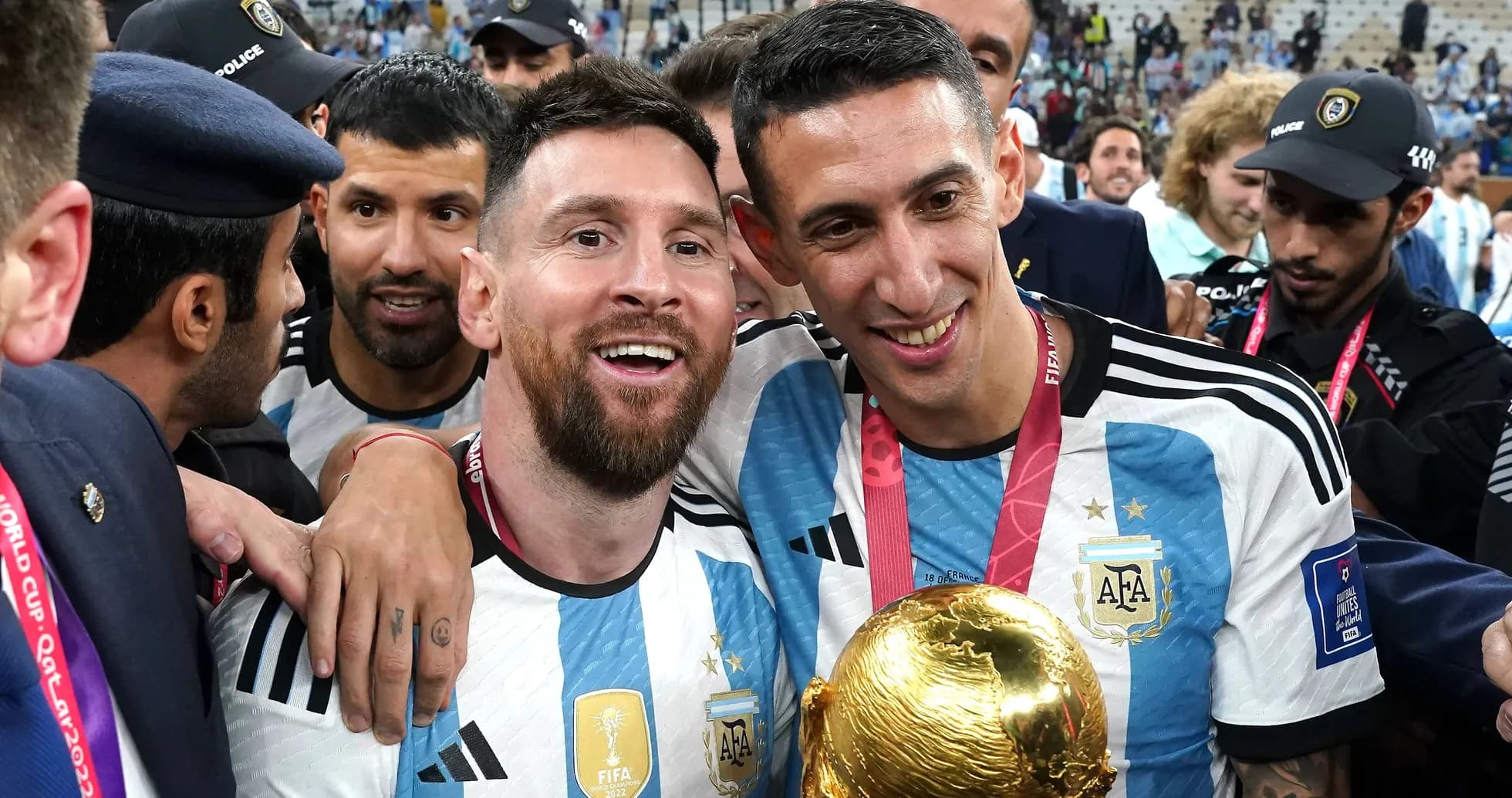
“Leo has to keep going as long as he wants,” he said, firm and unambiguous. “I think he can continue for many more years. At 39, he's shown that he's one of the best and that he can continue to be one of the best in history. He has no ceiling, there's nothing more for him.”
The timing of those words matters. Leandro Paredes recently revealed that Messi had framed the 2026 World Cup final as his farewell to the international stage, a line in the sand for the greatest player Argentina has ever produced. Di María, though, is not ready to speak about endings. Not when the evidence on the pitch still points in the opposite direction.
For him, Messi remains the standard, the reference point, the player who still bends matches and narratives to his will. Age is just a statistic; influence is what counts.
Scaloni, the anchor of a golden era
Di María’s defence of Messi’s future quickly broadened into a wider plea: Argentina cannot afford to lose Lionel Scaloni either.
If Messi has defined an era on the pitch, Scaloni has quietly built the structure around him. Under his watch, the Albiceleste have lived through their most decorated spell in modern history, collecting four major trophies: the World Cup, two Copa Americas and the Finalissima. It is a haul that has redrawn the country’s footballing psyche after years of near-misses and heartbreak.
“Scaloni is the leader of the national team, I hope he stays for everyone's sake,” Di María insisted. “He's developing a good generation of young players who are coming through now, and every little bit helps. I hope he stays; it's his decision. Scaloni, better than anyone, knows what he wants, but obviously, as an Argentine, I'd like him to continue.”
This is not just nostalgia speaking. Argentina’s dressing room has shifted. Veterans like Di María and Messi now share the space with a wave of emerging talent, players who grew up watching them and are now being molded by Scaloni’s hand. To disrupt that process now would mean tearing at the very fabric of a project that has already delivered historic success.
A generation that changed everything
Di María also allowed himself a moment to step back and look at the bigger picture, at the journey this group has taken and the weight of what they have already done.
“They deserve more than just applause for everything they've achieved and have continued to achieve,” he said. “Beating England was the culmination of all that. For me, the World Cup ended there, and we gave the country its greatest joy, and that's the most beautiful thing for everyone.”
In those few lines lies the emotional core of this Argentina cycle. The trophies, the catharsis, the sense that this team has already secured its place in the sport’s pantheon. The recent disappointment on the biggest stage does not erase that; it frames it. It shows the cost of staying at the top, the thin margins that separate glory from regret.
Di María’s words carry the weariness of someone who has lived every high and low, but also the pride of a player who knows this group has already changed the history of Argentine football.
Suffering, strength and what comes next
If the outside world saw the 2026 World Cup as a spectacle, Di María lived it as a test of endurance.
“I suffered through every match,” he admitted, “but in the end they drew on their inner strength and that's what led to victories. Finals are finals; sometimes you win, sometimes you don't. This time it wasn't our turn, but I think the lads did the national team proud.”
There is no attempt to dress up the pain of defeat. No excuses. Just a clear-eyed recognition of what finals demand and how even great teams can fall short without losing their identity.
From Di María’s vantage point, two pillars must remain in place if Argentina are to navigate what comes next: Messi on the pitch for as long as he feels capable of bending games to his will, and Scaloni on the touchline, guiding a new generation that has already tasted both ecstasy and agony.
The medals are already in the cabinet. The legends are already written. The real question now is whether this core, with Messi and Scaloni at its heart, has one more seismic chapter left in it.