Andoni Iraola's Vision for Liverpool: Progress and Challenges
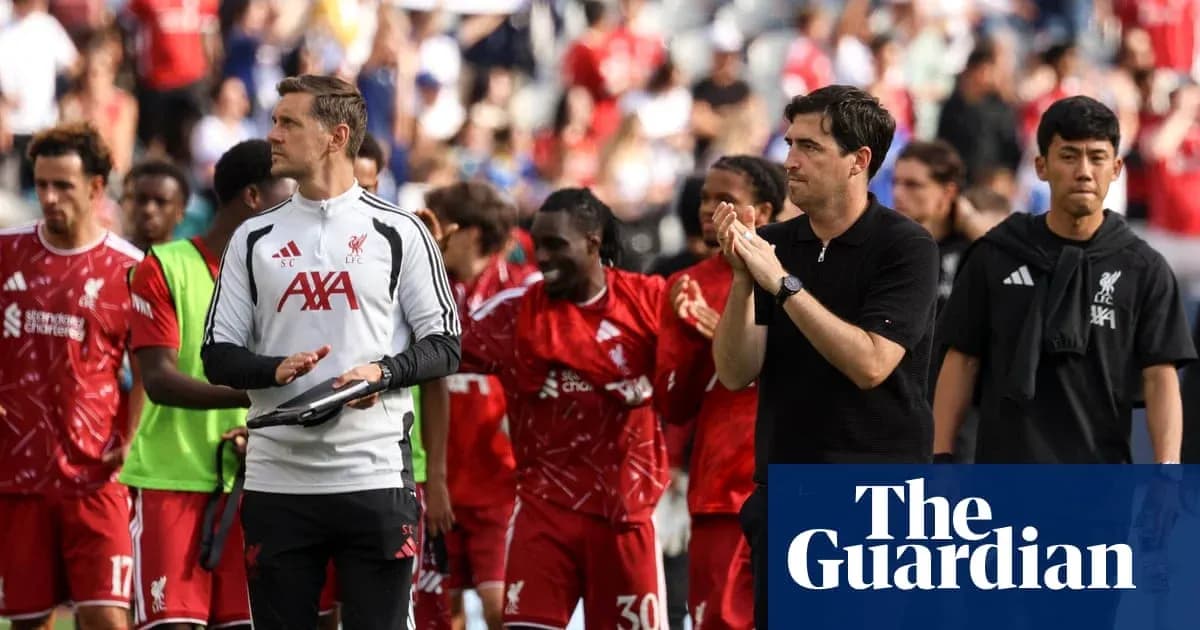
Andoni Iraola’s first real glimpse of Liverpool came not at Anfield, but under the bright, sticky lights of an American summer. Nashville, New York, Chicago: three cities, three very different nights, and one unmistakable conclusion. This is going to take time.
Liverpool beat Sunderland and Wrexham, then were picked apart 4-2 by Leeds in Chicago. Across those games, the outline of Iraola’s Liverpool flickered into view – aggressive, front‑foot, demanding – but so did the scars of last season. Set-piece frailty. Concentration lapses. A squad not yet fully his.
A vision still in pencil, not ink
The first half against Leeds was the clearest window yet into what Iraola wants. With senior names back in the XI, Liverpool hunted the ball, squeezed the pitch and played with a sharper, more urgent rhythm. Leeds were pushed back, the tempo high, the intent obvious. It looked like a team trying to live 10 yards further up the pitch.
Then the changes came. The intensity dropped, the structure frayed, and the familiar issues crept in. Poor defending from dead balls. Players switching off. A promising performance turned into a 4-2 defeat that felt like a warning.
Iraola knows why. Two months into the job, he has not yet coached Virgil van Dijk, Cody Gakpo, Alisson, Alexis Mac Allister or new signing Víctor Muñoz. He has not even met some of them in person. They only return to the AXA Training Centre this week, still shaking off the flight from Chicago and, in Mac Allister’s case, a World Cup summer.
There are fewer than three weeks until Liverpool walk out at Newcastle on the opening weekend. Only two more friendlies remain – a double-header against Como at Anfield – to weld ideas into habits. Iraola admitted he cannot click his fingers and have everything in place by day one. The football he wants is demanding. The learning curve will be steep.
A coach ready. A squad not quite.
The American tour also underlined another truth: Liverpool’s new head coach needs more help from above.
For large stretches of the trip, Iraola was without 14 first-team players. Eight were on post‑World Cup breaks, six were injured, including Joe Gomez, who was hurt in the US. No coach can accelerate tactical adaptation without bodies on the grass, and Liverpool’s work in that regard was always going to be limited.
Even when everyone is back, gaps remain. Big ones.
Mohamed Salah’s departure was announced in March. Talks to end his contract early began even before that. Five months on, Liverpool are still without a replacement for one of the most decisive forwards in their modern history. The right side of the attack is a question that has not yet been answered.
Right-back is another. Conor Bradley’s serious knee injury leaves Liverpool light in that area. Youngsters Jérémy Jacquet and Giovanni Leoni carry real promise – Leoni, in particular, has rebuilt his body impressively while recovering from an ACL injury – and 18-year-olds Ifeanyi Ndukwe and Mor Talla Ndiaye handled themselves well in the US. But promise is not the same as Premier League readiness.
Ndukwe, who impressed, cannot play this season because of post‑Brexit work permit rules. Gomez, with his injury history, must be treated as a bonus option when fit, not a guaranteed pillar of a four-man centre-back group. For a club with Liverpool’s ambitions, that is a fragile foundation.
Iraola spoke interestingly about his preference for wingers who can play on both flanks and the benefits of switching them mid-game. It hints at a more fluid attacking structure. Yet even if Liverpool complete a deal for Bradley Barcola from Paris Saint‑Germain, the right side still feels like an area walking a tightrope.
Nyoni steps out of the shadows
One upside of the absences was the enforced promotion of youth. Iraola used the tour to test the depth of Liverpool’s academy, and several youngsters responded.
Ndukwe, Talla Ndiaye, Lewis Koumas, Kieran Morrison and Luke Chambers all left favourable impressions. But one player stood out more than the rest: Nyoni.
The 19-year-old, part of Arne Slot’s squad last season along with Rio Ngumoha, arrived in the US as a prospect on the fringes. He left it looking like a midfielder firmly in Iraola’s plans.
While Ngumoha made 19 Premier League appearances last season, including five starts, Nyoni had to make do with six league cameos from the bench. On this tour, he looked determined to change that hierarchy. He embraced Iraola’s demand to look forward early, to find vertical passes under pressure, to move intelligently into pockets that open passing lanes.
His involvement in Florian Wirtz’s goal against Leeds summed it up. The pass in the buildup was delicate, precise, and entirely in tune with the type of football Iraola wants: brave, quick, progressive. Nyoni had spoken after the Leeds game about needing to improve this summer. Across the Atlantic, he backed his words with performances.
Jones loses ground at the wrong moment
For Curtis Jones, the tour felt very different.
With one year left on his contract and growing interest from Inter, this was a chance to make himself central to Iraola’s project. Instead, he drifted to the margins.
Unlike Nyoni and Dominik Szoboszlai, Jones never looked fully comfortable with Iraola’s demands in central midfield. He struggled to impose himself, particularly in the second half against Leeds, when the game asked for control and clarity. What followed off the ball did him no favours either.
Jones’s visible irritation at not receiving the captain’s armband from Szoboszlai against Wrexham jarred. He was also overlooked when Gomez went off in the opening game against Sunderland, with the armband again going to Kostas Tsimikas – a reserve left-back who spent last season on loan at Roma.
For a boyhood Liverpool fan and one of the more senior players on the tour, that was always going to sting. Jones, Szoboszlai and Tsimikas later played down the incident, laughing it off in the days after the Wrexham win. On social media, the row swelled beyond its true scale.
But context matters. Iraola has been clear about the importance of the collective, about ego being secondary to the group. Against that backdrop, Jones’s reaction felt out of step with what the new head coach is trying to build. At a time when others were seizing opportunity, he allowed one to slip.
Szoboszlai takes centre stage
If there was one constant presence across the tour, it was Dominik Szoboszlai.
With Salah, Andy Robertson, Van Dijk and Alisson all absent, Szoboszlai became the face of Liverpool in the US. The Hungary captain was greeted with a roar every time he appeared. His touches drew cheers, his interviews drew cameras, his profile loomed large over a relatively inexperienced squad.
Crucially for Iraola, the attention did not distract him. Szoboszlai trained with intensity and led by example, setting standards for younger players still feeling their way into senior football. Fresh from signing a new five-year contract, he looked every inch a pillar of the next iteration of this team.
With Salah and Robertson gone, Liverpool have two vice-captaincy slots to fill. Szoboszlai’s performances, attitude and influence on this tour made him an obvious candidate.
Three games in the US will not define Iraola’s Liverpool, but they have framed the challenge. The idea is clear. The work has started. The gaps – in personnel, in cohesion, in experience on the right side – are just as obvious.
Now the senior players walk back through the doors at AXA, the transfer window ticks towards its decisive phase, and the clock to Newcastle keeps counting down. Liverpool know what their new head coach wants.
The question is whether the club move quickly enough, and boldly enough, to give him a team that can actually play it.