USMNT's Growth: McKennie and Berhalter Reflect on Progress
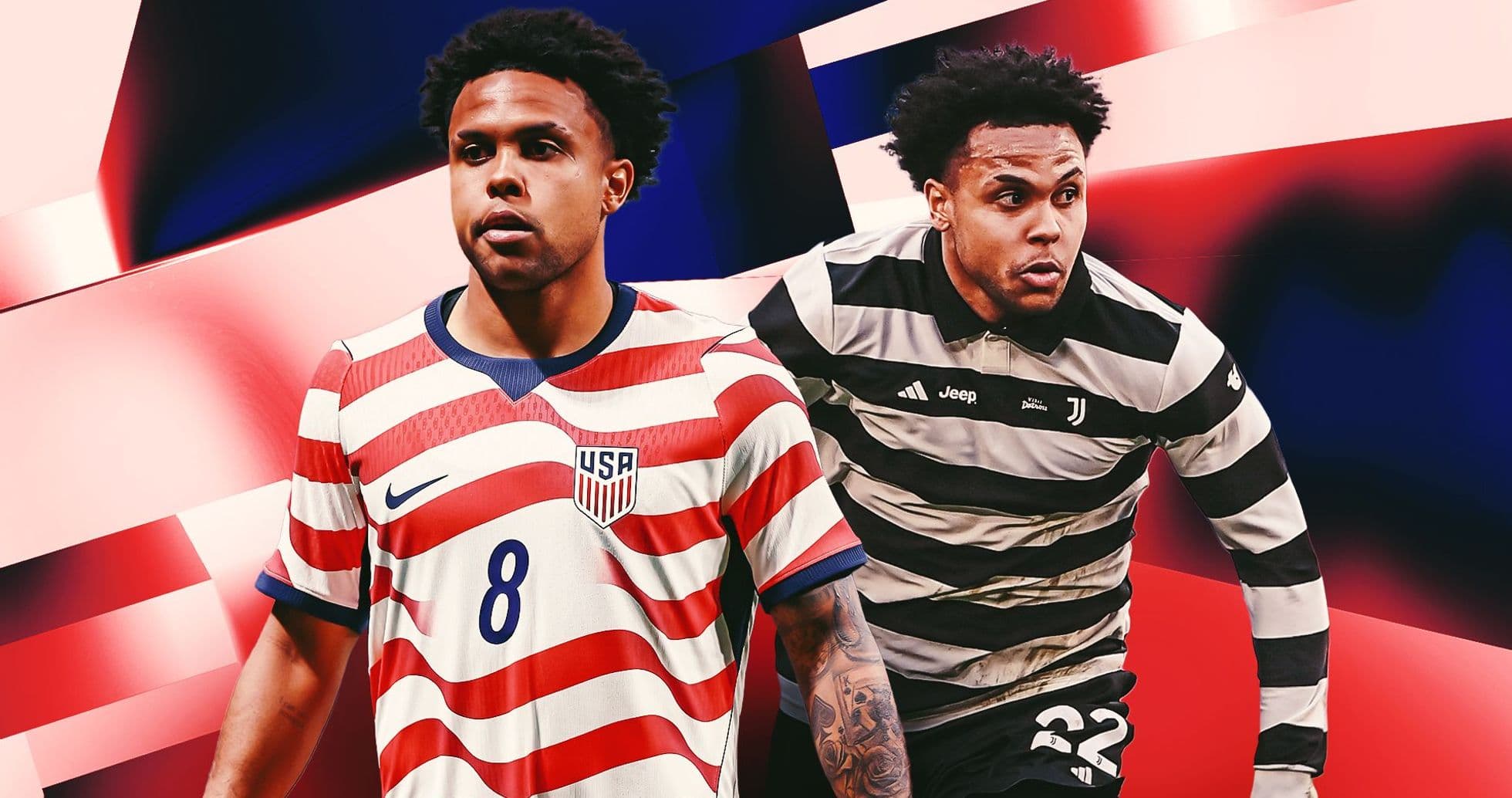
Weston McKennie walked into the Chicago Fire training facility on Friday with a grin and a mission. He wanted to see Gregg Berhalter.
Next to him, Sebastian Berhalter wanted the same thing, for slightly more obvious reasons.
"He's a great person, and I'm not just saying this because [Sebastian is here]," McKennie said with a laugh, talking about his former USMNT coach and Sebastian’s father.
McKennie had barely dropped his bag before he and the younger Berhalter were ushered to the podium. The Juventus midfielder still had the travel in his legs, but the idea of reconnecting with the man who helped shape his international career clearly energized him.
"I went to him with problems on and off the field. I've cried in front of him," McKennie said. "We've had tough times and also amazing times together, and so it'll be really nice to be able to see him around here, hopefully, today, and just to catch up and just go over some memories. I'm sure he'll probably give me some advice leading into the game and into the World Cup, because that's just the type of guy he is."
Berhalter’s Generation Comes of Age
Gregg Berhalter’s fingerprints are still all over this U.S. team, even if he no longer stands in the technical area.
When he took over after the 2018 World Cup qualifying collapse, he inherited a broken program and a dressing room that needed a reset. The rebuild was always going to be anchored in youth. Many of the players he trusted were teenagers, raw and ambitious, still learning what it meant to be professionals.
Now, they’re something else entirely.
"I think one thing we have to remember is when I got them, they were young, they were babies, and they were just learning what it takes to be a professional athlete," Gregg Berhalter said. "Now I see them, and they're men! They have kids, and they're adults, and they know exactly what it means to maintain themselves as professionals. It's an amazing thing to see.
"I just greeted them now, and was like, 'I can't believe it, they're grown up!'. I think they'll be ready for this moment. The one thing I know about this group is that they step up to these moments."
That sense of continuity lingers. Even as the coaching voice has changed, the core of the group still carries Berhalter’s imprint, and he now watches from a short distance, eager to see them cash in on the years of growing pains.
Richards, Timelines and a Manager’s Dilemma
Out on the training pitch Friday, Chris Richards joined the rest of the group and went through the warm-up without any visible problems. It was a welcome sight. It was not the same as clearance to play.
He will not feature this weekend, Mauricio Pochettino confirmed. The defender is fit enough to train, not fit enough to be thrown into a match that close to a World Cup.
The situation clearly irks the coach.
"When we decided the roster, we thought that Chris could play the final of the Conference [League] because we had designed the roster previously," Pochettino said. "There was a line of information where we were thinking that he could play that final against Rayo Vallecano in the Conference League. He was on the bench, if you remember. After, that he could maybe be [there] against Senegal. After, today, in the end, the timelines were lengthening and [it] angers me a bit. I’m not happy because we know Chris Richards is an important player, of course, we all know it, but also when I was saying is based on the information that we had, and sometimes there wasn't clarity."
"In the end, we can hope that Chris can be there. But, in the end, we’re going to find ourselves coming without competing [for a month] and after we have to make the decision if he’s in form to compete or not. There’s not a lot of time in the World Cup."
That’s the squeeze every World Cup coach feels. The calendar offers no kindness. A month without competitive football can turn a key defender into a question mark.
Across the squad, Pochettino described the usual end-of-season bumps and niggles, nothing out of the ordinary. He even laughed when asked to list specifics. The bigger issue, in his mind, is the impossible calculus of risk and rhythm on the eve of a global tournament.
"Rest the stars and someone will say they’re undercooked. Play them and one bad twist becomes a referendum on his judgment."
"The haters today with social media, they will never agree if you play normally with the players or if you play with the first team for the World Cup," he said. "If nothing happens, no one is going to say anything, good decision, but if something does happen, they say I have no clue!
"It's impossible to know what we need to do. That's why, from the beginning, it is to prepare in the best way that all the players have the possibility to play or to compete."
Germany Again, and a Sharper Edge
The U.S. have been chasing top-tier European opposition for precisely this reason: there’s no better dress rehearsal.
In March, Pochettino spelled out why he wanted the likes of Portugal and Belgium. Those tests arrived, and he watched his team learn harsh lessons in real time. Now, fresh off a win over Senegal, Germany await this weekend in another heavyweight friendly.
"We wanted to play the best in preparation for this World Cup," he said. "I think all the tests of Portugal or Belgium were amazing because they allowed us to improve and to learn what we don't need to do and how we need to approach it again. I think it's a great opportunity, after Senegal, this is going to be a beautiful team that we have to face tomorrow, and it's about approaching in the best way we can."
Germany is no stranger. In October 2023, the U.S. struck first through Christian Pulisic but still fell 3-1 in Connecticut. Fourteen of the 26 players in the current squad were part of that defeat.
McKennie doesn’t dwell on the details of the German lineup that day, but the memory of the contest remains clear.
"I don't really remember Germany's roster for that game, and I don't know how similar it is to this roster," he said, "But I think that game showed, obviously, the quality that they have, but also the quality that we have as well. We played a good game, and we had the potential to win that game as well.
"We go into this game with a lot of players that haven't played against them yet and players that have, so I think the new energy, the new style, the new circumstances in general leading into a World Cup, I think it's going to be a great test for us and I think we go out there with the same mentality that we always go out with."
Different coach, different context, same measuring stick. Germany still tells you where you really are.
McKennie’s Form and the Role Question
If there is one U.S. midfielder arriving at this camp with a tailwind behind him, it’s McKennie.
His season with Juventus ended in frustration at club level — no Champions League, the top four missed by just two points — but individually he delivered. Nine goals and six assists across Serie A and the Champions League underlined his evolution as a box-to-box threat.
For the U.S., that raises an old question in a sharper form: where on the pitch do you get the best version of him? Deeper, as a connector and ball-winner, or higher, breaking lines and arriving in the box?
McKennie isn’t fussed.
"I think any player can say that coming out of club form and being in good club form does a lot, because it's the confidence that you bring, it's the desire, the want, the everything," he said. "I think the system that our coach has here, the type of player I am is a player that adapts. I'm the type of player who can play many roles, so I'm more of a guy that, wherever he needs me to do, I'll do whatever I'm called upon for.
"I try to step up and just be the best I can for the team. I think that's one thing that this team does have: no one's selfish. Everyone's here for the right reasons. Everyone's here to get a victory for the U.S., so I think it's amazing to be able to come here with confidence, and coming off a great individual season. Obviously, my club team didn't finish where we wanted to finish, but the confidence is still there."
Some teammates arrive in sparkling club form, others limping through difficult seasons. World Cups rarely care. The tournament has a way of stripping away narratives and boiling everything down to 90 minutes, then 90 more.
On Friday in Chicago, you could see both timelines at once. Gregg Berhalter, talking about the babies he once coached who now have children of their own. Weston McKennie, in his prime, still leaning on that same voice for advice before stepping into the biggest month of his international life.
They’re not kids anymore. The excuses of youth are gone. The World Cup won’t wait.