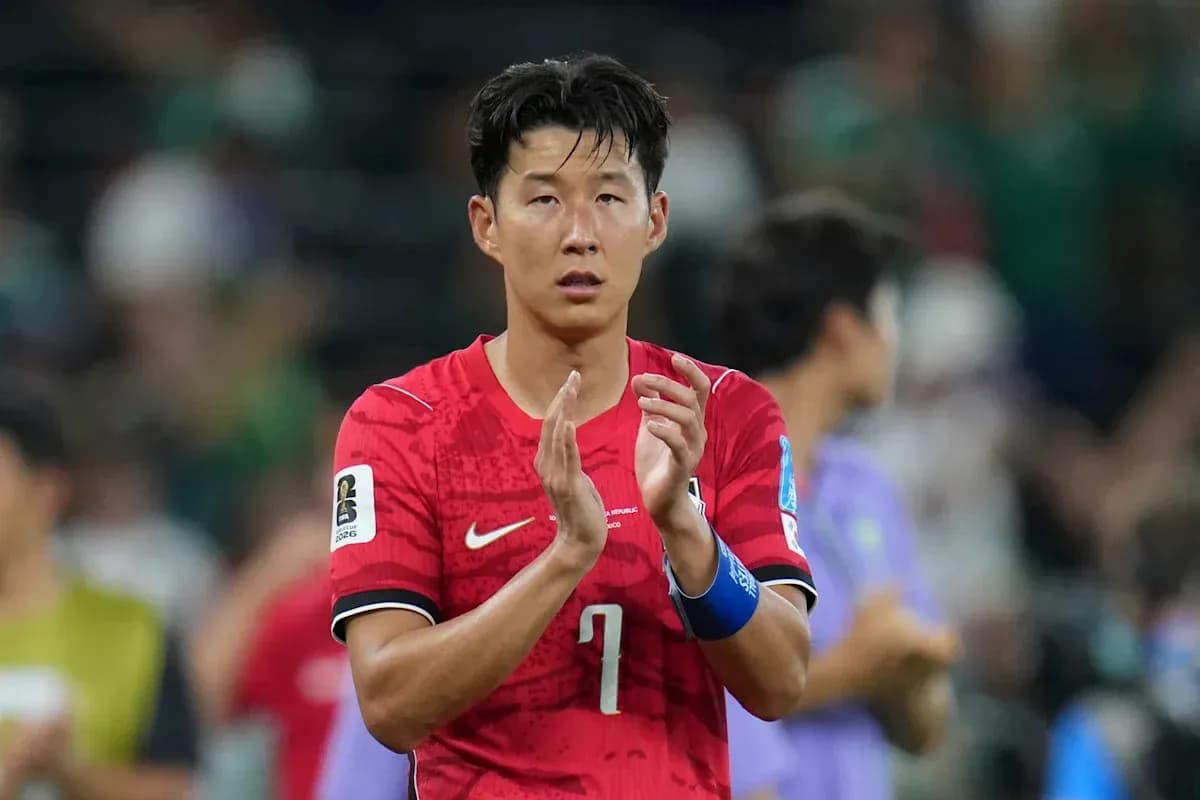
Son Heung-min's Heartfelt Response to World Cup Disappointment
Son Heung-min says he is “indescribably hurt.” You can see why.
South Korea’s World Cup campaign ended with a thud in the group stage, a collapse sharp enough to draw public criticism from the country’s president and force the resignation of coach Hong Myung-bo. For the captain and face of the national team, the fallout has cut deep.
On Monday night, Son turned to Instagram with a long, raw message to supporters. It was not the polished, media-trained apology of a superstar used to the spotlight. It read more like a confession.
“I don't dare to convey the disappointment and hurt of the fans with a single word ‘sorry,’” he wrote. “So even saying those words feels insufficient.”
The 33-year-old, a hero at home and a marquee name with Los Angeles FC in Major League Soccer, has long called the World Cup his “child's dream stage.” That dream, he admitted, has been shattered.
“The ‘child's dream stage’ that I always talked about has collapsed,” he wrote. “I'm indescribably stuck and hurt. To be honest, it's still not easy to accept this reality.”
The reality is brutal. South Korea opened the tournament with a promising win over Czech Republic, only to unravel with back-to-back defeats to Mexico and South Africa in Group A. The team failed to progress even as one of the best third-place finishers, a benchmark that had felt attainable when the draw came out.
Son’s own tournament only sharpened the criticism. He started on the bench for the decisive match against South Africa, never found the net in any of the three games, and left the World Cup without the kind of defining moment fans had hoped their captain would deliver.
He did not hide from that.
He wrote that he felt personally responsible that he “couldn't repay the time, heart, and constant support and love” the fans had poured into the team. For a player used to carrying the expectations of a nation, this failure clearly stings in a different way.
The pressure around the squad has been ferocious. Performances were dissected, the coach stepped down, and national pride—so often tied to footballing success—took a hit. In that storm, Son tried to pull the conversation back toward the players’ humanity.
He urged supporters to “send warm support and encouragement rather than criticizing and hurting all the players,” a plea that revealed both the weight of the backlash and his determination to shield his teammates.
One thing his message did not contain: any hint of a farewell.
If there were fears that this disappointment might push him into international retirement, Son moved quickly to silence them. He made it clear he intends to keep wearing the shirt, and to keep carrying the burden that comes with it.
“I will do my best in my position again to win the hearts of the Korean people and football fans,” he wrote.
The World Cup dream may have collapsed this time. Son’s response, though, leaves no doubt: he plans to stand in the rubble and start again.