Robbie Keane's Controversial Path Back to Celtic
Robbie Keane’s path back to Celtic, once a romantic football story, has turned into a political fault line running straight through the heart of the Scottish champions.
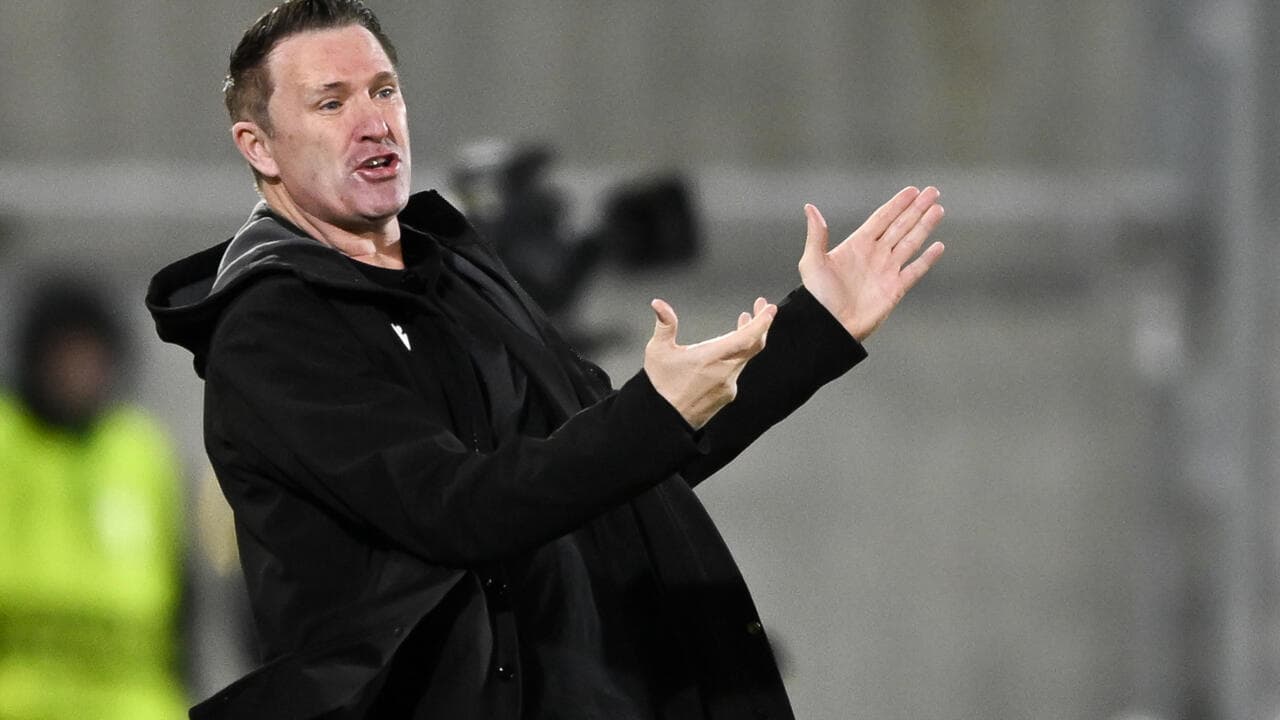
The former Republic of Ireland striker, understood to be the leading contender for the manager’s job after entering talks with principal shareholder Dermot Desmond, is facing a rising tide of opposition from sections of the club’s support who say his recent past makes him an unacceptable choice.
From loan hero to lightning rod
Keane’s relationship with Celtic began in far simpler times. In 2010 he arrived on loan and did what Robbie Keane has always done: score goals. Ireland’s record marksman lit up that spell, tapping into the emotional bond between Celtic and the Irish diaspora. For many, he felt like a natural fit.
That image has been shattered.
Keane’s decision to remain in Israel as manager of Maccabi Tel Aviv after the war in Gaza erupted has provoked fierce criticism in Ireland and among a vocal part of the Celtic fanbase. What might once have been a popular appointment now sits squarely at the intersection of football, identity and geopolitics.
Celtic supporters have made their stance on Palestine visible throughout the conflict, with Palestinian flags a regular presence at matches. The club’s terraces, especially the most politically active sections, have long cast Celtic as more than just a team, but as an institution rooted in solidarity with oppressed communities.
So when Keane emerged as frontrunner for the job, the backlash was swift and highly visible.
Graffiti and banners denouncing the prospect of his appointment have appeared outside Celtic Park. The message is blunt: this is not just about tactics or trophies; it is about what Celtic represents.
Organised resistance
Opposition has quickly coalesced into organised fan action. A group calling itself “Celtic Fans for the Liberation of Palestine” released a statement warning that hiring Keane “would be deeply divisive among the support”.
The statement, shared widely on social media, leans heavily on the club’s origins and identity.
“Celtic supporters have a long and proud history of solidarity with the Palestinian people,” it reads. For those backing the campaign, Keane’s time at Maccabi Tel Aviv during Israel’s assault on Gaza is a line that cannot be crossed.
“For us, Robbie Keane’s decision to manage Maccabi Tel Aviv during the genocide in Gaza is impossible to ignore,” the statement continues. It describes his choice “to manage a club in Israel while, less than 40 miles away, the same country was using indiscriminate weapons of mass murder against defenceless people” as “unconscionable”.
The language is stark, and deliberately so. It anchors the argument in Celtic’s founding story.
“Celtic was founded by a community shaped by the legacy of genocide, displacement and famine. Our club’s roots lie in solidarity with those who suffered injustice and oppression.
“We urge the Celtic board to listen to supporters’ concerns and reconsider this appointment.”
The ‘North Curve Celtic’ account on X, a prominent voice among the club’s ultras, has published a list of 67 groups said to have endorsed the statement, underlining the breadth of organised resistance.
This is no fringe murmur. It is a coordinated campaign aimed squarely at the boardroom.
Keane’s record and rationale
Keane’s coaching journey into this storm began before the current conflict. He was appointed by Maccabi Tel Aviv in June 2023, months before the Hamas-led attacks on October 7 and Israel’s subsequent bombardment of Gaza.
On the pitch, his work was emphatic. The 45-year-old led Maccabi to a league and cup double before resigning in 2024 and later taking over at Hungarian side Ferencvaros in 2025. From a purely football perspective, he arrives on the shortlist with a fresh winner’s résumé.
Keane has previously explained why he chose to stay at Maccabi for the full campaign, pointing to the staff who followed him to Israel.
“I have a duty of care,” he said. “My analyst, for example, was at Middlesbrough for 12 years. For him to come with me to Israel and then for me to just walk away, leaving him and his family.”
That sense of responsibility is central to Keane’s defence of his decision. For his critics, it does not outweigh the symbolism of remaining in post as the war escalated.
The clash is stark: professional duty versus political and moral expectation, played out through the prism of a club whose support has long embraced a particular worldview.
A board under pressure
All of this lands on a Celtic board that has just watched interim manager Martin O’Neill, at 74, drag the club over the line to another Scottish Premiership title on the final day of the season and add the Scottish Cup for good measure.
O’Neill’s short-term return delivered silverware and stability. It did not answer the long-term question. Who leads Celtic next?
On paper, Keane offers a compelling football narrative: a former Celtic striker, a high-profile name, a recent double winner as a coach. In practice, the board now knows that appointing him would ignite a firestorm among a significant section of its own support.
This is not a routine managerial search. It has become a test of how Celtic’s hierarchy balances football ambition with the political and moral currents that swirl around the club.
The banners are already on the walls. The statements are circulating. The supporters have drawn their line.
The decision now rests with the board. Whatever they choose, there will be no quiet way out of this.