Matheus Cunha, Harry Kane and the Psychology of Footballers
The World Cup has always been a brutal judge of character. This year, it has also become a strangely busy courtroom for amateur psychology.
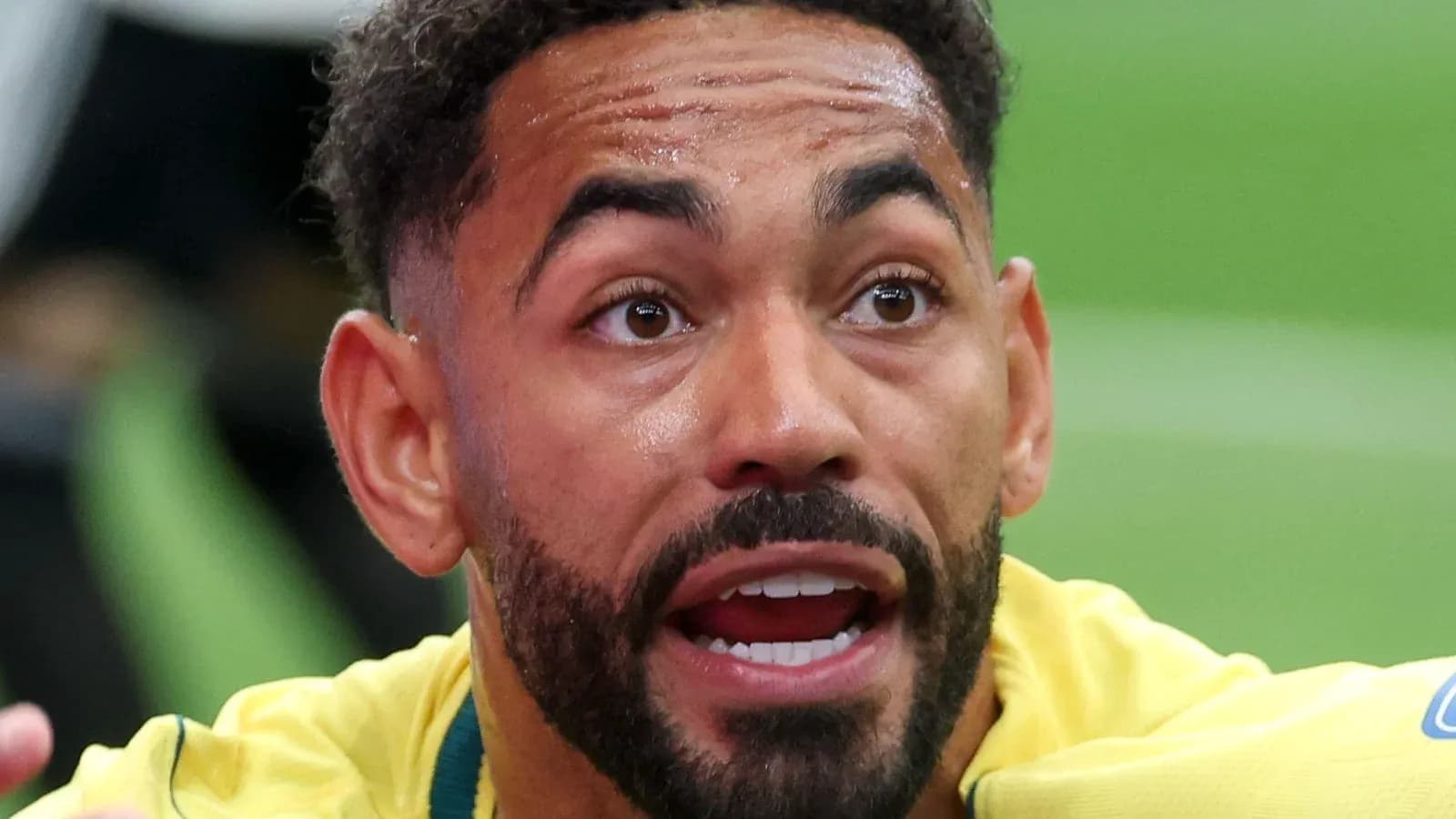
Matheus Cunha, we are told, will never replace Vinicius Junior for Brazil. He will probably fail at Manchester United as well. The charge? He is nice.
Not short of talent. Not tactically limited. Not physically fragile. Just… nice.
The argument, floated around Brazil’s win over Japan and amplified in English coverage, leans on a supposed “general feeling” and “awkward narrative” that Cunha “lacks the grit to go with the guile needed to become a great footballer, instead of a good one.” The main exhibit: his decision to briefly console Japan’s Ao Tanaka after Brazil’s victory, before joining in with his own team’s celebrations.
From that, we leap to the conclusion that he doesn’t have the edge for the very top.
It’s a stretch. This is a player who once picked up a ban for removing an Ipswich security guard’s glasses during what can only be called a fracas. Hardly the profile of a shrinking violet. Yet one moment of empathy on the pitch becomes a personality diagnosis, then a career forecast.
And it leads to the punchline: when Neymar finally steps away from the Seleção, he will hand the baton to Vinicius Jr, not Cunha.
Of course he will. Vinicius is already Brazil’s attacking reference point, a Champions League-winning superstar at Real Madrid. That succession plan has nothing to do with Cunha pausing to comfort a distraught opponent. But nuance is less exciting than a neat morality tale about a forward being “too nice” for the big time.
The same game, the same tournament, and yet the same media instinct keeps reappearing: define players not by what they do, but by what they supposedly are.
Kane, Bellingham and the Sliding Scale of Ego
Take Harry Kane. In the Daily Mail, Craig Hope describes the England captain as a man without ego “in a traditional sense” – “the humblest of superstars” – who still needs “a stubborn streak of high self-regard” to score the volume of goals he does.
So which is it? Humblest of superstars, or a striker driven by a “stubborn streak of high self-regard”? The piece tries to have it both ways, simultaneously downplaying and praising the same trait.
That contrast becomes sharper when set against the language previously used for Jude Bellingham. The same writer has painted Bellingham as a “divisive soloist,” a “poster boy for moodiness,” a “brand ambassador for petulance,” “an angry young man.” Kane’s self-belief is framed as admirable resolve. Bellingham’s is framed as a problem.
Different players, different personalities, of course. But the labels matter. One man’s ego is recast as leadership. Another’s becomes a character flaw. The calibration of who gets which description is rarely explained.
Hope’s piece also wanders into a curious geography lesson while mulling Kane’s future. Bayern Munich, he writes, is not Barcelona; the Bundesliga is not LaLiga; Der Klassiker is not El Clasico – “Der Klassiker is Bayern versus Dortmund, by the way.”
The explanation lands with the air of a teacher addressing a room of inattentive pupils. Bayern are painted as “stable,” “familiar,” “logical,” while Barcelona and the Nou Camp are “irresistible.” That’s quite a framing given Bayern went further in last season’s Champions League and collected more trophies. Stability and familiarity tend to be compliments in elite sport. Here, they sound like a slight.
England’s “Boost” and Brazil’s Reality
Across at the Daily Mirror, Matty Hewitt’s take on Brazil’s meeting with Japan adds another layer to the narrative fog. He suggests it “looked as though the Three Lions were going to be given a major boost” when Japan took the lead, with Brazil at risk of going out.
England, of course, lost to Japan just three months ago. Calling Japan a “major boost” for anyone at this point feels like a lazy reflex rather than a considered football judgement. England have beaten Brazil more recently than they have Japan. The old hierarchies do not always survive contact with current form.
From that same match, Jeremy Cross zeroes in on Cunha’s “classy World Cup act” with Tanaka, then folds it into that broader claim that the Brazilian lacks the “grit” to be truly great. It is a tidy story. It just doesn’t stand up to much scrutiny.
A forward who competes at the top level for club and country, who has shown fire in less flattering circumstances, is suddenly accused of softness because he took a few seconds to acknowledge an opponent’s pain. That’s not analysis. It’s projection.
Nagelsmann, a “Snap” and a Headline
Germany’s exit to Paraguay on penalties brought a different kind of character assessment. MailOnline led on the line that Julian Nagelsmann “snaps at female reporter’s questioning” after the defeat, with the added intrigue of Jürgen Klopp supposedly eyeing his job.
Two points jump out. First, the decision to label Lili Engels as a “female reporter” in the headline, when she is referred to simply as a reporter in the body of the piece. The gender tag appears to exist mainly to sit above a picture of a young woman and to change the emotional colouring of the word “snaps.”
Second, the clip of the exchange doesn’t quite match the drama. It shows a slightly tense back-and-forth between a coach under enormous pressure and a journalist doing her job. Nagelsmann looks irritated, yes. But “infuriated”? “Snapping”? It is a long way from a meltdown.
If that is the standard for a “snap,” then a lot of post-match interviews over the years would need reclassifying.
The Fix, the Claims, the Decision
Away from the World Cup giants, the Daily Mirror also reports that FIFA have taken a decision over whether to investigate Algeria’s clash with Austria following match-fixing claims. The headline flags the controversy; the governing body’s response becomes part of the wider noise around a tournament already heavy with off-field narrative.
From Kane’s supposed ego profile to Cunha’s supposed niceness, from Bellingham’s supposed moodiness to Nagelsmann’s supposed fury, one pattern keeps repeating: personality as clickbait, character as a shortcut.
Footballers and managers are being squeezed into ever tighter boxes – too nice, too angry, too petulant, too humble – on the basis of single moments and selective adjectives.
The game itself hasn’t changed. The way it’s being talked about has.