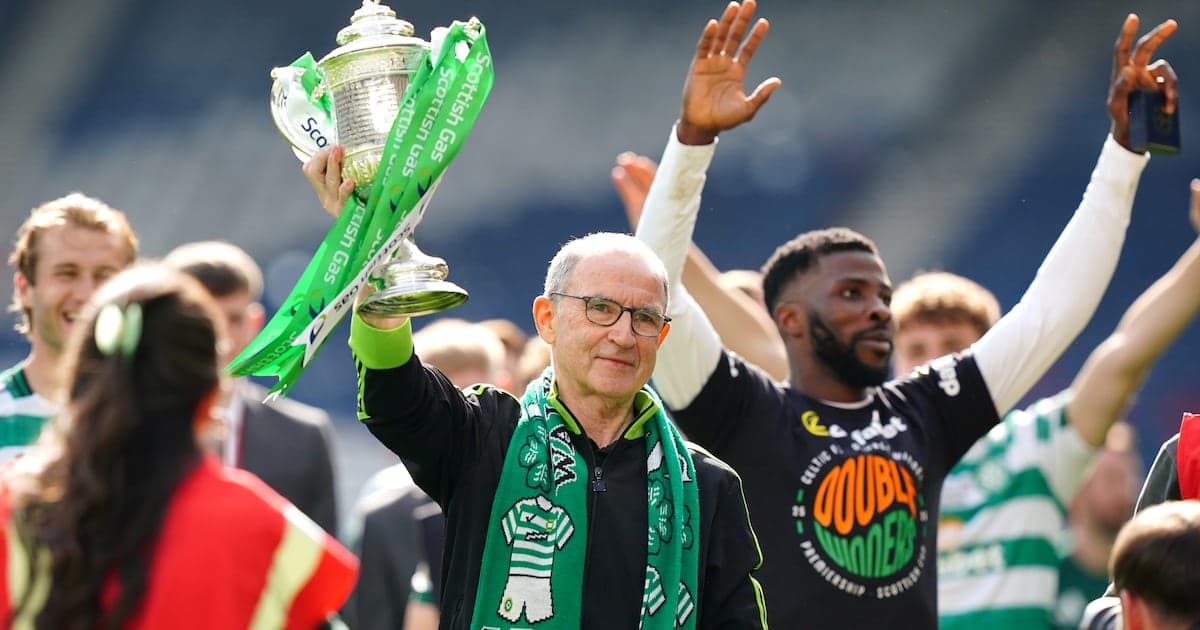
Martin O’Neill Returns as Celtic Manager After Remarkable Season
Martin O’Neill is set to complete one of the most remarkable returns in modern British football, with Celtic expected to confirm the 74-year-old as their permanent manager after he agreed a one-year deal to stay in Glasgow.
The contract, which includes an option for a second season, rewards O’Neill for hauling a fractured campaign back on track and finishing it with a domestic double. He did that not once, but across two separate interim spells in the same season, steadying the club when it threatened to veer off course.
Keane talk, Keane backlash
For a time, it looked as if Celtic would go in a very different direction.
Robbie Keane was pushed to the forefront of the discussion at boardroom level. The former Republic of Ireland striker held talks this week with Dermot Desmond, the club’s principal shareholder, as Celtic weighed a younger, more modern coaching profile against the comfort of experience.
Then the reaction hit.
A vocal section of the Celtic support made their anger plain at the prospect of Keane’s appointment, focusing not on his playing pedigree but on his managerial choices. His spell in charge of Maccabi Tel Aviv, followed by his stint at Ferencvaros in Hungary – from whom he resigned at the end of May – proved deeply contentious among fans who did not want that baggage attached to the club.
The mood music around Keane shifted quickly. The mood around O’Neill never really did.
O’Neill, again
After Celtic’s Scottish Cup final win over Dunfermline, O’Neill asked for time to think. At 74, and after a long, decorated career, he had every right to pause.
Yet there was always a sense of inevitability about his answer. The Northern Irishman relished the rescue act, relished the noise, relished the chance to restore order in a season that had lurched from one storyline to the next. A longer stay appealed.
Desmond, notably, has been here before. It is 26 years since he first persuaded O’Neill to leave Leicester City for Glasgow, a move that transformed Celtic’s modern history. That initial spell yielded three Scottish titles, three Scottish Cups and two Scottish League Cups. It also carried Celtic to the 2003 Uefa Cup final in Seville, where José Mourinho’s Porto denied them on a sweltering, unforgettable night.
Those memories still carry weight at Celtic Park. So does O’Neill’s authority.
From Rodgers’ exit to a chaotic interlude
This latest chapter began in chaos last October, when Brendan Rodgers resigned and left Celtic scrambling for a stabilising figure. O’Neill stepped in on a short-term basis, a familiar face asked to put out fires.
Celtic then tried to pivot. Wilfried Nancy was brought in as the long-term answer, the man to modernise and refresh the project. His tenure imploded almost before it began. Eight games, and he was gone, his reign filed under the club’s more bruising recent experiments.
The pressure on Desmond and the hierarchy grew. So did the temptation to turn back to what they knew.
O’Neill returned once more, took hold of the dressing room and the title race, and guided Celtic to a successful defence of their Premiership crown. The Scottish Cup followed, completing a domestic double that felt, at times, improbable.
Now comes the formal confirmation of what his players and most supporters have already been acting on: Martin O’Neill is not just the caretaker any more. He is Celtic’s manager again, with one more crack at shaping the club’s future as well as honouring its past.