Gianni Infantino's Fragile Reign as FIFA President
Gianni Infantino’s reign as “King of Football”, the title Donald Trump so eagerly bestowed on him, has never looked more fragile.
Less than a fortnight ago, he strode across the MetLife Stadium turf alongside the US president, bathed in fireworks and flashbulbs, to hand the World Cup trophy to Spain and Argentina. There were boos, yes, but they sounded like background noise to a leader at the peak of his power. The biggest World Cup in history had just closed with record revenues and broad praise for the football. Infantino left New York with letters of support from around 200 of FIFA’s 211 member federations and every expectation of a coronation-style re-election in March.
Now that same New York trip feels like a different era.
In the space of a week, the FIFA president has gone from untouchable to embattled, forced into a humiliating climbdown over a private investment scheme that detonated a rift at the top of the global game and left his own position in doubt.
The plan that blew up
Infantino’s miscalculation was not subtle.
He pushed a proposal to carve out FIFA’s most lucrative assets – the World Cup and other major competitions, plus broadcasting, sponsorship, ticketing and hospitality – into a new subsidiary called FIFA Forward Enterprise (FFE). A not-for-profit governing body would suddenly have a for-profit arm, with private investors buying in.
The numbers were huge. FIFA pitched a valuation of $20bn for FFE and sought to raise $4.2bn by selling roughly 20 percent. The “anchor investor” was set to be Thrive Eternal, a vehicle created by Joshua Kushner, brother of Jared Kushner, Donald Trump’s son-in-law.
For FIFA’s 211 member federations, the sales pitch was simple: cash. Each association was offered $20m if they signed up by a September 19 deadline. That sat on top of the $10m they were already due over the next four years, funded largely by FIFA’s record $15bn revenue from the 2023-26 cycle and the World Cup that has just finished.
Under the FFE model, those payouts would climb. FIFA said members would receive $20m each now, rising to $22m through 2034 and $24m through 2038. For small federations in places such as Andorra, Montserrat or Papua New Guinea, those are transformative sums. For England, Spain or France, the money matters less than control of the sport’s crown jewel.
Infantino gambled that the lure of hard cash would outweigh unease about selling a slice of the World Cup’s future. He misread the room.
‘Everyone’ against Infantino
The backlash was swift and overwhelming.
Some FIFA vice presidents and senior executives lined up against the plan. All European federations opposed it. So did the confederations of Asia and North America. Britain’s prime minister weighed in. The global body representing domestic leagues joined a chorus of fans furious at the idea of private equity and sovereign wealth funds taking a cut of football’s ultimate prize.
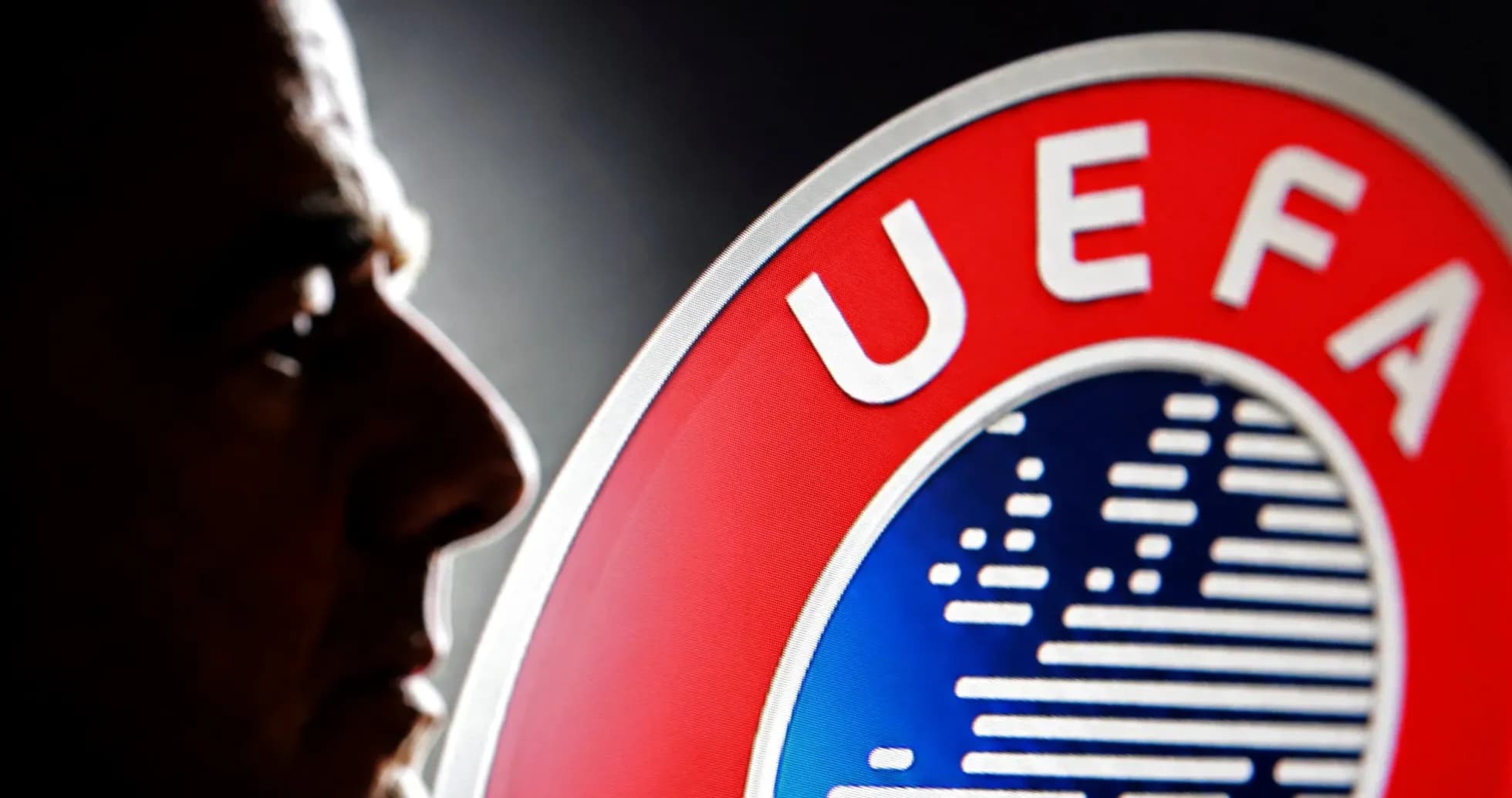
By Thursday, UEFA had gone further than words. It pledged to boycott all FIFA competitions unless Infantino dropped the project. That is no idle threat. European teams dominate the men’s World Cup and Club World Cup, the engines of FIFA’s revenue machine. Without Europe, the business model creaks, and everyone knows it.
The fear was not abstract. If investors paid billions for a stake in FFE, they would expect growth: more games, expanded tournaments, new formats. That means more pressure on an already suffocating calendar, more strain on elite players already pushed to their physical limits, and more competition for broadcast and sponsorship money that is not infinite.
It also means a direct challenge to the power of club football and the UEFA Champions League. For Europe’s clubs and leagues, the FFE project looked like a Trojan horse.
Inside FIFA, the revolt turned personal. Carlos Cordeiro, Infantino’s senior adviser and a former Goldman Sachs banker, resigned and branded the deal “bad”. Chief operating officer Kevin Lamour issued a blistering public defence of FIFA staff that read like an invitation to be sacked – and a pointed challenge to his boss’s judgment.
By Friday, Infantino was politically isolated. Even Trump, whose orbit the FIFA president has spent so much time in over the past year, said he had not spoken to him about the plan to sell stakes in the tournament.
The pressure finally told.
Infantino announced that he was abandoning the project, acknowledging in a statement that “the project has created divisions of a nature that, regardless of the level of support, are no longer in the interest of the objective set out in the first place”.
The plan was dead. The damage to his authority was not.
A shattered aura of invincibility
Infantino flew out of New York with those 200 letters of support in his briefcase. On paper, that should still be enough to secure another term when FIFA votes in Rabat, Morocco, on March 19. In reality, the ground beneath him has shifted.
His traditional power base in Africa, with 54 votes, had been notably cautious. Many African federations could use the “game-changing” money the FFE scheme promised, yet they did not rush to endorse it. South America’s CONMEBOL, led by FIFA vice president Alejandro Dominguez, said only that it would study the proposal “with the rigour it demands”.
Dominguez has his own stake in Infantino’s future. He is counting on the president to push through an expanded 64-team format for the 2030 World Cup, which is being shared by Spain, Portugal, Morocco and three South American cohosts – Argentina, Paraguay and Uruguay. Under the current plan, those three get just one match each of the 104-game tournament. An expansion would hand them more.
Even among allies, the calculation has changed. Infantino’s aura of inevitability has gone. The intervention of Cordeiro and Lamour would make many presidencies untenable. The question now is whether FIFA’s member associations see this as a one-off overreach or the culmination of long-standing unease about his style and his repeated attempts to ram through controversial projects.
The election picture sharpens
The timeline is tight. November 18 is the deadline for candidates to enter the presidential race, exactly four months before the vote in Rabat. Infantino, re-elected unopposed in 2019 in Paris and again in 2023 in Kigali, Rwanda, is entitled under FIFA statutes to one more four-year term.
Until this week, talk of serious challengers felt theoretical. Now it sounds like planning.
Names are already in circulation. Paris Saint-Germain president Nasser Al-Khelaifi, a powerful figure in European and global football, is routinely mentioned. So is Victor Montagliani, the Canadian who serves as FIFA vice president and heads CONCACAF. Sheikh Salman bin Ebrahim Al Khalifa, the long-serving AFC president from Bahrain, came close to beating Infantino in 2016 and may feel he has unfinished business.
To win a contested election, a candidate needs 106 votes. No continent votes as a perfect bloc, but a coalition built around most of Europe’s 55 members, CONCACAF’s 35 and Asia’s 46 would form a formidable base for any rival.
Infantino knows that. The FFE structure, with its commissioner-style role and commercial focus, looked suspiciously like a potential landing spot for him beyond 2031, one that could pay far more than his current package of more than $6m a year. That long game now lies in ruins.
What kind of FIFA do the members want?
Strip away the noise and the fight over FFE lays bare a fundamental question: who should own the future of the World Cup?
Private equity and petrostate wealth have become normal in European club football. Investors from the United States, the Gulf and beyond now control some of the continent’s biggest teams. But the World Cup is different. It is still seen as a public good, a shared treasure that belongs to fans and nations rather than shareholders.
Infantino tried to bridge those worlds – the romantic and the commercial – by offering federations more money than ever before. For smaller associations, the temptation was obvious. For the game’s traditional powers, the cost in control and calendar space was too high.
The UEFA-led resistance has, for now, stopped the sell-off. It has not resolved the underlying tension between FIFA’s hunger for growth and the sport’s capacity to absorb it.
That tension now plays out against a backdrop of political uncertainty at the top of the organisation. Infantino is still in office. He still has significant support. But the week that began with him as the self-styled king of a booming empire has ended with a very different question hanging over Zurich.
Is this the moment global football decides it wants a different kind of ruler?