England Adopts Palm-Cooling Tech to Combat World Cup Heat
The heat hit first.
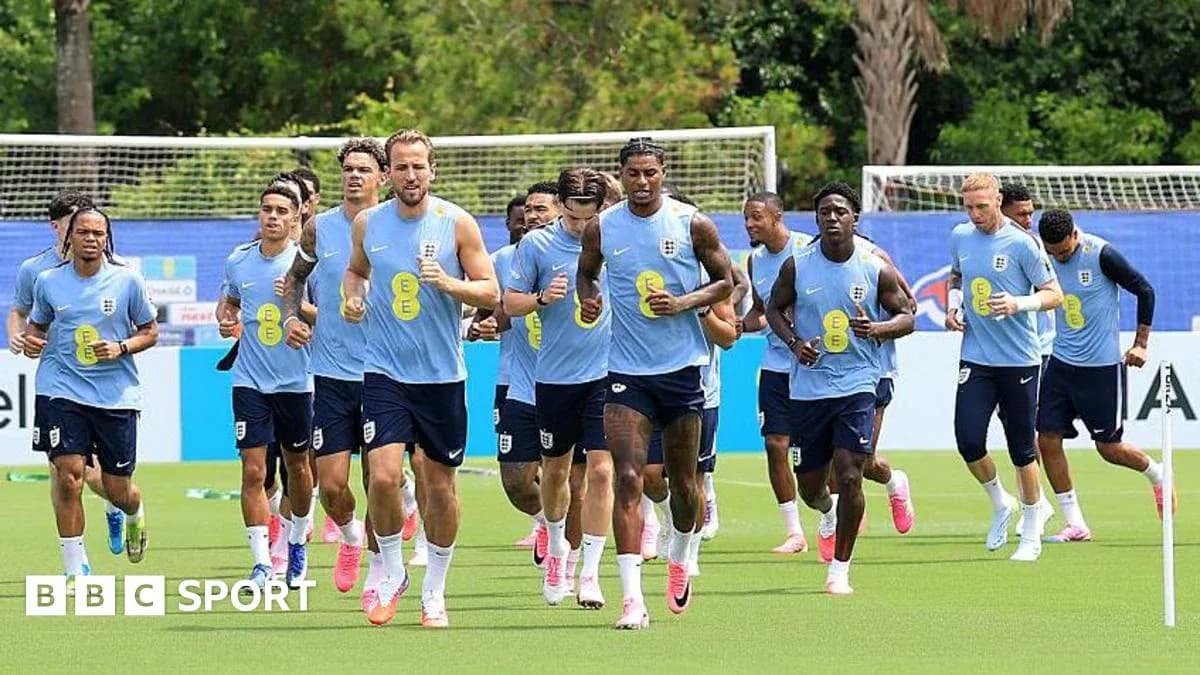
As England’s players stepped out for their opening training session in West Palm Beach, Florida, on Tuesday, the thermometer climbed to 32C. The World Cup is still days away, but the conditions they will face in the United States have already arrived – hot, humid, draining.
So England have brought a new weapon.
High-tech palm-cooling devices, already seen at top clubs such as Manchester United, will be part of the routine this summer as Gareth Southgate’s squad look for every marginal gain in a tournament where the climate could be as fierce an opponent as any side they face.
Science in the shade
Studies suggest at least a third of World Cup fixtures will be played in temperatures above 26C. That figure alone has shaped England’s planning. This is not a minor detail; it is a defining feature of the tournament.
Sports science has long chased ways to control core body temperature. The latest research points to an unlikely area: the palms. Cooling the hands, where blood vessels sit close to the surface, can significantly reduce core temperature, speeding up recovery and helping players sustain high-intensity efforts for longer.
England intend to lean on that data. The devices will be used during training sessions in Florida and during the official water breaks in World Cup matches, when players will grab not only drinks but also the cooling units designed to drag their body temperature back from the red zone.
Building capacity for the heat
Jordan Henderson, speaking after the first sessions in the Florida sun, framed this opening week as a crucial phase.
He described it as a period to “build capacity to the conditions,” stressing that the warm-up games will serve not just as tactical rehearsals but as live tests of how the squad cope with the climate. These are not friendlies in name only; they are part-laboratory, part-dress rehearsal.
The Brentford midfielder was quick to highlight the work being done off the pitch. He praised the “team behind the team” for their “top level research” on cool-down strategies and recovery methods, a nod to the analysts, medics and sports scientists whose influence on modern tournament preparation grows year by year.
“Hopefully that can give us a little edge when we get into the tournament,” he said. In a World Cup where fine margins are likely to decide who survives the knockout rounds, that “little edge” is exactly what England are paying for.
Warm-ups under a hot sky
The acclimatisation will continue under match conditions. England face New Zealand on Saturday, 6 June (21:00 BST) and Costa Rica on Wednesday, 10 June (21:00). Both fixtures offer Southgate the chance to rotate, experiment and, crucially, monitor how his players respond to prolonged spells in the heat.
Those games will also allow staff to refine the use of the palm-cooling devices: when to deploy them, how players respond, who benefits most. Some will adapt quickly, others less so. The data gathered in those friendlies could shape substitution patterns and training loads once the tournament begins.
The campaign ahead
Then the real thing starts.
Thomas Tuchel’s side open their World Cup campaign against Croatia on Wednesday, 17 June (21:00). It is a demanding first assignment, followed by Ghana on 23 June (21:00) and Panama on 27 June (22:00). Three group games, three late kick-offs, three nights when the heat may cling stubbornly to the pitch long after sunset.
Tactics, selection, form – all will dominate the headlines. Yet in the background, the battle against fatigue and overheating will run just as intensely. England hope that by the time they walk out for that opener against Croatia, the Florida sessions, the water breaks, and those curious palm-cooling devices will have done their quiet work.
If the margins are as fine as they expect, the difference between lasting and wilting might just be measured in the palms of their hands.